Para athlete opens doors for disabled anglers
Visually impaired sportsman Gavin Kilpatrick is helping to grow competitive disabled fishing in SA, while inspiring others through his passion, resilience and community partnership at Fun Fishing in the Rietvlei Zoo Farm.
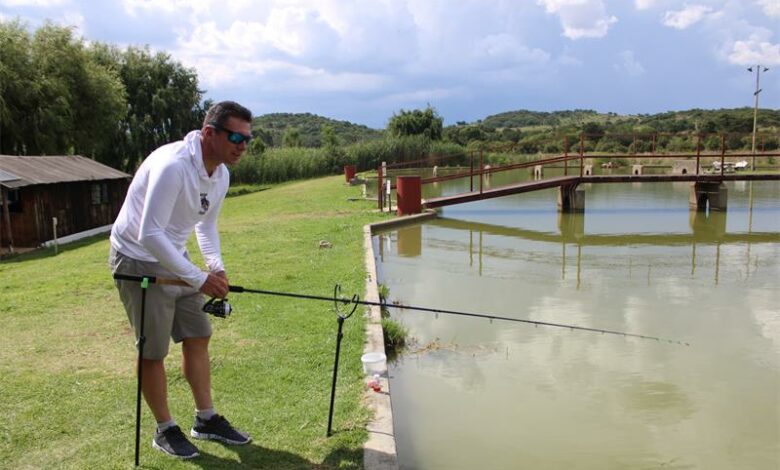
Accomplished para athlete Gavin Kilpatrick is no stranger to pushing limits.
After years of competitive cycling, rowing, bowls, triathlons and golf, the visually impaired sportsman has now cast his passion into a new arena: The world of competitive fishing for people with disabilities.
Kilpatrick has Stargardt Macular Dystrophy, a progressive genetic condition that affects central vision.
His love for fishing began in childhood, with memorable outings alongside his father.
He later learnt about competitive angling and immediately wanted to get involved.
“Some of my fondest memories are of fishing with my dad. Those childhood moments I cannot forget. That is where the passion comes from.
“When I started researching disabled angling, I found a fraternity that includes people with all types of disabilities. I found a club, went to trials, and it just became part of the process,” he said.
One reason he participates in new sports is to inspire others, “Because I have a disability, I like to try things to show others that it is possible. Whether their disability is worse, better, or even if they have none, it is still possible. Fishing is enjoyable and not impossible.”
From passion to competition
His move into competitive fishing felt natural.

“All my past sports required power and speed. I am getting older and am no longer an elite sportsman. When I discovered competitive fishing, I thought, ‘Why not?’ I love it, am competitive and enjoy being outdoors.”
Tackling the provincial trials
The provincial trials were a steep learning curve. For many years, Kilpatrick primarily fished for bass using lures from the bank or a boat.
Competitive disabled angling requires bank angling techniques, and the Disabled Angling Federation has strict requirements for specific styles.
“I had to adapt within a week. My original plan for the tournament did not go well. I had to make changes. It was more a learning curve than being competitive,” he said.
Fishing at the Vaal Dam also challenged him.
“I am used to smaller venues. The Vaal is large. You must cast further and deal with weeds tangling your line. It was all new to me while trying to stay competitive.”
Still, being selected was uplifting.
“It felt rejuvenating. I found a new sport I love and a community of people with disabilities I can relate to. We can all learn from one another.”
What competitive disabled fishing involves
Kilpatrick competes in feeder fishing, a recognised form of carp angling.

Disabled angling includes athletes with a range of physical impairments, including amputations, mobility challenges and visual impairments.
“Even though I have all my limbs, my vision impairment qualifies me. The sport is closely aligned to able-bodied angling, which is great because you can learn from everyone.”
Adapting the sport
Fishing requires accuracy, precision and technique. Vision loss makes every step more challenging.
“Threading the line through the eyes of the rod, threading weights, hooking bait, finding the right tools, and casting accurately are all very challenging. But I have developed tools and practised so much that some things feel like second nature now,” he said.
What fishing gives him
Fishing supports him physically, emotionally and mentally.
“Physically, you are outside and moving around. Emotionally, it is calming. You hear birds, and the water looks like glass. Then you get the adrenaline rush when a fish bites.
“Mentally, you are forced to focus. If I am threading a hook and talking at the same time, I will put the hook in my finger,” he joked.
A sport that restores independence
Kilpatrick says being able to fish locally has changed his life.
“Fun Fishing is close enough to my home that I can take an Uber. Because I cannot drive, that small bit of independence means a lot. I can walk around safely, fish and enjoy what I love.”
Community support makes the difference
Support from friends and mentors has been crucial.

“My friends and family know how passionate I am. I have mentors who guide me on what tackle to buy or which bait to use,” he said.
One of his biggest supporters is Rene Coetzer, who owns Fun Fishing at the Rietvlei Zoo Farm.
She has welcomed Kilpatrick to the venue and hopes the partnership will introduce more people to the space.
“We have been here for 10 years, and many people still do not know about us. I hope working with Kilpatrick will help bring more people here. We are a small business and appreciate community support,” Rene said.
When Kilpatrick approached her, he did not want a job for money. He simply wanted a place where he belonged.
“I just wanted to be here and do what I love,” he said.
Making the sport more accessible
Fishing is one of the most affordable and accessible sports for disabled athletes.
“A fishing rod costs about R500. You can rent equipment, get lessons and try it before committing. With cycling, you spend tens of thousands before you even start.
“I once paid R700 to enter one single cycling race. Here, you pay R60 for the entire day, and the reward is ten thousand times greater,” he explained.
Kilpatrick hopes to grow the disabled feeder fishing community and bring more visibility to the sport.
“In SA, disabled athletes are not highlighted enough. Fishing is accessible and affordable. With the right support, it can reach so many people.”