Red data species lose home in flames
BLUE HILLS - 'HELPLESS' is how the Greater Kyalami Conservancy's Tyrone McKendry described how he felt while watching a pair of African grass owls flee from flames as a veld fire destroyed the land next to their nesting site.
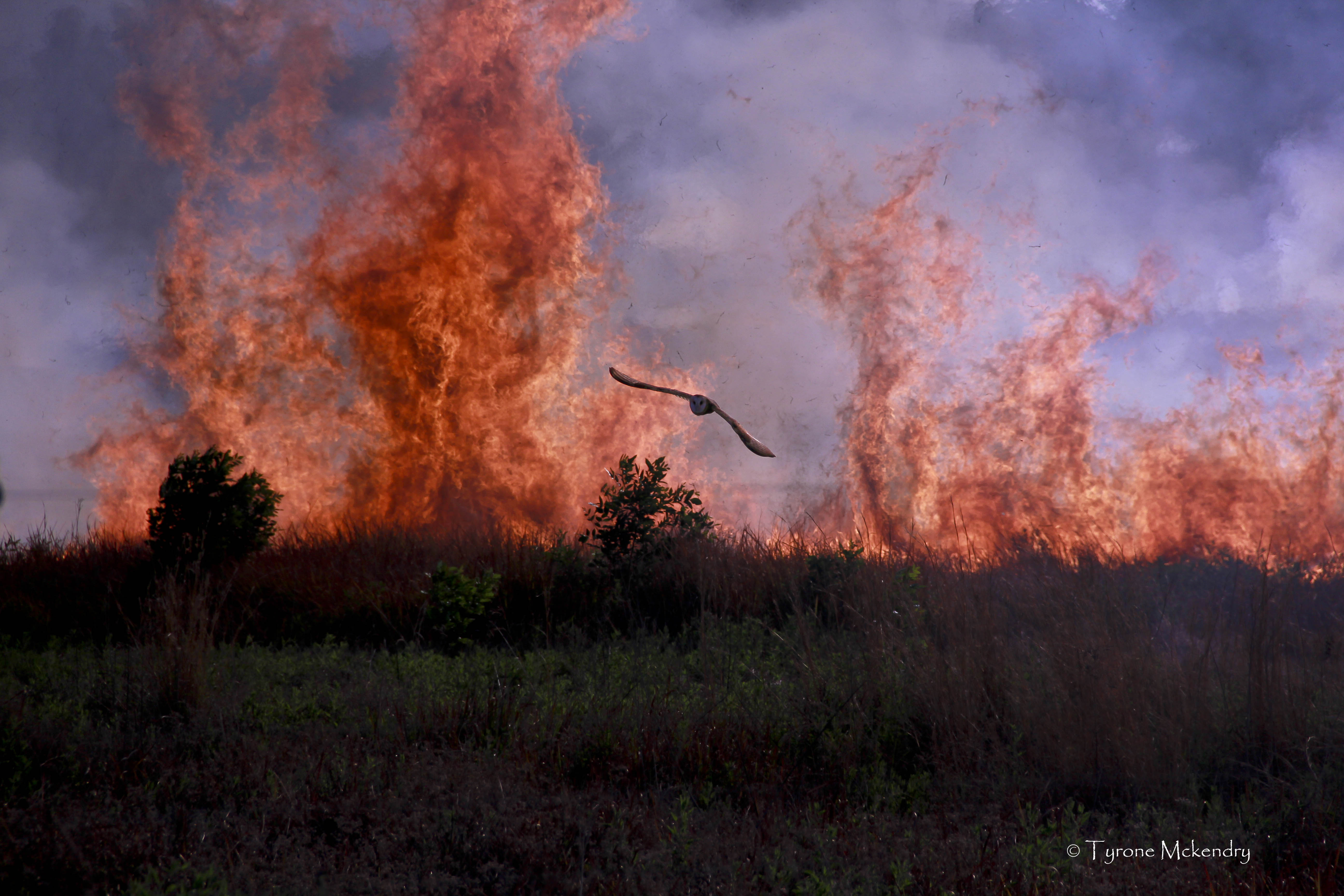
McKendy, who is the co-ordinator of the conservancy’s biodiversity projects, reflected, “As I think back to the moments when the fire was at its hottest and the owls were frantically flying from nest to nest in an attempt to hide from the blistering heat, I am saddened by the thought that if we do not change the current pattern of destruction and rampant development, I might never see another African grass owl in this area again, and what a tragic thought that is.
“Now that their eight-year nesting site is gone, I wonder where these owls will go?”
Chairperson of the Greater Kyalami Conservancy Kristin Kallesen said the land burnt was purchased by Alwina Brand to ensure it remains grass owl habitat and is not developed.
McKendry said there were still a few areas where there was a suitable habitat for the red data species but said these areas were also threatened by development which destroyed their natural habitats. Land close to the Brand’s property is earmarked for development. Domestic animals and careless motorists were further threats.
Kallesen said the conservancy wants a grass owl specialist to investigate the impact development in the area would have on the owls.
Last year, the Endangered Wildlife Trust’s Matt Pretorius said he did not hold much hope for the African grass owls in the urban areas of Gauteng. He cited development and veld fires as the biggest concerns.
“At the moment around 80 percent of the habitat burns every single year, which is not conducive to the tall, thick grass they require for making their roost and nest cavities. The eco-system will be unbalanced without the owls and we will see a boom in small mammals which are the owls’ prey,” said Pretorius.
Brand said the owls had not returned to the property since the fire and did not expect them back until the grass grew taller.
The cause of the fire could be natural but Kallesen, McKendry and Brand thought the way the fire burnt was ‘suspicious’.
“We could see a thin ‘line’ where the fire burnt all down the fence right to our property passed the firebreak. Veld fires do not, in our experience, spread in a thin strip down a fence line on short green grass,” said Brand.
Kallesen said they thought the area could be re-habitated for the owls to remain in the area McKendry said the conservancy requested help to rehabilitate the damaged site as quickly as possible.
Details: biodiversity@gekco.co.za