Invasive weed war continues at Lonehill Dam, as City Parks explains root cause
The weeds keep returning, but so do the men determined to clear them, while City Parks explains why the dam won’t stay clean.
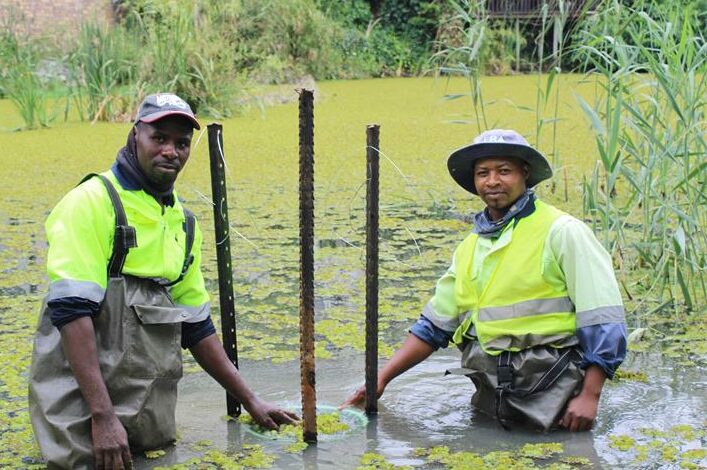
The battle against the invasive weeds at Lonehill Dam shows no signs of slowing down, but neither do the men who keep fighting it.
Day after day, Isaac Maphuma and Misheck Ncube, from the Lonehill Residents Association (LRA), are out on the water, hauling out masses of Kariba weed that have once again resurfaced across the dam.
What was supposed to be a quiet period after the recent removal of red fern has turned into yet another round of heavy labour, but, for the pair, the physical strain is simply part of the mission. “It’s definitely a lot of work.
Read more: ‘Weed wars’ rage on at Lonehill Dam as Kariba weed makes a comeback
Sometimes it feels like it never ends,” Maphuma said as he pulled another netful of weed from the water. “But we enjoy doing it because we’re doing it for the community. When people walk past and thank us, it reminds us why we keep going.”
Ncube echoed the sentiment, saying the job comes with challenges, but also a sense of purpose. “When you’re out here for hours, your back feels it, but this dam belongs to everyone who lives here. If we don’t take care of it, who will?”
Environmental specialist Nadeem Abrahams, also from the LRA, says the recurring weed flare-ups are linked to deeper environmental issues that need addressing. “It’s a cycle. Once one invasive plant is controlled, another gets the opportunity to dominate. The real issue is the water quality. Until that is stabilised, these weeds will keep coming back.”
Abrahams added that factors like storm water runoff and past sewage leaks contribute to the nutrient-rich conditions that help the weeds thrive. “These plants feed off imbalance. Even after a clean-up, some fragments stay hidden among the reeds. They then resurface when conditions improve.”
Jenny Moodley, from Johannesburg City Parks and Zoo (JCPZ), confirmed that it has been working in partnership with the LRA for several years, in an attempt to manage and control the spread of the aquatic, alien, invasive plants that affect the Lonehill Dam.
Also read: City Parks breaks record, plants 3 000 trees along Winnie Mandela Drive in an hour
“This long-standing partnership has been partially effective in ensuring regular maintenance and management of the dam, contributing to its ecological health and overall upkeep. However, recent warm and wet weather conditions have intensified the bloom and spread of invasive aquatic plants, as these climatic factors accelerate their growth and regeneration.”
She said the water quality within the dam remains compromised, largely due to pollutants and possible sewage contamination.
“It is important to note that such issues fall outside JCPZ’s direct mandate, as the entity’s core responsibility lies in the maintenance and ecological management of the park and open space infrastructure, alongside the dam which is a storm water catchment.
“Matters relating to sewage spills, contamination, and pollution in water bodies falls under the jurisdiction of other municipal entities, specifically the Environment and Infrastructure Services Department (EISD), Johannesburg Water, and Johannesburg Roads Agency, who are best positioned to investigate, mitigate, and implement corrective measures.”
Follow us on our Whatsapp channel, Facebook, X, Instagram and TikTok for the latest updates and inspiration!