
JMPD explains how informal traders can retrieve goods after confiscation in Fourways
Fourways informal traders were left scrambling after JMPD confiscations. Here’s what the Metro police department says you must do to get their goods back.
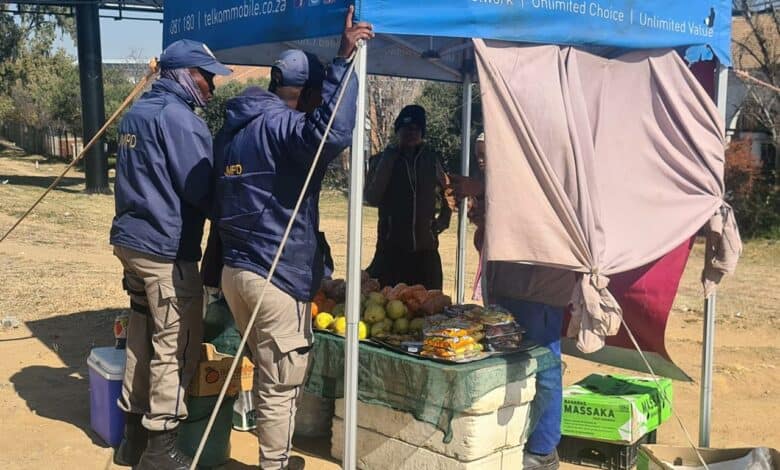
Following complaints from informal traders in Fourways whose stock was confiscated for trading illegally along Winnie Mandela Drive, Johannesburg Metropolitan Police Department (JMPD) spokesperson Xolani Fihla has outlined the official process for retrieving impounded goods.
According to Fihla, trading on Winnie Mandela Drive is strictly prohibited under the City of Johannesburg’s by-laws, and JMPD officers are mandated to enforce these regulations.
Read more: UPDATE: City of Johannesburg mourns former JMPD chief
Once goods are impounded, traders must follow a clearly defined, multi-step retrieval procedure.
Secure the official receipt
Fihla said the first and most important step is obtaining the official receipt issued by the impounding officer.
“The receipt must list all items taken, the reason for the impoundment, and the address of the JMPD storage facility where the goods are kept,” he explained.
This document is the trader’s only proof of ownership and must be presented later to reclaim the goods.
Pay the applicable fines and fees.
Before goods can be released, traders are required to settle all fines and impoundment or storage fees.
Also read: Fourways informal trading and settlements under JMPD spotlight
While costs vary based on the city’s tariff schedule, traders typically face amounts ranging from R1 600 to R3 000 or more, depending on the violation and how long the goods remain in storage.
These fees generally include:
- A fine for contravening the by-law,
- An impoundment or release fee, and
- Daily storage charges that accumulate after a set period, often after 48 hours.
Visit the impoundment facility
Traders must then go directly to the pound facility listed on their receipt. The following documents are required for collection:
- The impoundment receipt,
- A valid ID or permit, and
- Proof of payment for all fines and fees.
Fihla cautions traders that there is a time limit for retrieving goods, especially perishables, which the city may dispose of if unclaimed.
He also emphasised that traders have the right to dispute an impoundment if the procedure was not followed, for example, if no receipt was issued or if they were denied the opportunity to pack up before enforcement.
Fihla advised affected traders to immediately locate their receipts and contact the pound facility indicated to confirm the full amount due and the next steps required for release.
Follow us on our Whatsapp channel, Facebook, X, Instagram and TikTok for the latest updates and inspiration!