
Anti-Racism Week 2021 launched
The action week, which runs from March 14 to 21, encourages all sectors of society, including the international community, to find ways of mobilising against racism and racial inequalities.
This year, 2021, marks the 20th anniversary since the World Conference Against Racism, Racial Discrimination, Xenophobia and Related Intolerances first took place in Durban.
The conference gave way to the creation of a platform where leaders from around the world could engage in the global challenges of racism with the intention of adopting a programme of action that would address these challenges.
Today, racism still persists and at times takes more extreme and violent forms. In short, racism has moved out of the shadows and into political and economic arenas which prompted an equivalent global response.
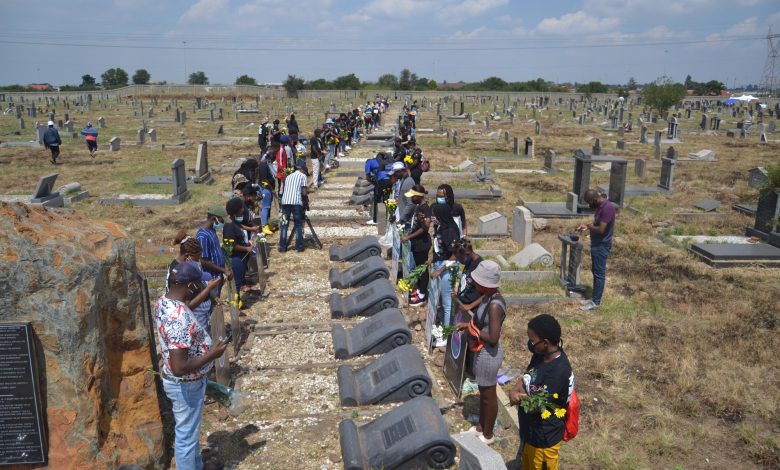
The starting point for this should be global activations needed in support of the UN Anti-Racism Day on March 20. On Saturday, March 13 the Anti-Racism Network South Africa (ARNSA) hosted the launch of its annual Anti-Racism Week campaign in Sharpeville near Vereeniging.
ARNSA appeals to the public to help highlight the scourge of racism around the world by showing support for it or by initiating anti-racism campaigns under the theme #UniteAgainstRacism.
This year, the campaigns around Anti-Racism Week will tackle issues of racism in sports, in the media and in schools.
“Kicking off Anti-Racism Week, the network will host a lecture interrogating the global challenge of racism and responses required of us as a society. Having teamed up with UK’s Show Racism the Red Card (SRtRC), which have been conducting education sessions on the values of anti-racism, the week will see dialogue on how we can effectively use sport as a tool for tackling racism,” said Busisiwe Nkosi the Convenor for Anti-Racism Week.
“This is an important development in relation to building strong links in the global fight against racism.”
In addition, a panel discussion analysing racism and the role of the media will be one of the highlights of Anti-Racism Week.
“The media has a critical role to play in promoting transformation and presenting the anti-racism agenda. How they cover and tell stories, the voices they choose to elevate and their own skill of challenging their own biases are central to getting the stories right,” said Caryn Abrahams, a senior lecturer at the University of Witwatersrand and Board member at the Ahmed Kathrada Foundation.
Spreading the word
School assemblies will also be utilised as a means to elevate the message against racism.
“In the history of Anti-Racism Week, we have found that the impact of the school assemblies has been immeasurable. The schools that have opened their doors to us have enabled the network to entrench anti-racism education through our programme. In adherence to lockdown regulations, we will host some of these interactive school assemblies to a limited audience and where technology allows, we will host them online with just as much energy,” Nkosi said.
A detailed diary of all the events will be made available on the Ahmed Kathrada Foundation and ARNSA websites. The Ahmed Kathrada and Nelson Mandela Foundations established ARNSA in 2015. Its secretariat today also includes the Institute for Justice and Reconciliation (IJR) and the Centre for the Advancement of Non-Racialism and Democracy (CANRAD).
The launch itself will see a delegation of young people gather to pay tribute and celebrate the lives of the 69 people who were shot and killed during a peaceful protest against apartheid’s dehumanising pass laws.
Getting involved
March 20 is UN Anti-Racism Day which is a national day of action against racism. March 21, which is when Anti-Racism Week comes to an end, is the International Day for the Elimination of Racial Discrimination.
Nationally, the day is also marked as Human Rights Day which is linked with the events of Sharpeville. Individuals and organisations who want to get involved in Anti-Racism Week can do so by contacting the convenor on busisiwe@kathradafoundation.org.
“The week provides us with an opportunity to reiterate the importance of diversity training and literacy around racism across all sectors and this will be a key feature throughout the programme. We look forward to working with institutions and business as we have done in the past with companies such as retail clothing group H&M,” said Nkosi.
Speaking about the theme, Nkosi urged institutions and organisations to adopt measures that promote racial equality, tolerance and condemn anti-racist behaviour and attitudes.