WATCH: Sizwe Secondary School is left in ruins while departments delay action
The DA demands urgent action at Sizwe Secondary as sewage and flooding persist.
Sizwe Secondary School has long been at the centre of concern, but the recent heavy rain has left the ward’s leadership deeply distressed.
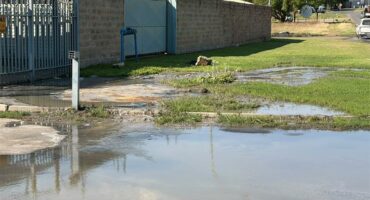
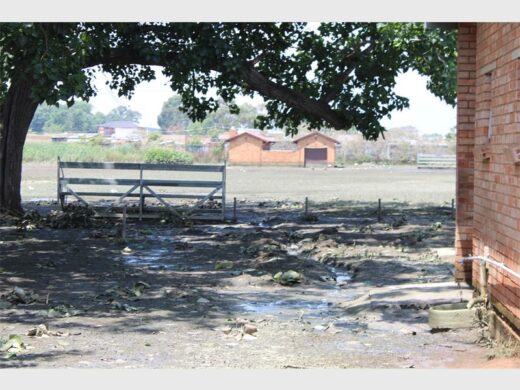
The downpour caused severe flooding throughout the school, halting daily operations. Classrooms and staff offices were left waterlogged, forcing the school to temporarily shut its doors.
@bedfordview.edenv Germiston ward Clr Kade Guerreiro highlights the dire conditions at Sizwe Secondary School after flooding and years of sewage failures. Urgent intervention is needed to protect learners and restore a safe environment. #SizweSecondary #SchoolCrisis #KadeGuerreiro #FixOurSchools #LearnerSafety
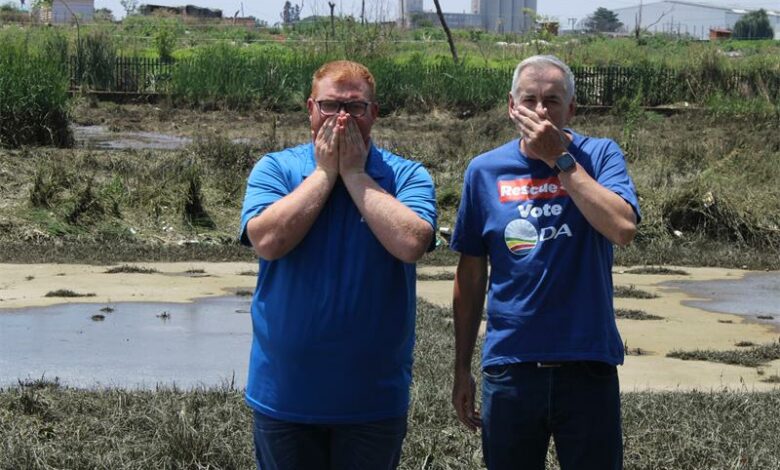
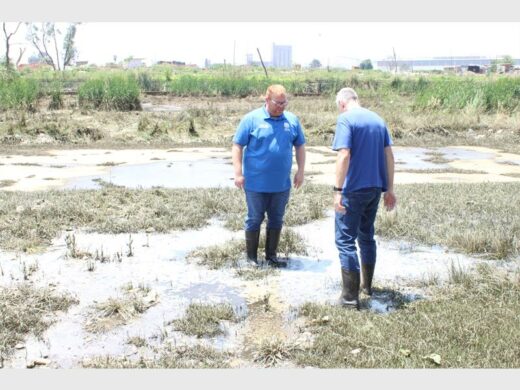
In response, the DA called on the Department of Education (DoE) to urgently intervene. Ward Clr Clr Kade Guerreiro and DA MPL for Education Mike Waters visited the school, held a media briefing and toured the affected areas.
ALSO READ: Sizwe Secondary School receives new library
Upon entering the premises, visitors were immediately confronted by a strong, unpleasant odour. Even after leaving the school grounds, the harsh sensation in the throat remained, an indication of just how dire the conditions have become, reports GCN journalist Obedience Mkhabela.
The GCN has reported on the school’s challenges for over three years, repeatedly engaging the CoE and the DoE on the matter.
Sizwe Secondary has been plagued by ongoing sewage malfunctions, resulting in sewage frequently flowing through its premises.
Learners and staff have had to endure the unbearable stench daily, with many reportedly developing respiratory problems due to prolonged exposure.
With most of the learners from disadvantaged communities, parents have limited options and are often unable to move their children to other schools.
ALSO READ: School Governing Body chairperson of Sizwe Secondary re-elected
Recently, heavy rain again left the school flooded; fortunately, after the year’s final exams had been completed.
Throughout the year, however, teaching and learning were repeatedly disrupted whenever bad weather struck.
With the principal prohibited by the DoE from speaking to the media, the GCN contacted the school governing body (SGB), the city and the DoE for comment.
In a previous email addressed to Guerreiro and dated February 19, he confirmed that the school had been continually affected by sewage due to serious Ekurhuleni infrastructure failures.
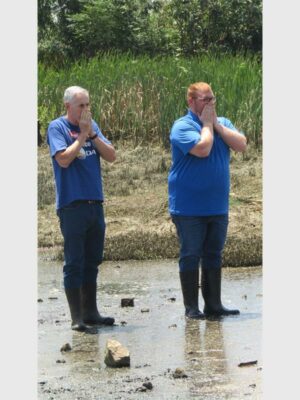
These issues have forced over 1 000 learners to study in an environment surrounded by stagnant water and sewage.
“The school and the residents of Elandsfontein have to live with multiple infrastructure problems, including blockages, collapsed pipes and a strained system caused by significant population growth,” the email stated.
During the media briefing, Guerreiro expressed frustration that, despite Ekurhuleni’s administration visiting the school multiple times, launching a petition and raising questions in council, the city has taken no action. He added that the matter was reported to the Human Rights Commission, but he has never received feedback.
Guerreiro said the school cannot offer sports because the grounds have been submerged under sewage and rainwater for most of the year.
“The school once had netball courts, but they are now completely underwater and in ruins,” he said.
“Several classrooms had to be demolished by the DoE, and although container classrooms were provided, those, too, are now flooded, damaged and may soon become unusable.”
ALSO READ: Sizwe Secondary receive water puricifation system
He warned that if the DoE fails to implement solutions during the upcoming holidays, learners will be forced to return to the same conditions next year.
“We call on the Gauteng education department to intervene and provide the school with proper help,” said Guerreiro.
Waters echoed Guerreiro’s concerns, noting that no parent would willingly send their child to a school in such conditions if they had another option.
“The bathrooms are in an even worse state, and the overall conditions around the school are not conducive to learning,” Waters said.
He stressed the need for a safe and supportive environment for learners.
“We advocate for a safer learning environment, yet what we see here is the opposite. We have children from nearby informal settlements who already face daily hardships, only to arrive at school and find the same conditions repeated.
“What is the state of mind of that learner? What justice are we giving them? We are possibly destroying the potential of our future leaders and even future presidents through situations like this.”
Waters explained that the matter has been taken to Parliament, the Human Rights Commission, and was raised several times in council.
ALSO READ: Sewage spills continue to affect Sizwe Secondary learners
“Despite years of engagements, the CoE has failed to intervene. Instead, there is constant finger-pointing and no action,” he said.
He emphasised that political differences should not stand in the way of resolving the crisis.
“Politics aside, we need this school to function properly and serve the hundreds of learners who leave their homes every morning with the hope of receiving an education here,” said Waters.
The CoE previously dispatched health officials to assess conditions at Sizwe Secondary School, one of the 75 high-risk schools out of 245 in the province identified by the DoE.
This announcement was made during Gauteng Education MEC Matome Chiloane’s October 2023 visit as part of his Operation Kgutla Molao programme.
Despite this, the situation remains unattended.
SGB chairperson Morekwa Kenny Phogole, now serving his second term, told the GCN in March that although the school’s matric pass rate climbed from 71% in 2023 to 82.9% in 2024, the reality on the ground has not changed.
Teaching and learning continue under harsh and unsafe conditions, a situation the GCN has extensively documented.
ALSO READ: New satellite office for Victim Empowerment Group launched at Sizwe Secondary
In 2022, following ongoing media coverage and community complaints about the school’s sewage crisis, environmental health inspector Olivia Ndlovu later conducted an inspection in July that year. The persistent sewage seepage across the school grounds had already forced management to cancel all athletic activities indefinitely.
Phogole explained that the neighbouring informal settlement has placed severe pressure on the area’s infrastructure, causing repeated system failures and posing health risks.
“As our learner numbers have increased annually, the DoE has tried to ease the pressure by providing more classrooms,” he said.
He acknowledged, however, that severe overcrowding remains a challenge.
“The sewage is the main issue, and we have been working closely with the city to try to find a solution,” he added.
“Despite reaching out to multiple departments, very little has been done. The sewage affects staff and learners, and with the health risks involved, we need health inspectors to assess every learner at least once a month.”
The GCN has sent a further request for comment to the DoE on December 10, with a deadline of December 12 at noon. By the time of going to print, no response had been received.