Prevention is better than treatment at Freedom Recovery Centre
The centre has various facilities and programmes to address the substance abuse problem in the community from different perspectives.
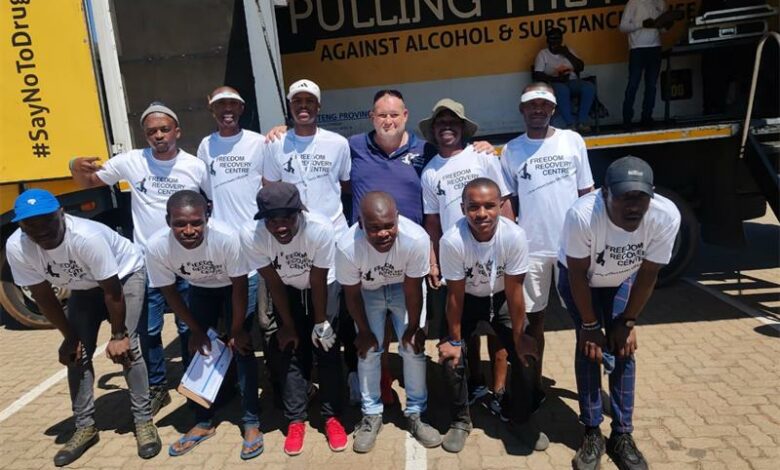
The Freedom Recovery Centre, a local rehabilitation centre, offers several facilities and programmes to address the community’s substance abuse problem from different angles.
They were recently visited by the office of the Premier of Gauteng, and a report indicated a high recovery rate.
One of the centre’s projects is a vegetable garden, which supports the centre’s kitchen. They also want to turn the kitchen into a skills development programme to help patients learn how to sustain themselves after completing the programme.
They also have a soup kitchen in town, where they see people’s daily struggles. Social workers frequently reach out to people through the soup kitchen to provide support.
One of the unhoused people who benefited from the soup kitchen even started volunteering there and now does maintenance work for the centre’s various facilities.
One of the projects the centre also wants to kick off is a shelter for unhoused people, where they can help residents with documentation and provide NQF-accredited skills development training.
They already provide these programmes for clients, and one of their graduates learned how to make handbags, which she now sells to support herself.
The skills these programmes develop are such that residents can employ themselves if they are unable to find employment elsewhere.
Another such project is a house of safety for abused women and children.
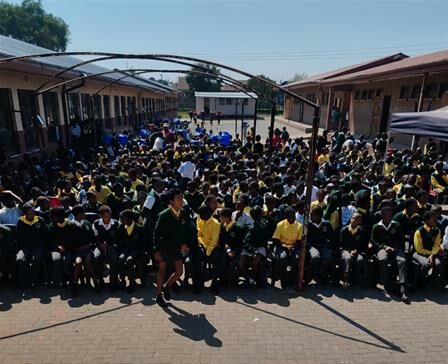
The centre does awareness drives regularly, especially at schools where marihuana and a substance known as “lean”, a mixture of cold drink, over-the-counter drugs and medicated cough syrup, are abused heavily.
Preventing the problem before they have to treat it is the centre’s biggest challenge, and they run awareness campaigns in schools and youth organisations, and would like to involve other organisations to expand the scope.
On top of that, they need funds, especially for the soup kitchen and for patients who desperately need winter shoes and socks. The shoes most needed are sizes five, six and seven.
“About 67% of the youth, ages 16 to 25, abuse drugs on a regular basis, and it starts at home,” says Esti van Rensburg from the centre. “Parents smoke marijuana, which puts children at risk, and 45% of children under 16 who use marijuana develop mental illnesses like schizophrenia or psychosis.”
“The rest of these kids’ lives are affected by marijuana. They become adults who need to be helped with the most basic care tasks,” she explains.
The centre currently cares for about 300 patients from different areas, including Ratanda, Delmas, Endicott, Heidelberg and Nigel. Many of them are unhoused with no qualifications, clothes or shoes.
“They’re underweight, and their history just breaks your heart,” says van Rensburg. “There aren’t enough beds to address the whole problem, and it’s not just unhoused people.
“It’s doctors, accountants, people addicted to over-the-counter or prescription medication, not just hard drugs,” she says.
To find out more, contact van Rensburg on 073 457 0824.