Community introduced to Heidelberg Hospice services at black-tie gala
Medical professionals and community stakeholders gathered to learn how Heidelberg Hospice is providing quality palliative care with the support of the APCC.
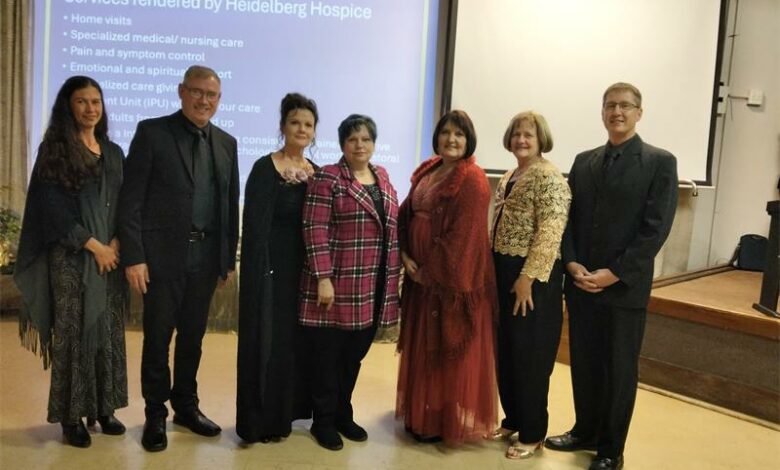
The CEO of the Association of Palliative Care Centres (APCC), Motlalentoa Motsoane, explained the operational model for member care centres and hospices to stakeholders on May 21 at a black-tie gala at Suikerbosoord.
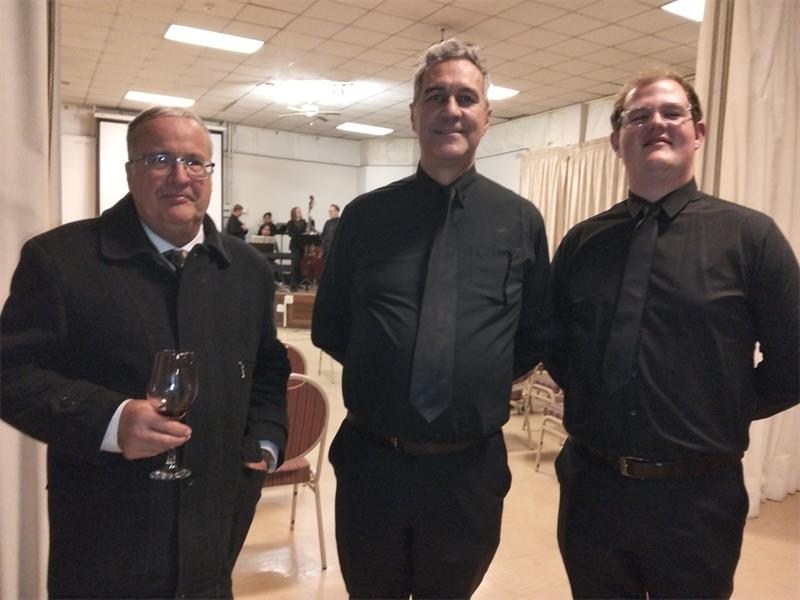
The event, attended by oncologists and other medical professionals, the Heidelberg Hospice Interdisciplinary Team, and other interested parties, aimed to introduce the facility to the community and explain how they operate.
“We believe we are here to serve a community in need,” said Motsoane. “At some point, you will feel like you are all by yourself. Perhaps you got sick, you lost your job, so we (the APCC) want all our members to be non-profit so that those who are forgotten can be served. The level of care we used to have at hospitals is no longer the same. Covid has shown that many would rather keep their family at home, because the level of care in the hospital isn’t what is needed,” he explained.
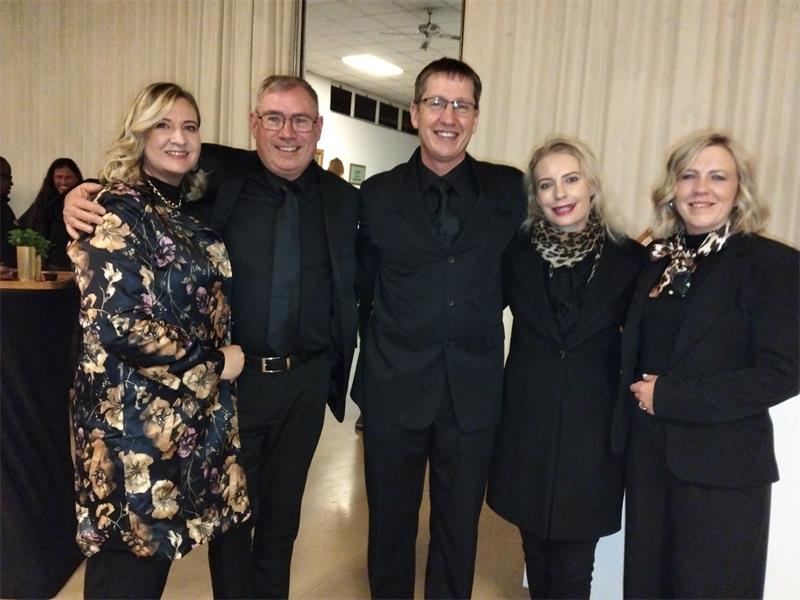
Photo: Charma du Plessis.
For families or individuals where being cared for at home isn’t an option, centres like the Heidelberg Hospice are necessary.
“Every year we check on the centre’s standards to make sure that the level of care is of such a nature that anybody can say ‘this is where we want to go’. We look at cleanliness and staff quality.
“Our biggest challenge within the healthcare system is that people are treated physically, but not holistically. They focus on physical symptoms, but provide nothing for psychological, social and spiritual needs.
“Many patients have these difficulties,” he explained.
“We often get asked when one can start palliative care. Most of the time it’s for end-of-life patients, but it should start from the moment a terminal diagnosis is given,” he said.
He explained that the APCC provides internationally recognised standards that are reviewed and updated on a five-year cycle. Member centres are evaluated and graded on a five-star system annually, and encouraged to do a self-assessment every other year.
They are also required to conduct continuous professional development for staff to improve care and maintain their grading.
A centre is internationally graded with a five-star rating. With a three-star rating, the grading Heidelberg Hospice has received, the hospice is considered fit to operate with quality care, and Motsoane believes they can achieve a five-star rating within the next year.
The Heidelberg Hospice Interdisciplinary Team was introduced to the attending medical professionals. They are Annelie Gericke, the end-of-life companion doula; Ds Braam Briel, the spiritual and religious attendant; matron Wilma Wehmeyer; Sr Liza Marais; social worker Marlene Walkden; and Nadia Pieterse, the medical administrator.
Assisting with medical activity is Dr Siewert Alkema.
After the presentation, food was provided by Fedics, for which the organisers were very thankful.