
Roads at airport’s cargo building to be upgraded
Airports Company South Africa will reconfigure and upgrade the access and frontage roads around the cargo buildings.
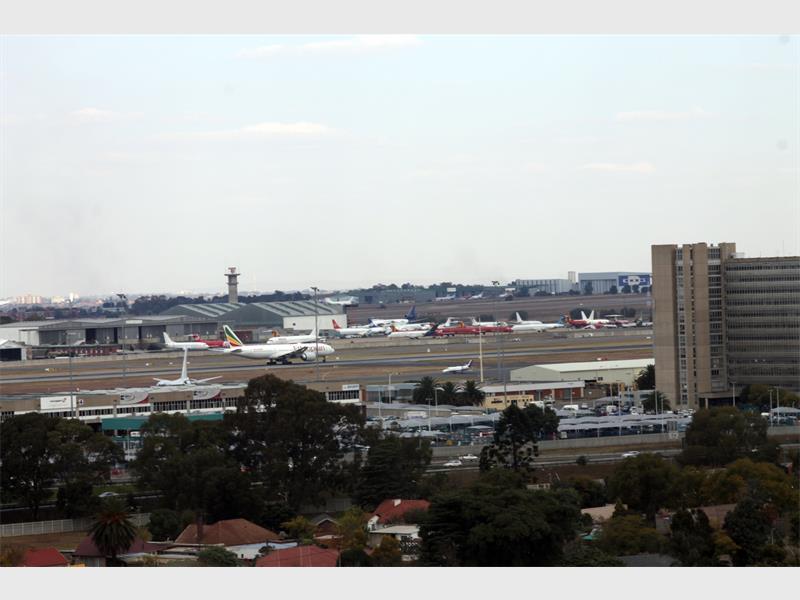
AIRPORTS Company South Africa (ACSA) is ramping up its efforts to support growth of air cargo traffic.
Both initiatives that will ease congestion and expand warehouse space in the short term and infrastructure developments that will develop capacity in the longer term are being looked at.
Speaking after last week’s Air Cargo Africa conference and exhibition in Ekurhuleni, the general manager of OR Tambo International Airport, Bongiwe Pityi, said while air cargo tonnages were under pressure, development of new infrastructure in collaboration with the sector was needed to ensure that maximum advantage could be taken of the next upswing.
The total air cargo of 350 500 tons that was processed through OR Tambo International Airport in 2016 was about 10 per cent down on that of the preceding year, as global trade came under pressure. In spite of this dip, Pityi says the cargo facilities at OR Tambo International Airport are already operating at close to capacity.
Also read:
• OR Tambo named African airport of the year
“The balancing act we need to achieve is to have the infrastructure in place for when economic conditions turn, but not so far in advance that it creates an unreasonable cost burden. No one likes a white elephant but it would be most unfortunate if the infrastructure is not there when it’s needed most,” she says.
Pityi says delegates at the Air Cargo Africa event referred to airfreight growth opportunities in pharmaceuticals, perishables and automotive parts.
“We have assured the sector we will not put infrastructure in the ground without being certain that it will do the job it needs,” she says.
In the short term, Airports Company South Africa will reconfigure and upgrade the access and frontage roads around the cargo buildings at OR Tambo International Airport to ease congestion and reduce in-transit times.
In the medium to long term, plans for a midfield cargo terminal are being aligned with a master development plan for the entire airport precinct. Pityi says the master development plan has a horizon of decades and careful consideration has to be given to integrating plans for infrastructure that will have a potential life span of 30 to 40 years.
Pityi also referred to major commercial and retail expansion in the airport’s western precinct, which is part of the aerotropolis plan, with announcements of the precinct implementation anticipated in the near future.
Pityi hopes the air cargo sector, facing reduced volumes and tight margins, will feel some relief from the 35 per cent reduction in tariffs from April 1.