
40 Mango fly worms pulled out of Glen Marais dog (sensitive content)
Both the owner and the vet thought the bumps on the dog’s body were caused by an allergic reaction when, in actual fact, it was later discovered that the dog had come in contact with the eggs of a mango fly.

Glen Marais resident Cambré Acker (24), dog mother to two three-year-old Boston Terriers, got the shock of her life when about 40 worms were removed from one of her pets.
Her male canine son, Popeye, was misdiagnosed last week Monday. Both Acker and the vet thought the bumps on his body were caused by an allergic reaction when in actual fact it was later discovered the dog had come in contact with the eggs of a mango fly.
The mango fly eggs had attached themselves to his skin and had turned into worms. His entire left side was infested.
Also read:
• Mango fruit fly infestation hits Pretoria
“Popeye displayed symptoms which resembled those of an allergic reaction, so I took him to the vet. He was given a cortisone injection. By Monday afternoon his symptoms had not subsided and his bumps were now wound-like, so we went back to the vet where he was given different medication and put into an anti-scratch cone,” explained Acker.
By the Tuesday, the furry pet was still itching and licking his body.
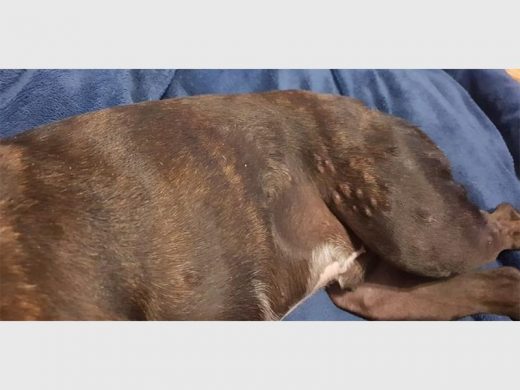
Acker noticed that her canine had something on his chin which resembled a pimple, it was yellow/white in colour.
“I squeezed it and a worm came out. I freaked out, the worm went back in and I pulled it out again.”
The 24-year-old admits she is very squeamish.
“I looked over his body and saw he had bumps on his entire left side, every bump was moving. I quickly called my mother to find out which vet clinic was open,” she recalled as she relived the horror all over again.
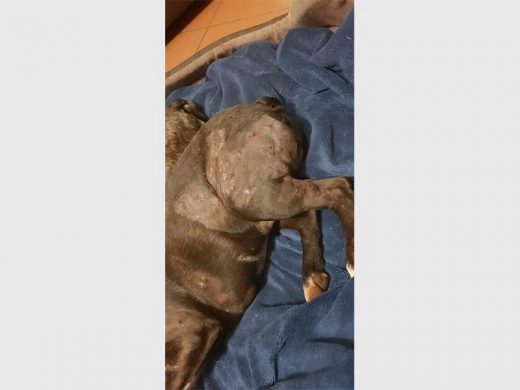
It was after hours. She called Kempton Animal Hospital, which is open 24/7, where she rushed her worm-infested dog to.
“He was slightly sedated so they could remove the worms. Over 40 worms were pulled out and the vet said in his entire 18 years of practising he had never seen so many at a go.”
Popeye was hospitalised for the night.
“The vet told me that mango worms were not common in the area and that was why he had been misdiagnosed.”
Acker went home and immediately examined Popeye’s sister Olive, only to find she had eight bumps with worms on her body.
“I sat and removed them myself with my fingers, tweezers and Vaseline,” she explained.
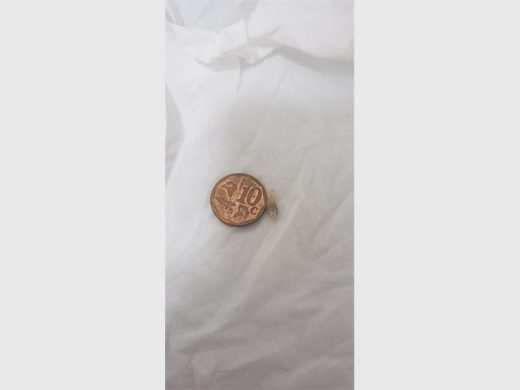
“After layering the bump with Vaseline, the worm came closer to the hole in the hope of getting air. This was when I pulled it out. The worm is quite hard, it looks squishy but it isn’t,” she further explained.
She warned dog owners who notice worms in their pets not to force the worm out, squash or kill it while it is in the skin as it might cause an infection.
The cordylobia anthropophaga, known as the mango fly, tumbu fly, tumba fly, putzi fly, or skin maggot fly, is a parasite of large mammals (including humans) during its larval stage. A mango fly egg can survive up to 10 days.
However, after the eggs are laid, they need a host to attach to, this is normally in the first layer of a dog’s skin. The worms stay three to four days in the skin and come out of the body to develop into flies.
Dr Faan van Rooyen from Kempton Veterinary Hospital is the vet who removed the 40 worms from Popeye. He said the worms were not dangerous but rather a nuisance and irritation.
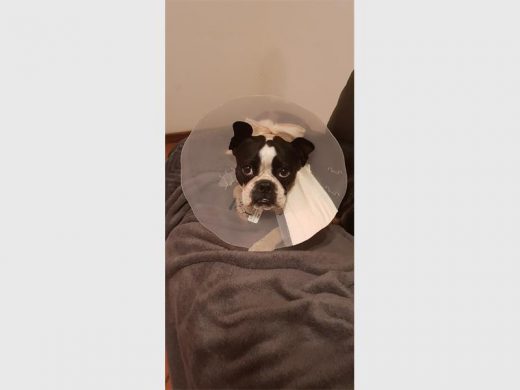
“It’s a bit sore for the pet but it’s not life-threatening,” he said.
Van Rooyen explained that it was not easy to recognise the worms in an animal until they had grown bigger in size.
“They just look like a pimple, only later when it’s bigger you notice it. If a pet owner suspects that their animal has been infected they should rather bring them to a vet for us to confirm,” he stated.
Acker does not know how her animals came into contact with the parasite and is not sure whether it was in Kempton Park or while away travelling around the province.
Van Rooyen said it isn’t a problem commonly found in this area because of the climate. The flies are problematic in warmer areas, he said.

He said mango flies are attracted to the smell of urine and also lay their eggs in jackets and blankets pets wear, as well as in the sand where the animals would play.
“It’s difficult to avoid contact. The best thing to prevent contact is good hygiene, and also to wash, tumble dry and iron laundry regularly,” he advised.
Popeye was given treatment to prevent further infection.
Both Popeye and Olive are doing well and are on antibiotics.