
Mlungisi, a trolleypreneur with a difference
When speaking to the Tembisan, Mavimbela said living with a disability makes it so hard to find a job.
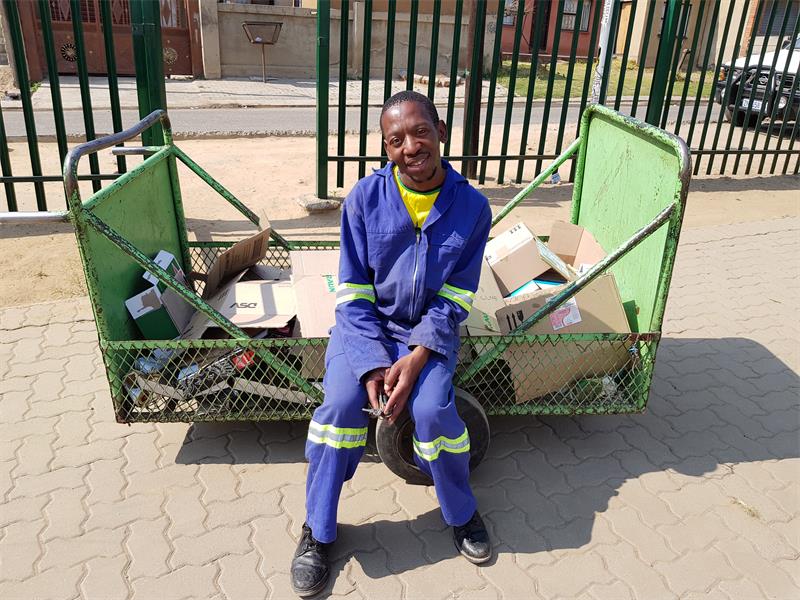
Who said disabled people are not capable of making things happen on their own, and to bring changes in communities.
This week The Tembisa had an interview with a local trolleypreneur, Mlungisi Mavimbela (34), who provides a living for himself and his beloved grandmother through recycling.
“You might not see this as I walk past you every day with my trolley, but I am mentally disabled. I was born this way. I am perfectly healthy and fully functional, and I do not need to take medication,” said Mavimbela.
When speaking to the Tembisan, Mavimbela said living with a disability makes it hard to find a job, arguing that organisation that employ people like him don’t really offer the freedom he wants.
“This is how I ended up collecting recyclables in my community. Being a trolleypreneur ensures my grandmother and I do not sleep on an empty stomach. It’s a hard job, but I really enjoy it,” he added.
Mavimbela said because of his love for his job, he wakes up every morning at 5am, prepare himself and walks to his workplace at the Tembisa Self Help Centre which is about 5km from his home. This he does it every day, without fail.
“I’ve been doing this for three years now, and have never missed a single day’s work, even during the coldest winter months. There are too many people counting on me to get the job done.”

He said he enjoyed his daily routine.
“I fetch my trolley and start my day at the local clinic where I collect boxes and plastics. The workers at the clinic all know me because I am always smiling and friendly, and I ask them nicely to help me to recycle because it is my job,” added Mavimbela.
“Upon loading my trolley, my next stop is the primary school near our centre. I actually enjoy going to the school because there is a lot of paper to collect and that means I get to get more money at the end of the day. This also means my grandmother and I can buy our monthly groceries and a few little luxuries.”
When asked about how he manages the job, Mavimbela said recycling is not as hard as some people may think.
“It is easy. It involves separating recyclables from trash. It takes a little effort to make a big difference. It is thanks to the people like myself and other trolleypreneurs that our neighbourhood is kept clean.
“Because of our collective efforts, fewer bottles, plastic items and paper, end up in rubbish dumps, rivers or on our roads and streets. But I must let you know that not everyone sees us in the same way as we see ourselves. Some people worry that we are here to steal,” said Mavimbela.
He said that many people fail to see the value of the work they do, adding that they are seen as thieves, hobos, crooks or just dirty and inconsiderate people who scratch and dent their cars with their trolleys.
“This is not true. I want to say to these people that we are just like them. We are trying to make a living to support our families. If our trolleys get in your way, or make you feel uncomfortable, I apologise on behalf of my fellow collectors, as this is never our intention. We all need to be considerate of each other and be kind to one another,” he said.
He said their goal is to earn a living and to look after their families – and to make South Africa a cleaner and more beautiful place for everyone.
“You can help us to achieve this by committing to recycling in your own homes. When you do so, please also remember to keep your paper, plastics and bottles clean separate and dry. Please also separate recyclable material from your other trash as it makes collection and recycling easier,” added Mavimbela.
Mavimbela said he would also like to thank places such as Mpact Recycling that purchase the recyclables from the many buy-back centres around Gauteng. In turn, this allows the buy-back centres to buy the recyclables they as trolleypreneurs collect.
“Without their assistance and support, we would not be able to feed our families,” concluded Mavimbela.