
Clear run for holiday travellers on these major routes
The SANRAL app can be downloaded for free and offers users information about road conditions, traffic congestion and incidents on the road
Peak traffic on the country’s national roads might occur somewhat earlier than normal because of the days on which December and January public holidays fall.
In addition, all public schools close on December 12, a Wednesday, and open on a Tuesday, a week after January 1.
Traffic will begin to pick up this week and traffic volumes will become really heavy from December 14, the beginning of a long weekend and when the building industry closes down.
As Christmas falls on a Tuesday, it can be expected that traffic will start peaking on December 21.
The end of the holiday period is also somewhat different: New Year’ Day is on a Tuesday and so is the day public schools re-open on January 8. This may mean peak traffic on the Mondays before.
Travellers will not experience any delays as a result of road construction on the N4 freeway from Pretoria to Mozambique, SANRAL said in a statement. The road is in good condition but motorists should take care, especially when they are driving during typical highveld thunder storms.
Travelling on the N1 from Pretoria to the Zimbabwean border should also be trouble free during the festive season and road users will not experience any delays caused by road works.
There will also not be major delays on the N1 between Gauteng and Cape Town as no road works have been scheduled for the holiday period. However, extreme high volumes of traffic are expected in parts of the Karoo and at the Huguenot Tunnel on certain days prior to public holidays.
SANRAL expects free-flowing traffic throughout December and January on the entire N1 route. However, high traffic volumes will be experienced on the weekend and on the days prior to the Day of Reconciliation, Christmas and New Year, says Vusi Mona, SANRAL’s communications manager.
Very high traffic volumes are expected on either side of the Huguenot Tunnel in the Western Cape and in the vicinity of Colesberg in the Karoo on certain critical days.
Travellers are encouraged to take a break during long distance journeys to prevent fatigue and lack of concentration. Most crashes on the N1 can be attributed to speeding, driver fatigue, reckless overtaking or vehicles travelling in the emergency lane.
Mona says motorists should be very cautious when driving in areas where housing settlements are located close to the road, especially in the Southern Free State and the Karoo. There are often high pedestrian activities or the possibility of domestic animals wandering onto the road in such areas.
SANRAL calls on road users to follow important safety tips when they take to the country’s main roads during the holiday period. “The main message is to remember that a road is a shared space and that you should be respectful towards your fellow road users.”
According to Vusi Mona, spokesperson for SANRAL, speed limits are clearly indicated on the 22 214 km of roads managed by SANRAL in all nine provinces. These are maximum limits and drivers should adjust their speed according to conditions such as rain or visibility.
“Road user behaviour contributes a lot to road crashes and we appeal to motorists to respect the rules of the road and to also ensure their vehicles are roadworthy,” he says.
Motorists can use a variety of SANRAL tools to help plan their travel better. They can visit the SANRAL website, www.nra.co.za for help in planning their journeys.
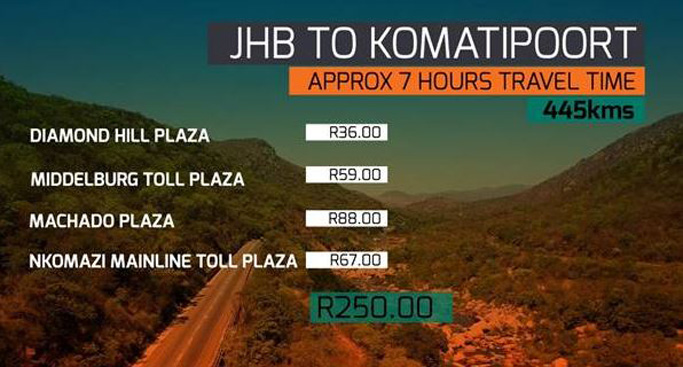
SANRAL has made available a series of videos to help motorists plan their journeys – what route to use, what to expect on the road, the estimated expenditure for tolls and rest spots on the route.
Motorists can also download the SANRAL App for convenience of topping up their e-tag accounts from the comfort of their cars.
“The app can be downloaded for free on all Android and iOS devices and also offers users information about road conditions, traffic congestion and incidents on the road enabling motorists to plan their journeys in advance,” explains Mona.
Incidents should be reported to either the South African Police Services (10111) or the National Traffic Call Centre (NTCC) on 012 665 6075, alternatively to the TRAC Rescue team at 0800 872264 (0800 TRAC N4).