‘If I can teach blind people to bowl, I can teach you too’
Rare neurological disorder affects specific areas of the brain, hence the father-of-two’s issues with his legs
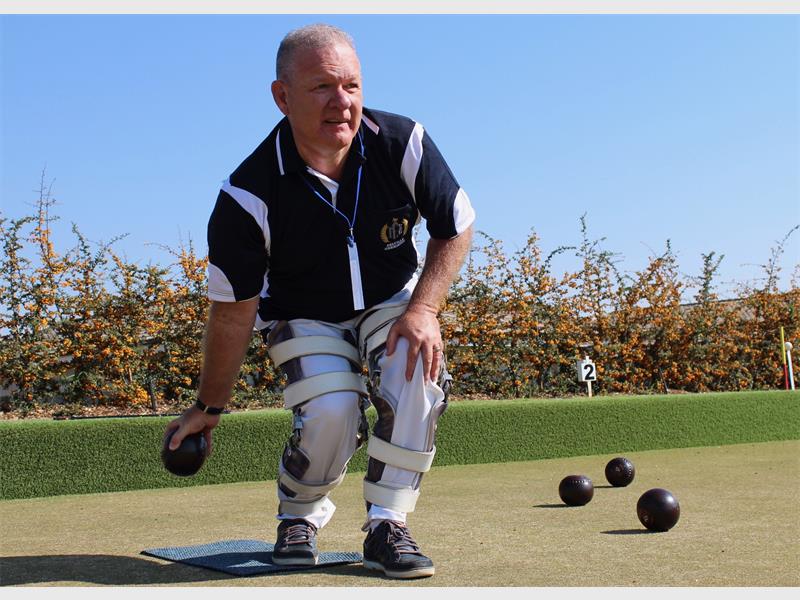
Eastlands Mature Lifestyle Estate resident Wouter de Vos learned at the age of 49 to never take anything for granted.
He was a successful bank operations manager who loved his job and never had health issues, then his walking ability started deteriorating.
A neurologist confirmed a fear that De Vos never thought to have: corticobasal degeneration.
The rare neurological disorder affects specific areas of the brain, hence the father-of-two’s issues with his legs.
Today, five years later, De Vos also has Parkinson’s disease, lack of balance and short-term memory loss. He was medically boarded from ever working again, he’s not allowed to drive, and recently he woke up with a stutter.
“I wouldn’t change a thing,” he said to Express over a cup of coffee. He walked to the table slowly with the help of leg braces and a crutch.
“I realise now that I wasn’t a good husband or dad; work was my number one. I’ve since prioritised.”
De Vos refuses to let his diagnosis get him down, which is why he approached bowls coach Dennis Panaino last year.
“He came to me on the bowling greens at Eastlands and said he wanted to play but he didn’t think he’d be able to,” Panaino, a coach of 17 years, remembered.
“I told him if I could teach blind people to bowl, I could teach him too.”
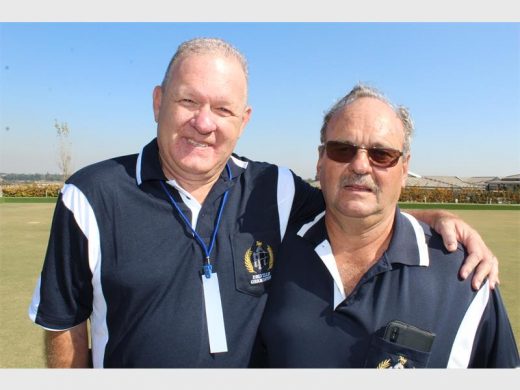
Panaino was right and De Vos was a natural. He has since been chosen to represent Ekurhuleni at the Disability National Bowls tournament in June.
“Bowling has given me a purpose in life again. My target is to inspire someone else and show them anything is possible,” De Vos explained.
His son Gideon (25) has also started bowling. Soon, they can add a third member to their team, as De Vos’ daughter Melanie (28) is expecting a baby girl.
“I’m very excited to become a grandfather,” he said, smiling.
Although he is clearly determined to make the best of his situation, which he refers to as “a glitch in [his] motherboard”, De Vos could not do it without his support system.
“My wife Ina is amazing. She is now also my full-time caregiver because I leave taps open and candles burning. But that’s just an age thing,” he joked. “The children are also always there for me.”
Added to this caring network, De Vos also has his friends and neighbours at Eastlands, who have since become like family. “We moved here for the medical facilities and a smaller home, and I’m glad we did. It’s heaven.”
His advice to people who might face a similar condition is not to give up.
“You have a purpose, that’s why you’re still around.”