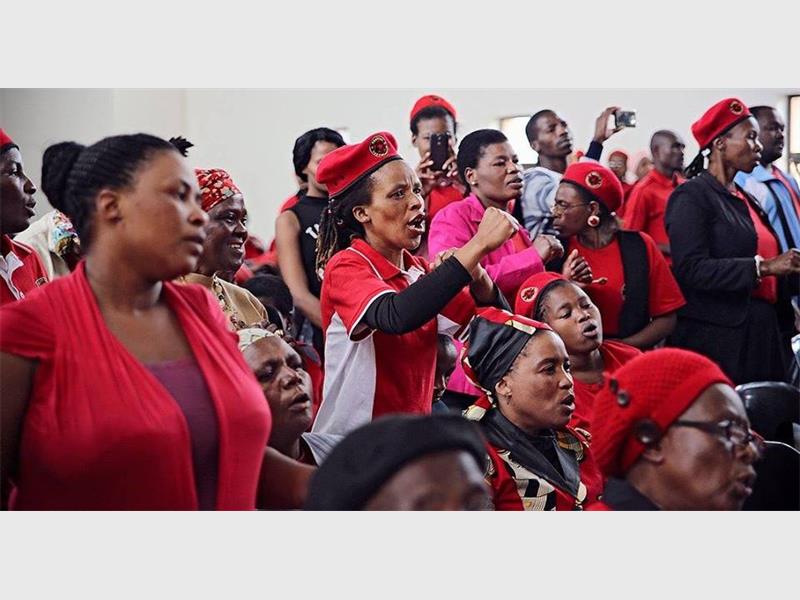
Vusimuzi informal settlement residents have taken their fight against the City of Ekurhuleni’s reblocking process to the South Gauteng High Court.
The residents, represented by senior attorney at the Socio-Economic Rights Institute of South Africa (SERI) Thulani Nkosi, took the city to court in an urgent application to prevent it from reblocking on June 28.
Nkosi exclusively told this paper that the city has been interdicted from further rolling out its reblocking process.
“I can confirm to you that, in essence, the City of Ekurhuleni has been interdicted from further rolling out its reblocking, pending the outcome of the case. The case is due to return to court on July 16,” he said.
Nkosi argued that the reblocking process was imposed on the residents without proper and prior consultation.

Magdelene Tembe
Last week, the city’s spokesperson, Themba Gadebe, explained to this newspaper that the reblocking of informal settlements is a programme to ensure all informal settlement residents enjoy a dignified home with decent sanitation, clean running water and electricity supply.
This process also requires that some residents’ homes be demolished and rebuilt in different places.
Advocate Emmanuel Sithole, representing the City, argued that consent from the residents had been obtained before carrying out this process.
“What we are doing is not demolishing, we are developing the community and providing them with services that they desperately need,” said Sithole.
The affected residents told The Tembisan that they are now being subjected to living in more inhumane and dangerous conditions than ever before.
They argued that the City and the ward councillor in particularly are working against the will of the people and are imposing a development that has destroyed some people’s homes and possessions.

A community leader, Jeckina Lamola, who has been a local resident for the past 25 years, said reblocking is worse than apartheid tactics.
“The City is promising the people a better life, but this is worse than apartheid because we are now subjected to sharing our little stands. Some of our stands have already been forcibly reduced to the size of a toilet,” she said.
She went on to reveal that death threats have been made against her and others who are seen to be against reblocking.
“I live in fear. My life is under threat. We were even threatened that we would be fired from the temporary jobs that we were given. So, you see, our situation is very bad and serious,” she went on.
The residents said they initially didn’t have any objections to this programme because they were promised that they would be moved to better habitable areas, such as in Esselen Park and Clayville, but this promise later changed as they were told those areas were no longer available for land relocation.
“So, the City opted to cut our stands into little toilets. Because of this process, one stand has been divided to accommodate four more stands or houses. There is no privacy, no space for our children to play and no space to park our cars,” said another resident, Nelly Orapeleng, who also claimed that her life has been threatened too.
A mother of eight children, Magdelene Tembe, who previously owned a four-roomed house, saw it demolished and was left with only one room.
“They didn’t even leave me with anything to fix or rebuild the new structure. They just destroyed and left everything as is,” she said.