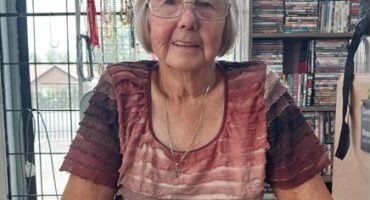
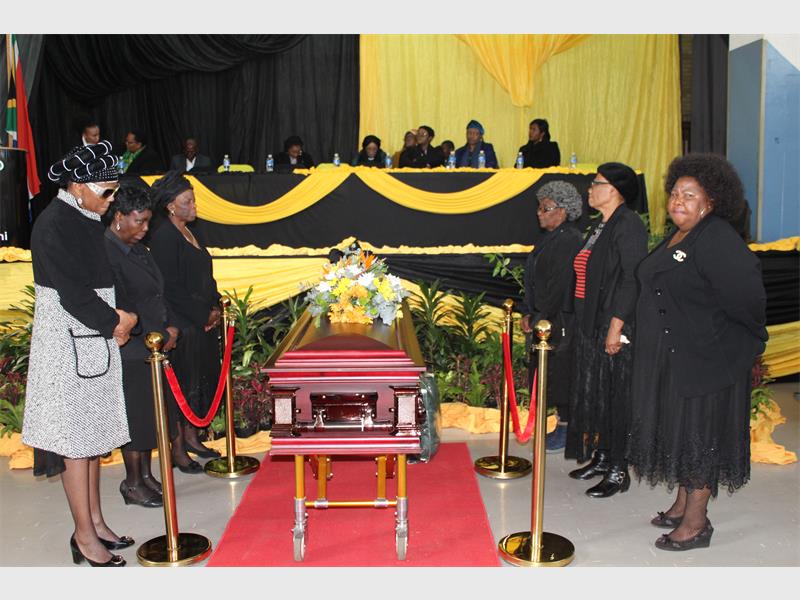
Just three days into Women’s Month, the City of Ekurhuleni honoured Zodwa Mofokeng.
In the early 1980s, Mofokeng, a community activist, led a march to the Kempton Park Magistrate’s Court to stop the police from killing people whenever there was the burial of activists, and police subsequently stopped the killings. For her involvement in the fight against oppression, she was in and out of prison and survived two assassination attempts orchestrated by the security branch. She was also involved in the rent boycott campaign. She died in 1996, just two years after the first democratic elections.
And to help right the wrongs of the past, the City exhumed Mofokeng’s body from Midrand Cemetery and reburied her at the Thami Mnyele Cemetery, where other struggle icons are also buried.
Spearheaded and championed by the City’s executive mayor, Clr Mzwandile Masina, Mofokeng was labelled as a
dedicated and loyal cadre of the underground movement during the 1980s.
“We gather here today during Women’s Month – a time in which we reflect deeply on the role that women played in our resistance and liberation struggle history, and a role they continue to play in contemporary struggles that are aimed at ensuring that every single one of us has a life of meaning and value,” said Masina.

“Today, we are celebrating one such woman – a giant on whose shoulders we continue to stand many years after she departed the land of the living. Her presence in Ekurhuleni would not only set parameters for the intensification of the struggle against apartheid, but would rewrite history. The struggle of mama Zodwa was a struggle that was fundamentally about reclaiming the dignity of the oppressed. When she led the community of Endulwini Section to fight for the tarring of roads and sanitation facilities, she was not only fighting against a system that thrived on separate development, but against a system that reduced black lives to indignity,” said Masina.
“The Tembisa that mama Zodwa came to in the 1980s was unfit for human habitation. It was a place that had been subjected to neglect by a regime that did not believe black people deserved to live in dignity. Decades of suffering immeasurable persecution had rendered many of our people debilitated – resigned to the idea that theirs would be a life of negotiating the dehumanising brutality of apartheid.

“But a fiery mama Zodwa, still a young woman at the time, could never accept a life of servitude – a life in which her humanity and that of those around her amounted to nothing. The nervous condition of nativity that some had come to accept as their reality was something she was unwilling to reconcile herself with.
“And so, she refused to live in a Tembisa that did not honour her humanity. And because she knew that power concedes nothing without struggle, she committed herself to the struggle.”
He said Mofokeng’s contribution in the fight for liberation will never be forgotten or erased.
“We have an obligation to walk in the footsteps of women such as these. Our children must know mama Zodwa so they can emulate her. May the daughters we raise know her. May they be her,” concluded Masina.
Also follow us on: