
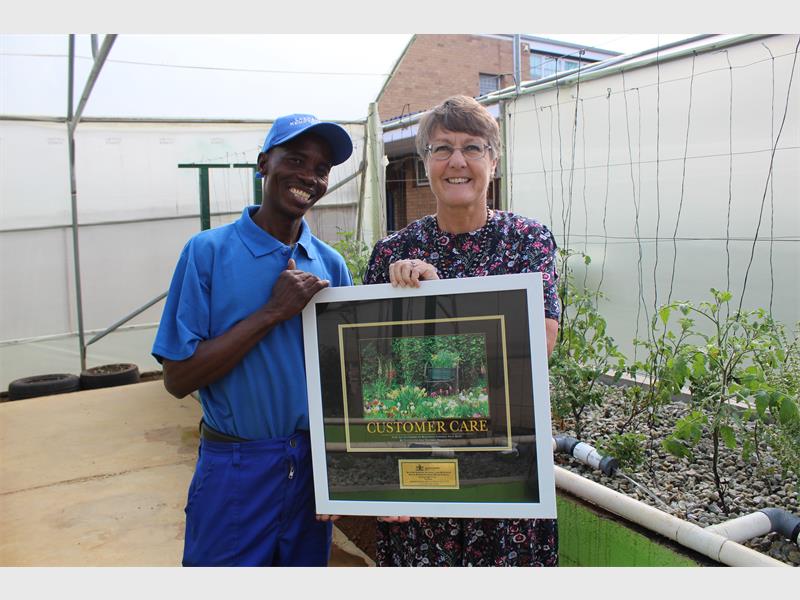
Laerskool Kempton Park’s green thumb initiative, introduced as the INMED Aquaponics system, was honoured with the Tanzanite Award at the 2019 GDE Service Excellence Awards.
Thanks to their innovative aquaponics system and sensory garden, they received this title in a sub-category for best project.
Founder and CEO of INMED Partnerships for Children, Dr Linda Pfeiffer, said: “This outstanding project is a prime example of how aquaponics can address the intertwined issues of food security, malnutrition, climate-change adaptation and skills development for sustainable incomes.”
The partnership is an international NGO that has pioneered the use of school-based aquaponics to improve the nutrition and food security of children in disadvantaged communities in South Africa for more than 10 years.
“We are so grateful to Air Products who has championed INMED Aquaponics in South Africa from the very beginning,” Pfeiffer added.
Adoreé Louw, project manager at the school, said she was over the moon that the project had received this prestigious recognition.
“Our school serves a community characterised by challenging socio-economic circumstances. Two years ago we realised we needed to find a better, more sustainable solution to feed our learners.”
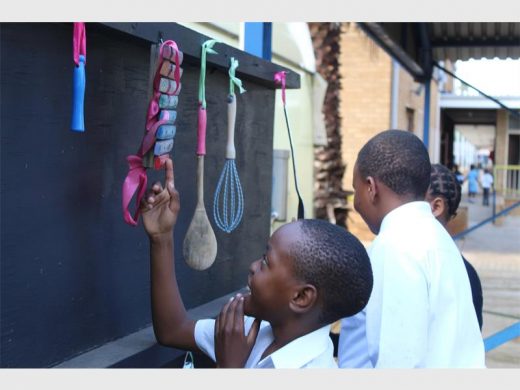
Laerskool Kempton Park is a full-service school incorporating learners with special educational needs into mainstream education. Louw said many of their learners relied on the school for their only hot nutritious meal a day.
“Our learners simply did not have the funds for this and neither did the school qualify for departmental funding for a feeding programme.”
Louw said it was at that point they spoke to Air Products who had already sponsored a small play area for the school. “They introduced us to the INMED South Africa team, who showed us how aquaponics could work in the school environment,” she said.
“The synergy was good for the school, as we were also keen to introduce aquaponics as a technical subject for learners, expanding on adaptive agriculture.”
Aquaponics is a food production technique that combines aquaculture (fish farming) with hydroponics (soilless crop production in water) in a closed symbiotic system. It produces at least 10 times more harvests year-round than traditional farming in the same space.
Aquaponics uses 90 per cent less water, requires no chemical fertilisers or pesticides and is attractive to youth who face staggering unemployment rates and have become disillusioned with farming.
INMED has developed a simplified, modular system that can be tailored to any space constraints and adapted to the needs of individuals with disabilities.