Laerskool Kempton Park: A shining beacon of hope
This amazing school is still managing to innovate and make a difference to the lives of vulnerable people and learners in its surrounding community.

In March this year, Laerskool Kempton Park, a full-service primary school, was awarded the Tanzanite Award in the 2019 GDE Service Excellence Awards in the sub-category best project, for their innovative INMED AquaponicsTM system and sensory garden.
Fast track one month later, and this amazing school is still managing to innovate and make a difference to the lives of vulnerable people and learners in its surrounding community.
ALSO READ:
Feeding scheme launched to help less fortunate
Adoree Louw, project manager at the school, says even though the school is closed they are still feeding some of the families on the feeding scheme, thanks to a special exception to maintain the system during the Covid-19 lockdown.
“We are fortunate enough to have one of the general workers from the school, Maboy, living on site and he helps pick some of the vegetables. He co-ordinates with another school staff member, Philemon, who also lives in the area, and visits the site twice a week to feed the fish and check that everything is working well,” she says.
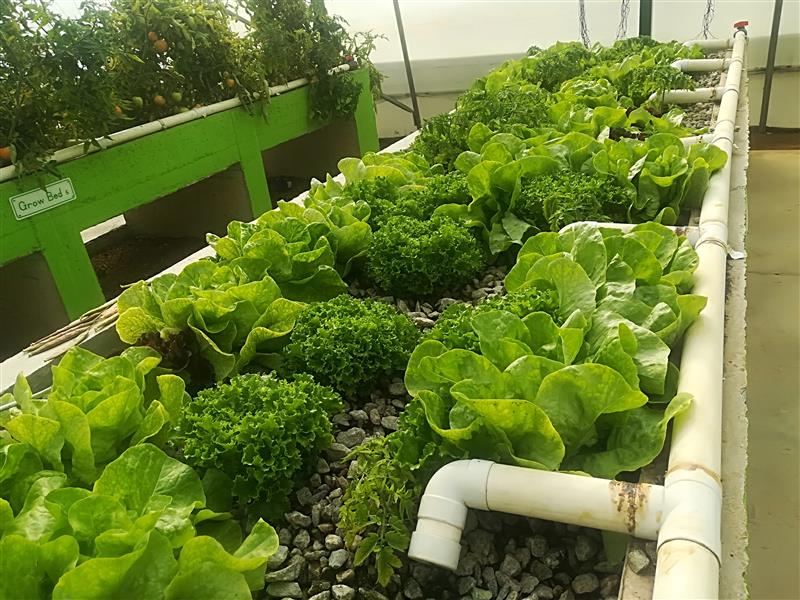
Aquaponics is a combination of aquaculture (fish farming) and hydroponics (soilless crop production in water) in a closed symbiotic system. Advantages include sustainable crop production at least 10 times higher than traditionally farmed plots of equivalent size, up to 90 per cent less water consumption than traditional irrigation, low energy consumption, year-round production of high-quality crops, no chemical pesticides or fertilisers, and flood and drought resilience.
ALSO READ:
Owl Rescue asks not to be forgotten during lockdown
It has become a critical tool for feeding communities during lockdown. The system was implemented at the school by local NGO INMED South Africa with Air Products to provide the school with greater access to fresh food, vocational skills development and an alternative learning environment. It also has become an important community resource.
A number of the parents have Philemon’s number and are able to contact him to check when he has picked the vegetables. “They can then come and collect from the school. We are also able to give them some of our fish to take home,” says Louw.
“This is so important when you consider that many of our learners relied on the school for their only hot nutritious meal of the day.”
During the lockdown period, the school has also started receiving requests for support from other impoverished families that live nearby and require help. “A lot of these people were temporary employees who worked in restaurants in and around the airport, and they have now lost their income. Others are street hawkers. So it’s a very difficult time,” says Louw.
Louw says the school has really tried to be proactive in keeping their learners stimulated, particularly their special needs children, by providing worksheets to parents through WhatsApp groups. “Unfortunately, not all families have the app. We have some families that don’t even have water or electricity, which makes it very difficult,” says Louw.
On the positive side, however, the families with WhatsApp have been very receptive, even requesting additional worksheets. The school has also put up free activities on its Facebook page.
“None of this would have been possible without our aquaponics system, which enables us to provide veggies and fish to the community. I would also like to extend a special thank you to our principal, Mr André Page and Philemon. Without Philemon I don’t know what we would have done,” says Louw.
The woman who cures the harvested catfish from the system is also making it available to families in need.
“This outstanding project clearly shows how aquaponics can address the issue of food security, particularly in such a challenging time,” concludes Jane Ogilvie, INMED South Africa operations manager.
“Our next step must be to help the community adapt and replicate the same system on a small scale at home.”
Also follow us on: