Ekurhuleni mayor highlights role of local economies
Executive mayor Nkosindiphile Xhakaza says local economic development is key to tackling unemployment and inequality, as leaders gather at the National Economic Development Summit to drive inclusive growth.
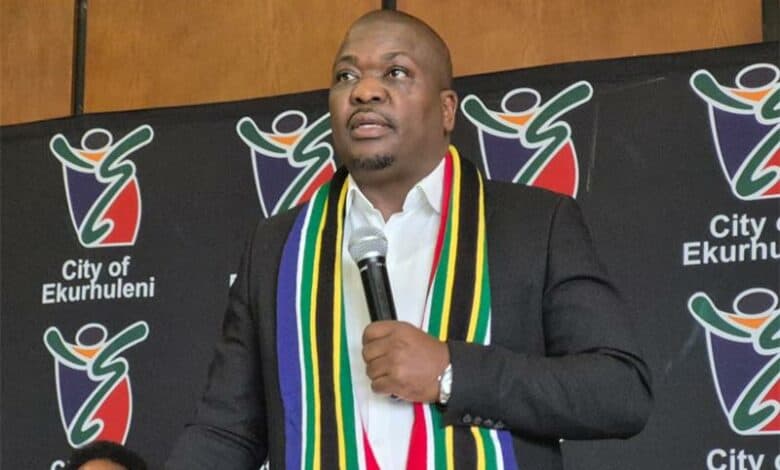
“Local Economic Development (LED) is no longer a complementary function of municipalities; it is central to our existence because it is through LED that we respond to unemployment, inequality and poverty.”
These were the opening remarks of the executive mayor of the City of Ekurhuleni, Nkosindiphile Xhakaza, at the National Economic Development Summit.
Xhakaza said vibrant local economies are key to repositioning cities and towns as engines of growth and improving the quality of life for residents.
ALSO READ: City of Ekurhuleni opens 2026 community bursary applications for students
The two-day summit, themed ‘Unlocking Resources, Infrastructure, and Skills for Local Economic Development’, began on April 15 and concludes on April 16.
It was officially opened by President Cyril Ramaphosa.
“This theme speaks directly to the core of our developmental mandate as local government. It challenges us not only to reflect, but to act decisively in building resilient, inclusive and sustainable local economies,” said Xhakaza.
“As municipalities, we stand at the coalface of service delivery and economic development.
“Our communities are not asking for abstract policies; they are calling for tangible improvements in their daily lives, jobs, functional infrastructure, access to opportunities and, most importantly, the restoration of their dignity.”
He added that economic development must be place-based, people-centred and driven through partnerships.
Xhakaza said the city has deliberately positioned Ekurhuleni as a strategic economic hub, anchored on its Aerotropolis vision, industrial capacity and logistical advantages.
ALSO READ: City of Ekurhuleni mayor appoints three additional MMCs to complete mayoral committee
“We have come to appreciate that government alone cannot drive economic development. We require strong partnerships between the public sector, the private sector, academia and civil society,” he said.
He emphasised that the city will continue engaging with big business, SMMEs and township enterprises to ensure inclusive growth. Key focus areas include enterprise and supplier development, localisation of procurement, job creation initiatives and community upliftment programmes.
“These partnerships are not optional; they are essential,” he said.
Xhakaza also highlighted the importance of infrastructure in driving economic growth.
“We must confront the reality that ageing infrastructure, if left unattended, becomes a constraint to growth. At the same time, new infrastructure investments must be strategic, targeted and future-oriented,” he said.
He added that the city is implementing infrastructure upgrades aimed at supporting industrial development, improving logistics efficiency and strengthening service delivery, including water security, energy resilience and transport networks.
“Infrastructure must not only serve today’s needs; it must anticipate tomorrow’s demands,” Xhakaza added.