
Eight years of research bring Knysna elephants' story to life
The book explores more than just the elephants. It covers elephant ecology and behaviour, including their growth, social structures and diet, as well as the ecology and history of the Knysna and southern Cape forests and personal stories from people who interacted with the elephants.
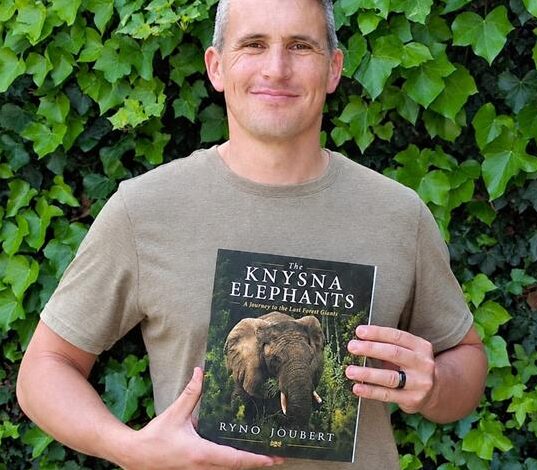
A Kempton Park teacher has turned a childhood fascination with the Knysna elephants into a published book after eight years of research on the forest giants’ history.
Ryno Joubert, a Social Sciences teacher at Gekombineerde Skool Noorderlig in Benoni, was born and raised in Kempton Park, where he still lives.
His first book, The Knysna Elephants: A Journey to the Last Forest Giants, was published on October 9, 2026.
Joubert said completing the book while continuing his teaching career was a particularly meaningful achievement.
ALSO READ: Peermont equips Ekurhuleni teachers with industry skills
“It means a great deal to me. I was born and raised in Kempton Park, where I still live, and I work as a Social Sciences teacher at Gekombineerde Skool Noorderlig in Benoni. To have published a book after years of research while continuing with my teaching career is something I am very proud of,” he said.
“I hope it also shows that, regardless of where you live or what you do for a living, a passion can grow into something meaningful if you are willing to put in the time and effort.”
His interest in the Knysna elephants began in 2001, when he visited the Garden Route on a school tour with Laerskool Bredell.
“I was fascinated by the Knysna forests and the elephants that lived there. As the years passed, I became increasingly interested in their history and the questions surrounding their survival,” he said.
ALSO READ: Teacher and philanthropist Hluphi Shili gives back to Ecaleni children
In 2018, he began researching the elephants in earnest. What started as a personal interest gradually developed into an extensive project that would take eight years to complete.
Conducting research from Kempton Park, far from Knysna, presented its own challenges. Joubert relied on historical documents, newspaper articles, scientific studies, photographs and film footage.
He also interviewed retired foresters, former SANParks employees, fern pickers and elephant trackers Wilfred Oraai and Karel Maswati.
“Many of the people I spoke to were in their late seventies, eighties or even nineties, so recording their memories and experiences was particularly important,” he said.
Gill Thomas from Sedgefield helped him access records at libraries and museums in Knysna and George, while a librarian at the National Library of South Africa in Cape Town also helped with the research.
Balancing the project with his teaching responsibilities and family life was another challenge, but he remained committed to completing the book.
The first physical copy arrived at his home on October 17, eight days after publication.
“It was a very special and emotional moment after eight years of research and writing. My wife took photographs and videos of the occasion, and my eldest son, who is in Grade 2, wanted to hold the book because it was Daddy’s book. Those little moments made the experience even more meaningful,” he said.
His family played an important role throughout the process. His wife and children shared in the excitement when the book arrived, while his parents bought the first copy.
ALSO READ: Ivory Park teacher’s rape case postponed for further investigations
Joubert said one of his most fascinating discoveries involved identifying individual elephants through historical photographs and film footage.
“I paid close attention to details such as the wrinkles on their foreheads and the worn edges of their ears. Through these comparisons, I traced the same cow across different periods and identified her as Oupoot, also known as Strangefoot. She was born in March 1970 and is now 56 years old,” he said.
He said historical records were not always complete or consistent, making it necessary to compare different sources carefully before reaching conclusions.
The book explores much more than the elephants themselves. It covers their ecology and behaviour, including their growth, social structures and diet, as well as the ecology and history of the Knysna and southern Cape forests.
It also includes personal accounts from people who interacted with the elephants and examines how the animals once ranged across parts of the Cape before hunting, habitat loss and human expansion contributed to their decline.
The book considers whether elephants should be reintroduced to Knysna, drawing on the area’s conservation history, including the 1994 reintroduction attempt.
ALSO READ: Mooifontein Primary teacher honoured for excellence in natural sciences
Joubert said he intended to provide readers with information rather than tell them what conclusion to reach.
“My aim is not to tell readers what to think, but to present historical and ecological information that will help them consider the issue for themselves. The 1994 reintroduction provides valuable historical experience that can be considered when discussing possible future approaches,” he said.
He believes the elephants’ story forms an important part of South Africa’s natural heritage.
“Their numbers declined dramatically, and Oupoot is now the last surviving member of this once larger group,” he said.
“I believe it is important to preserve their story, not only because of the elephants themselves, but also because of the people, forests and history connected to them. Once the knowledge and memories of those who witnessed this history are lost, they can be difficult, if not impossible, to recover.”
Although Joubert first visited the Knysna forests as a schoolboy and returned during the 2010s to walk trails such as Garden of Eden and Circles in a Forest, he clarified that his research did not involve fieldwork or attempts to locate Oupoot.
He returned to the area in 2025 to conduct interviews for an upcoming documentary about the Knysna elephants. His book, however, was based on historical records, photographs, film footage, scientific studies and interviews with people who had direct knowledge of the animals.
He said speaking with retired foresters and elephant trackers was particularly valuable because their experiences included observations not always recorded in official documents.
Joubert’s work as a teacher also influenced his research approach.
“Teaching and historical research both involve asking questions, examining evidence and trying to understand why things happened. As a teacher, I encourage learners to think critically, compare information and distinguish between fact and speculation. I applied the same principles during my research, especially when different sources provided conflicting information,” he said.
The project taught him patience and perseverance, lessons he hopes to pass on to aspiring writers and young people.
His advice to anyone considering a research or writing project is to choose a subject they genuinely enjoy, ask questions, consult reliable sources and remain patient when progress is slow.
Looking ahead, Joubert hopes to continue researching and writing, with a particular interest in South African military history, including the South African National Defence Force, South African Air Force and South African Navy.
ALSO READ: Ivory Park teacher gets recognition for his contribution
He is also assisting Steve McLean with historical research for a forthcoming book about the SAAF Dakota C-47. Other interests include the Quagga Project and cycads.
He hopes Kempton Park readers who enjoy South African history, wildlife and conservation will find his book engaging.
“For me, the book is about more than the last surviving Knysna elephant. It is also about the people who knew these animals, the forests that shaped their lives and the importance of preserving a remarkable part of South Africa’s history,” he said.
The Knysna Elephants: A Journey to the Last Forest Giants is available in paperback and e-book formats through Amazon, Takealot and other online retailers.