
Gauteng provincial government maintains it was ‘correct’ to dissolve Tshwane council
The Gauteng provincial government is adamant that its decision to place the Tshwane metro under administration was correct, despite the highest court in the country finding the contrary.
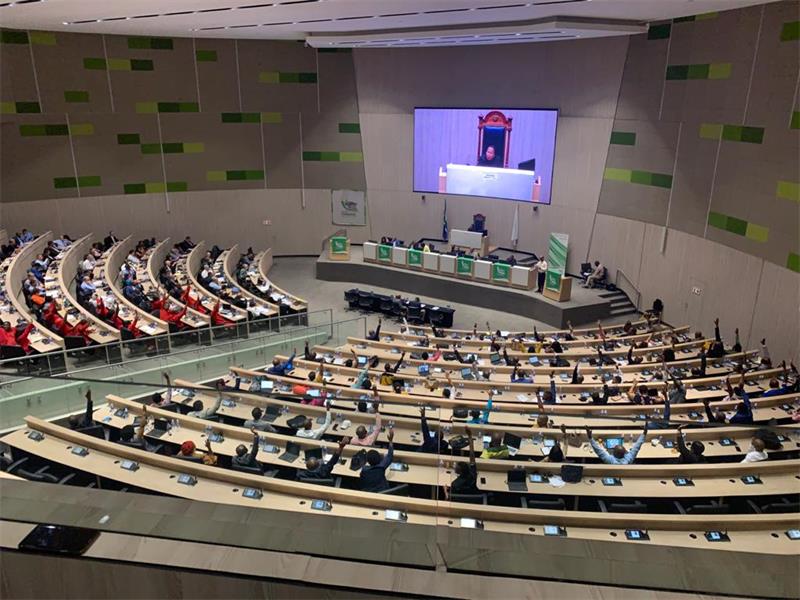
The Constitutional Court’s majority judgment penned by Justice Rammaka Mathopo which was delivered on Monday (October 4), ruled that the Tshwane council dissolution by the Gauteng government in March 2020 was unlawful.
Addressing a media briefing on Wednesday (October 6) in Sandton on the judgment, Gauteng local government MEC Lebogang Maile said they still believed that their decision in dissolving the Tshwane municipality in March 2020 was a correct move to make.
The council was dissolved in March 2020, after its failure to hold meetings which hindered the 214 councillors from fulfilling their executive duties such as passing of budgets, electing a new mayor and appointing a new city manager.
WATCH: Gauteng MEC Lebogang Maile briefs the media on ConCourt judgment on Tshwane dissolution
The metro’s mayor at the time, Stevens Mokgalapa had resigned following a sex scandal.
Maile said the provincial government was left with no other choice but to dissolve Tshwane municipality for failure to execute duty.
“We were not mad and irrational when we took the decision to dissolve Tshwane council but we referred to the law. The three sets of judgment from the ConCourt and the other courts have agreed with us that the municipality was dysfunctional.
“The first judgment was, however, of the view that the province should have invoked or explored less intrusive means (less harsh measures),” he said.
“As provincial government we stand by our decision and that is why we went through the courts and all of that [in defence of the decision to dissolve Tshwane metro].”
Maile emphasised that the ruling by the court was not a “unanimous judgment”, and that there were other justices who disagreed with the majority judgment.
This was in reference to the minority justices who disagreed with the majority, however, it was the final judgment by the court as it had five judges concurring with its conclusion.
The second judgment penned by Justice Jafta (with Justices Mhlantla and Tshiqi concurring) identified that the collapse of council meetings revealed a deep-rooted inability to address political issues within the council, leading to its dysfunctionality.

“The second judgment, therefore, disagreed with the finding made by the high court and the majority judgment that the dissolution was not appropriate because there were other steps which the province could have taken to address the issue of non-fulfilment of executive obligations.”
On the second minority judgment written by the chief justice Mogoeng Mogoeng, Maile said they took note that he agreed with the dissolution of the municipal council but contended that it was the only appropriate and effective remedial step to take in view of the municipality’s undisputed dysfunctionality.
While the three judgments by the court had conflicting views on the legality of the dissolution, Maile said for the provincial government this was a lesson that would guide them.
Regarding the court order for Maile to appoint a person or commission to investigate the Tshwane political instability between November 2019 and March 2020, he said he was yet to consult with the provincial government on the matter.
“Accordingly, and having studied the judgment, the MEC will consult the premier and exco on the way forward, especially on the order that the MEC must invoke his powers to conduct a full investigation into the cause of the deadlock and dysfunctionality of the municipal council of the city of Tshwane,” Maile said.
Maile also defended the administrators that led the municipality for seven months.

“We would like to categorically refute and dismiss the constant, unfounded attacks on the competency and integrity of the team of administrators deployed in Tshwane for the duration of the intervention.
“This was a team of technically proficient, qualified, skilled, seasoned administrators who restored stability and governance to the city of Tshwane, while working amid the unique environment of Covid-19, hence one of them is still continuing to help the city of Tshwane in the position of acting city manager.”
Read original story on rekord.co.za