Use water prudently, DWS urges Limpopians
Residents in the province are urged to double their efforts to save water as dam levels decrease.
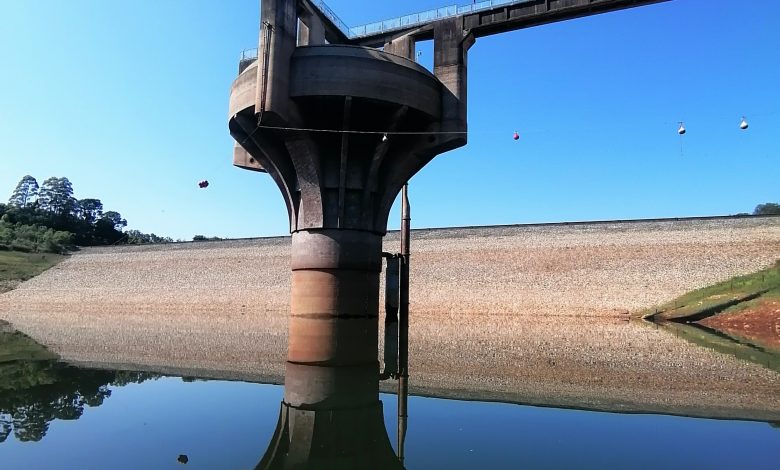
According to the department of water and sanitation in Limpopo, the provincial water storage has decline from 57,2% a week 57,0% last week.
This is however an improvement from last year when water levels were at a low of 48,7% during the same period.
The hardest hit dam in the province is Middel-Letaba which is almost dry at 0,7%.
The dam is located in the Middle Letaba River, between Elim and Giyani.
The source of the Middle Letaba river rises high in the tropical mountains of Magoebaskloof in Tzaneen.
Other dams that are critically low are Glen Alpine at 7,3%, Doorndraai at 8,6%, Ebenezer at 14,2%, and Tzaneen at 9,4%.
The biggest dam in the province, De Hoop situated at Steelpoort a stone throw away from a small mining town of Burgersfort, has declined from 89,0% last week to 88,8% this week.
This is still a considerable rise from last year’s 76,6%.
Also read: Dam levels remain dire
Flag Boshielo Dam located in Olifants River in the Polokwane water supply system is sitting comfortably at 84,6%, as compared to last week’s 85,4%.
However, this is a massive improvement from last year’s 50,7%.
A total of seven dams in the province are sitting at above 90% mark.
Among them are Mogoebaskloof Dam which has dropped slightly from 100,2% to 100,1%. Mutshedzi Dam located in the far north of the province stands at 95,7% from last week’s 92,0%.
At the same time last year it was at sitting at 63,8%.
Rust De Winter has also soared to 97,6% an improvement from last week’s 90,0%. In Vhembe district, Nandoni Dam in the Luvuvhu River is pleasantly sitting at 95,8%.
The following dams are also hovering above 90% mark: Klaserie 97,1%, Hans Merensky 100,8%, and Dap Naude at 98,7%.
Also read: No improvement on Limpopo dam levels
Albasini Dam which is located in the east of Makhado town near Tshakhuma area where horticultural crops are grown stands at 69,7% from last week’s 70,0%.
The nearby Nzhelele and Nwanedi sit at 68,4%, and 48,2% respectively. Vlugkraal sit at 72,8%, Tonteldoos stands at 60,0%, Houtrivierat 66,6%, and Warmbad at 58,7%.
In the backdrop of the decline of water levels that has been recorded, the DWS is further calling on residents to use water in a prudent manner to avoid potential problems.
Meanwhile, despite the persistent week-long rains having a positive impact on the average country’s dam levels, the DWS has warned South Africans against complacency as the current rains do not mark an end to the challenges.
“Instead, residents must use water sparingly and harvest as much water as possible,” the department said.
According to the latest national weekly report on dam levels issued by the department last Wednesday, the persistent rainfall has increased the country’s dam levels from 60,9% to 61,2% with water storage in reservoirs also increased to nearly 80%.