First ever CT scan on a live rhino SA
The Care for Wild Rhino Sanctuary and the University of Pretoria’s (UP) Faculty of Veterinary Science in Onderstepoort have conducted the first successful CT scan of a live adult rhino in South Africa.
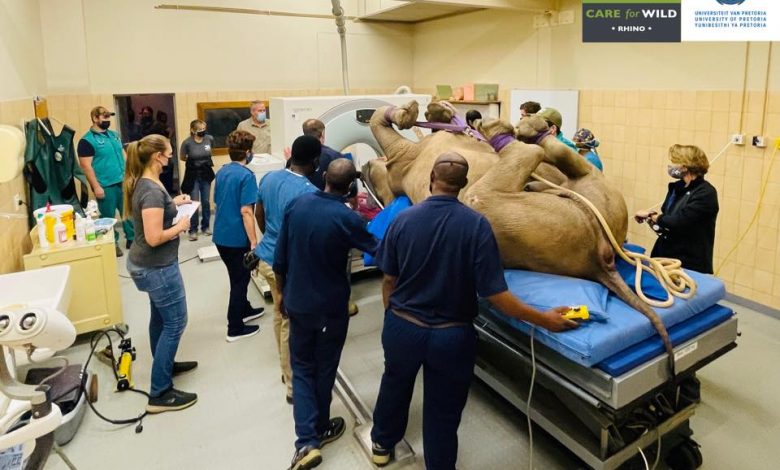
This is a milestone in veterinary healthcare and diagnostic imaging as well as rhino conservation, the sanctuary said on its Facebook page.
Orphaned by poachers in 2015, white rhino Oz, was rescued and brought to Care for Wild for rehabilitation, release and ongoing protection.
Earlier this year, rhino monitors reported an unusual swelling to his face. Care for Wild founder and CEO, Petronel Nieuwoudt consulted with veterinarian, Dr Albertus Coetzee of West Acres Animal Hospital.
After discussions with wildlife veterinarian Dr Jacques O’Dell and Prof Gerhard Steenkamp, veterinary dentistry specialist and maxillofacial surgeon at the Faculty of Veterinary Science, and with the support of Louis van Wyk of Wildlifevets.com, the decision was made to transport the one tonne bull to the Onderstepoort Veterinary Academic Hospital (OVAH) for further investigation.
Also read: KNP starts with dehorning of selected rhinos
The collaboration catalysed a landmark moment in veterinary healthcare as well as rhino care and rehabilitation with the first ever CT scan on a live rhino in South Africa.
The logistical experience, information and knowledge gained from this is phenomenal progress in the fight to save a keystone species from extinction, the sanctuary said.
“We cannot save a species alone but together we can achieve remarkable things.
In acknowledgement of the team of specialists who came together, we thank them for their passion, dedication and immense commitment,” said Nieuwoudt.
The CT scan revealed a tooth root abscess and appropriate treatment was performed.
Oz is now back at Care for Wild with his rhino crash and eating and drinking well.
The logistical experience, information and knowledge gained from this is “phenomenal progress” in the fight to save a keystone species from extinction, the vets said.