Success story of Moletele community’s farming and tourism enterprises
The Moletele community’s success in using their land near Hoedspruit productively is an example of how partnerships can lead to a successful enterprise amid a sea of failures of beneficiaries of the land reform programme.
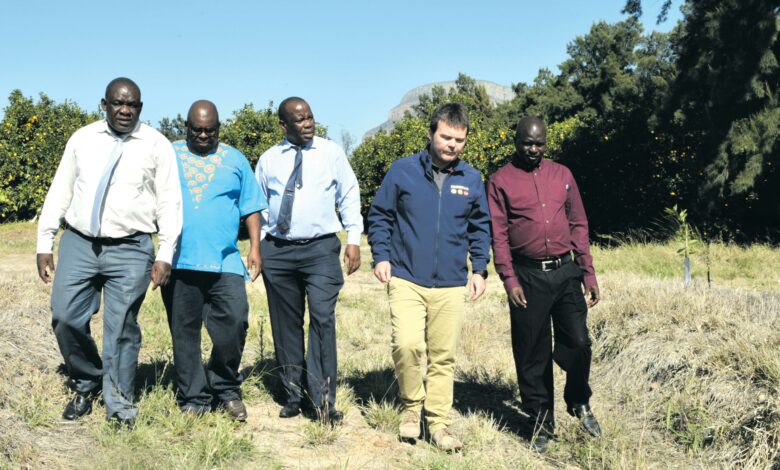
The Moletele community of 1 615 families has claims on some 70 000 hectares in the Hoedspruit area. The initial claim that was lodged in 1992 by the Moletele Traditional Authority, consisted of only 30 farms. The claims were gazette in 2004 and the first farms were acquired in 2007, leading to the registration of the Moletele Communal Property Association (CPA) which is the legal entity that holds all property on behalf of the Moletele community.
The natural boundaries of their land are the Klaserie River in the east, the Kruger National Park in the north, the Drakensburg mountains in the south, and the Olifants River in the west. The farms on its land, like much of the Hoedspruit area, benefit from good soil, water, and climatic conditions for mango and citrus production. At the time of registering the CPA, only 63 hectares were under cultivation, despite
the availability of full irrigation rights.
The orchards were ageing and there was a sub-optimal mix of cultivars and poor economies of scale.
Management costs were high and commercial viability uncertain. An initial attempt to set up a joint venture with an investor failed when the government grant earmarked to finance the community equity participation did not materialise. A subsequent attempt to create a strategic partnership with a manager to run the farms was also unsuccessful because the operator was unable to raise the capital needed for investment.
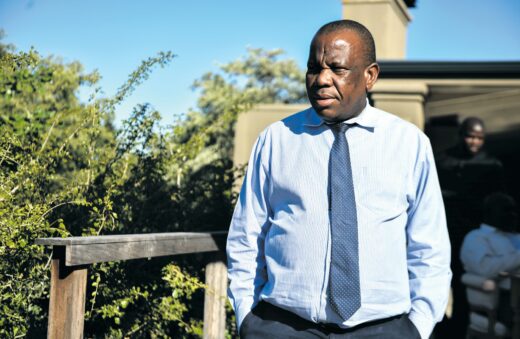
The farms faced an uncertain future and the jobs of the 44 people employed were under threat. “For some years after establishing the CPA, we tried to develop a cluster of fruit farms covering 151 hectares,” Albert Thabane, chairperson of CPA told the Herald. “Then in 2012, we approached Vumelana for support to find an investor to develop the farms.”
Vumelana is a non-profit organisation that was established in 2012 to help beneficiaries of the land reform programme put their land to profitable use by establishing commercially viable partnerships between communities and investors. An advisory team was appointed.
Four potential investment partners were identified who were already active in fruit farming and keen to expand their operations.
Also read: Tree Concert held to plant 10 000 trees in Hoedies
After running a competitive bidding process that set out the desired benefits for the association, including rental payments, equity sharing options, and employment and wages, a build-operate-transfer (BOT) agreement was entered into between the CPA and a private farming
company.
This was based on planting 115 hectares of new orchards, repairs to the bulk water supply, the replacement of irrigation infrastructure, fixed investment of just over R10m, and annual operating costs of R7m per annum,” said Thabane.
Vumelana further assisted the CPA in facilitating two partnership agreements with commercial investors for the development of a tourism lodge on the Thornybush Nature Reserve, and a farm on the Moletele Farms South East. “Community Private Partnerships (CPPs) are established between communities that acquire access to land under the land reform programme and private parties. “Typically the communities bring their land and labour and the private partner brings capital and skills to the partnership,” Thabane explained.
CPPs differ from management agreements in so far as the partners share the risks and the rewards. In management agreements, the land owner typically carries all the risk and the private manager earns a fee whether or not the venture succeeds. They also differ from typical joint ventures that demand 50:50 shareholding and risk-taking.
“CPPs are based on an assumption that the partners are unlikely to be equally capable of carrying the risk and that the balance of risks, resources, and rewards must be negotiated in the context of the particular circumstances of each case,” he concluded.