Locals shine at the tenth avocado world congress
Six representatives from Allesbeste outside Tzaneen attended and four shared their insights and research at the World Avocado Congress that took place in Auckland, New Zealand earlier this month.

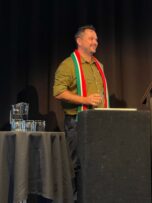
“The value for us in attending the congress and in presenting on a range of topics lies in the interaction and the opportunities created to connect with people and share information with others in the avocado industry,” says Zander Ernst. “One of the big topics at the congress was sustainability and how we change to adapt,” Ernst explains. “Improvements in our business are often achieved by experimenting and trial and error. We like to experiment, we do not just want to accept the norm and it is fun to play around and tweak what we can improve production,” says Ernst. Ernst presented talks on two topics, breeding and selecting cultivars and rootstocks set for the future of the avocado industry.
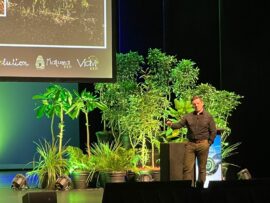
He spoke on the prosperous commercial trellising of avocado, where Allesbeste used the Maluma cultivar. “Trellising is the right thing and it is looking promising at the moment. It holds the potential to be the perfect solution for the future. We will still pay a lot in school fees, learning about trellising avocados but you cannot get an increase in yield if we keep doing the same thing,” says Ernst. Allesbeste currently has 24ha of avocados grown on trellises with three years of production data on 40 different rootstocks. Ernst explains that the research is paying off with trellised avocado trees reaching the break-even point by 2 to 3 years whereas avocados grown with conventional methods reach the break-even point after 6 to 7 years.
Also read: South Africa a leader in the avocado industry
Matt Carter did a poster presentation on the avocado flavour wheel, a project he started working on in 2020 with the goal is to communicate the complex tastes, textures, and flavours of an avocado to the market and the consumer from a purely sensory point of view. “Sensory testing is done for three reasons, to determine the actual sensory difference between samples, to describe the flavour of samples, and to determine the preference of products,” Carter explains. Avocado samples are evaluated on a scale based on taste, smell, texture, flavour, environment, and aftertaste.
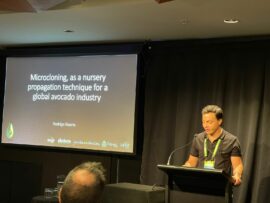
Rodrigo Duarte addressed delegates on micro-cloning as a nursery propagation technique for the global avocado industry. “We will be experimenting with tissue culture for the next 5 to 10 years. There are certain advantages to tissue culture, such as disease management. We aim to figure out the commercial value of tissue culture,” said Ernst. Donovan Lewis presented on protocol precision ensuring good quality arrivals on Maluma and growth worldwide. The Allesbeste Symposium, formerly known as the Maluma Symposium will take place in August this year. The team at Allesbeste looks forward to sharing the insights gained from the World Congress and the progress made with their research with local producers.