October is first robotic surgeon in Limpopo
"Using robotics for procedures like a prostatectomy, holds the benefit of less side effects."
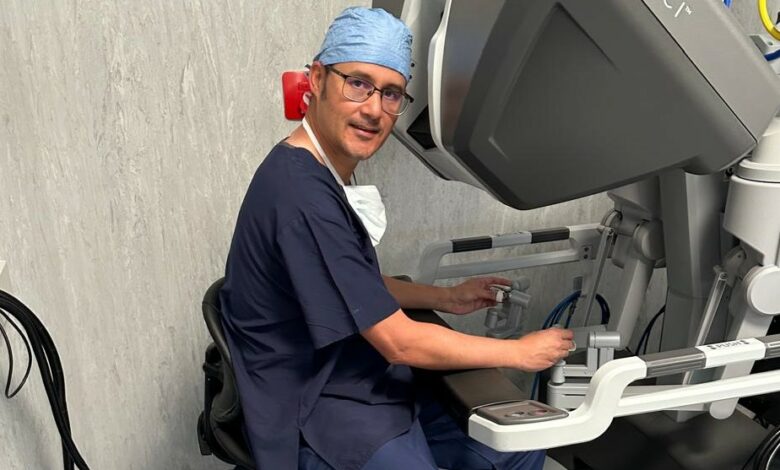
Dr Nathan October, a urologist from Tzaneen, is the first doctor in Limpopo to complete his robotic training for surgical procedures. “Surgery and procedures in the pelvis are challenging and can have many possible side effects,” explains October. He says that using the robot, in this case, a Da Vinci robot, for prostatectomy is more precise and accurate and allows patients to heal faster and have a better functional outcome.
“Some of the side-effects of this procedure that are lessened by using a robot for surgery include incontinence and erectile dysfunction,” says October. The robot currently used provides visual sensory feedback to the surgeon and future models hope to provide surgeons with haptic (resistance and pressure) sensory feedback to surgeons as well.
Also read: Rivalani becomes a Doctor of Philosophy at age 30
“Pelvic procedures and surgery such as knee and hip replacements are easier when done with a robot since these joints and bends in the human body are hard to manipulate and operate on,” explains October. He says that currently there are about five or six Da Vinci robots for surgery in South Africa and that the technology has been in the country for the last nine years.
He adds that two state hospitals in the Western Cape, Groote Schuur Hospital and Tygerberg Hospital, currently have robots for surgery. “It is pleasing to see that more medical aids are giving authorisation for robotic procedures,” he adds. He did his training on a Da Vinci robot at the Urology Hospital in Pretoria through the University of Strasbourg in France. He completed his undergraduate studies at the University of Stellenbosch and specialised in urology at Wits.