Lion conservation highlighted at Phalaborwa talk
Conservationist Marnus Roodbol shares his passion for protecting Africa’s lions and calls for urgent collective action at conservation evening,
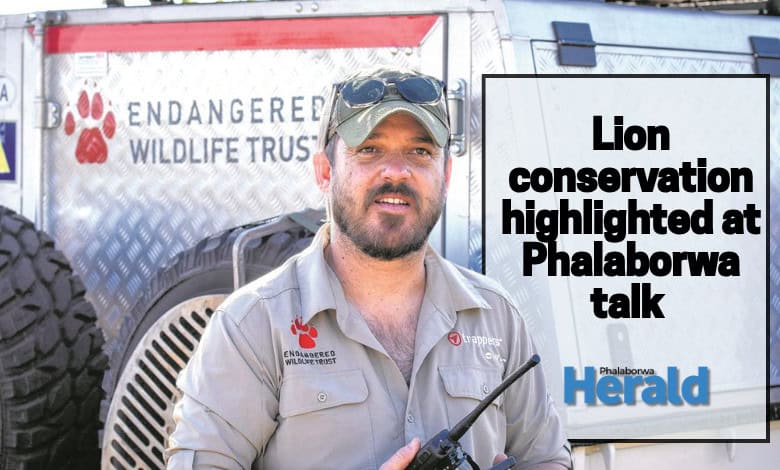
LIMPOPO – On Wednesday, May 7, conservationist Marnus Roodbol gave an inspiring talk titled “Lions: The Last Strongholds” at the Phalaborwa Conservation Evenings, hosted by the Phalaborwa Natural Heritage Foundation (PNHF) and the South African Hunters and Game Conservation Association (SAJWV – SAHGCA) Mopani branch. Herald journalist Comfort Maila asked him about his work.
In the middle of the African bush, where the roar of a lion can be felt deep inside and even makes the ground shake, Marnus Roodbol has found his life’s calling. To him, the roar is not something to fear, but it reminds him of his passion, purpose, and the strength of nature.
“I was very young when I became infatuated by lions. In all honesty, they scared me when I was a child, but that fear turned into respect and a greater understanding. I still have a healthy respect for these magnificent creatures and always will. They are one of the only animals that still excite me today and drive me to work harder to protect them. There is nothing better than sleeping in a tent with no fence and hearing lions walk past or call near your tent,” Roodbol shared.
Roodbol, who is currently the Lowveld project manager for the Endangered Wildlife Trust (EWT), has spent over a decade working to protect Africa’s lions.
He stated that his journey in lion conservation began in 2011 in Kenya’s Masai Mara, where he started by counting lions. He continued this work in Botswana, studying lion populations in various nature reserves. However, he soon realised that just counting lions was not enough.
He needed to understand the conflict between lions and people, especially in areas without fences, where lions and cattle often cross paths.
From Botswana, Roodbol moved to Namibia, where he worked with the San community living along the Botswana-Namibia border. There, he helped count lions using spoor (tracks) and also collected local knowledge through questionnaire surveys. Eventually, he returned to South Africa, where he now leads a lion conservation project in the Greater Limpopo Transfrontier Conservation Area (GLTFCA) under EWT.
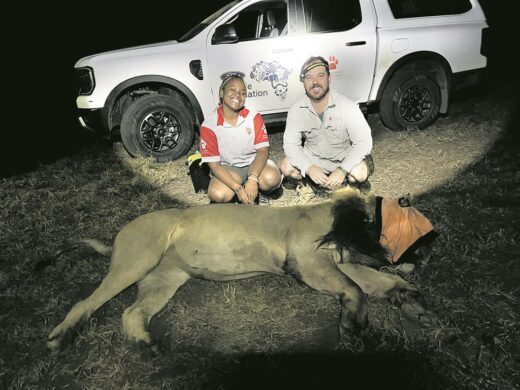
Roodbol said that his team is working closely with Sanparks and the Peace Parks Foundation to protect lion territories and support conservation goals.
“Our collaboration is to support our partners with what they need regarding lion conservation and how best to go about protecting the animals together. We are monitoring the majority of lions across this landscape via satellites and have incorporated several algorithms to assist us with responding to any events that may deem necessary,” he explained.
However, technology alone cannot save the lions. Roodbol highlighted that the greatest threats lions face across Africa today include human encroachment into their natural territories, the conversion of their home ranges into agricultural land, and the rise in bushmeat snaring in many countries. Additionally, there is both local and international demand for lion body parts, often driven by unfounded or traditional beliefs.
“The decline in lion populations is a serious concern, as it could have a major impact on the tourism industry in the future. Many jobs may be at risk, since tourism is one of the key drivers that support local communities across Africa,” Roodbol warns.
He further noted that the team has not been undertaking any major community projects at present, as other approaches are already being implemented by Sanparks and smaller nonprofit organisations. However, they do collaborate with them and offer support wherever possible.
“There are many local communities that struggle with the low employment within southern Africa, which does contribute towards their need for nourishment, such as meat. A collective approach is desperately needed with communities surrounding these parks to develop concrete approaches where all parties can benefit from the tourism and national parks.
The future of conservation lies with the community support and understanding of these magnificent creatures,” Roodbol concluded.
The next Phalaborwa Conservation Evening will be held on June 6 at The Coffee Lounge in the Lifestyle Centre. The speaker will be Dr Rion Lerm, a researcher on the state of bird communities in the Kruger National Park. For more information, call 082 614 3688.