DWS confirms Tzaneen Dam is safe after heavy rains
The Department of Water and Sanitation has dismissed social media claims of damage, stating the spilling Tzaneen Dam is structurally sound.
TZANEEN – The Department of Water and Sanitation (DWS) has assured the public that the Tzaneen Dam remains structurally sound following the heavy rains that caused the dam to spill, despite claims circulating suggesting damage to the dam wall.
DWS strongly refutes social media claims
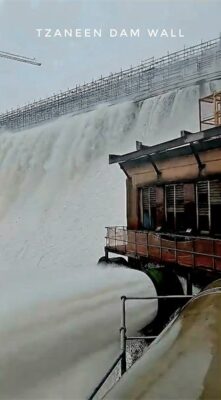
Heavy rainfall in the Tzaneen Dam catchment area led to increased inflows and controlled spilling at the dam, raising concerns among community members. The Tzaneen Dam is currently at 108.64% capacity.
Some social media reports alleged that the dam wall had sustained structural damage, claims which DWS has strongly refuted.
“The Tzaneen Dam is safe and there is no immediate risk of structural failure or danger to downstream communities,” said DWS spokesperson Wisani Mavasa. “The information circulating on social media about damage to the dam wall is misleading and incorrect.”
The dam is currently undergoing a major upgrade as part of a DWS mega project to raise the dam wall and increase water storage capacity.
Controlled releases and spillway function
As part of the construction process, the existing dam wall was temporarily lowered by four metres to facilitate the construction of a new spillway.
Mavasa explained that the temporary reduction in the wall height has, in fact, been advantageous under current conditions. “This temporary lowering allows excess water to flow safely over the dam during periods of high inflow, such as the recent heavy rains,” she said.
In addition to spillway discharge, diversion pipelines remain operational and are being continuously monitored by the appointed professional service provider (PSP) under the control of DWS.
Controlled releases are also being carried out through the dam’s sluice valves under constant supervision.
Because the dam is still under construction, some areas were exposed and not fully completed when it started to rain.
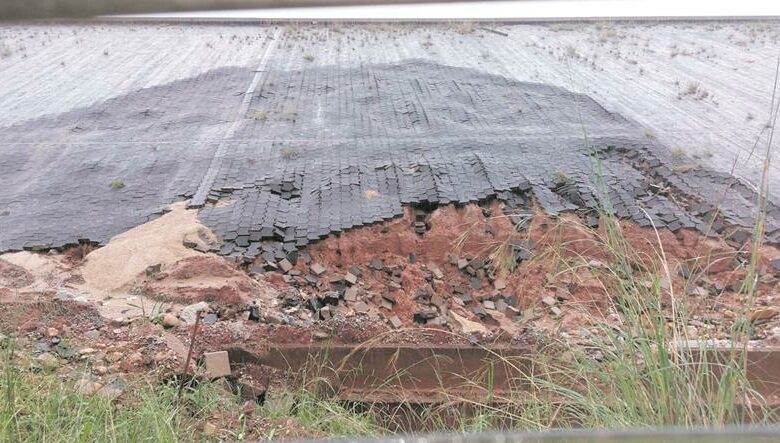
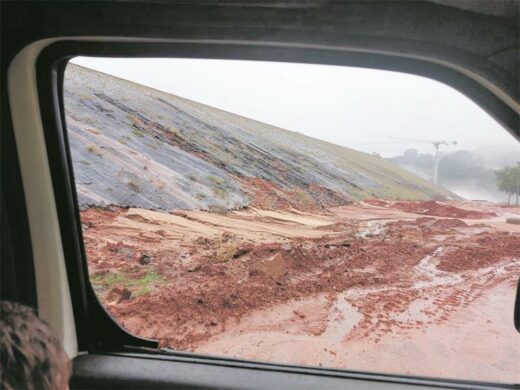
Temporary mitigation measures were put in place to limit surface erosion, but intense and prolonged rainfall led to localised erosion in certain areas. Parts of the downstream slope protection, including paving bricks, had also been removed as part of approved construction works prior to the rainfall event.
Localised erosion addressed
According to Mavasa, following inspections, localised erosion on the downstream embankment was identified. Emergency temporary protection works were immediately instructed by the project engineer to stabilise the affected areas and safeguard the dam’s structural integrity until permanent works can be completed.
“The approved professional person and the professional service provider have both confirmed that there is no immediate threat to the dam’s stability,” Mavasa added. “The dam remains fully operational and is being closely monitored in line with departmental procedures.”
She further confirmed that the emergency preparedness plan (EPP), which was compiled and updated in 2025, remains active and can be implemented should conditions escalate.
The final completion of the project will be assessed once the conditions improve, Mavasa stated.