Scorpion expert shares life-saving sting advice in Phalaborwa
SA’s leading scorpion expert Jonathan Leeming educates Phalaborwa residents on sting prevention, first response and when to seek urgent medical care.
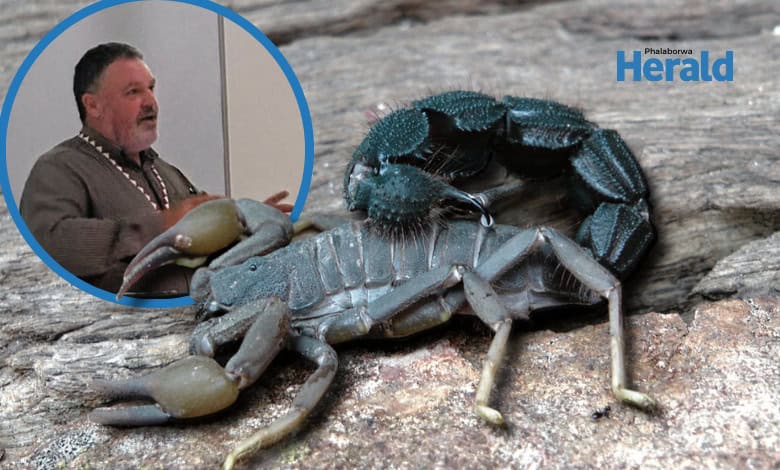
PHALABORWA – In Phalaborwa homes, where summer nights are warm, and doors are often left open, scorpions are an unwelcome but familiar sight. For many residents, these small creatures trigger instant fear. While most encounters end without harm, one highly venomous scorpion species found in the area can turn a routine night into a medical emergency, sometimes requiring antivenom and, in rare cases, claiming human or animal lives.
It is this reality that Southern Africa’s leading scorpion expert, Jonathan Leeming, is working to change, not by spreading fear, but by replacing it with knowledge.
Leeming addressed the first conservation evening of the Phalaborwa Natural Heritage Foundation (PNHF) at the Coffee Lounge, Lifestyle Centre, where residents gathered to learn about Scorpion sting first response on Wednesday, February 4.
Drawing from years of research and field experience, he reminded attendees that the danger of a sting depends on more than just the scorpion itself.
“The symptoms experienced by the patient are a result of more than just the scorpion responsible for the sting. Children under the age of eight and the elderly are at risk of life-threatening symptoms,” Leeming explained.
His presentation was based on his latest book, Essential Scorpion Sting First Response, which provides a science-based framework aimed at reducing the chances of being stung and ensuring the best possible outcomes when stings do occur for both humans and animals.
Leeming visited Phalaborwa as part of a broader Lowveld tour, during which he had been presenting courses and educational talks in communities across the region. He said the mission behind the tour is rooted in prevention and empowerment.
“My trip is focused on reducing the burden of scorpion stings. It is not only about creating awareness and dispelling misinformation, but about giving people a new, science-based understanding that will genuinely benefit anyone living in the Lowveld,” he said.
During the presentation, Leeming unpacked the different scorpion species found around Phalaborwa, explained the realities surrounding antivenom availability in Southern Africa, and guided the audience through the critical timeframes after a sting. He further explained when a sting can be safely self-treated at home and when immediate professional medical attention is necessary.
Moreover, he shared an important emergency resource: the National Poison Information Helpline, which can be contacted at 086 155 5777 for medical advice following a scorpion sting.
Leeming is widely recognised as Southern Africa’s foremost expert on spider bites and scorpion stings. A best-selling author, international speaker, and award-winning conservationist, he consults for poison information helplines, medical organisations, and academic institutions. He also serves as a panel member at major regional events such as the South African Snakebite Symposium and the Eswatini Snakebite Symposium, and is a member of the National Snakebite Advisory Group.
To further support communities in Phalaborwa, Leeming has developed free resources, including emergency medical contact details, a scorpion identification and first-response guide, and access to a free online course. These resources, along with information on how to order his book, are available at www.scorpions.co.za/lowveld.
The Phalaborwa Natural Heritage Foundation will host its next meeting on Wednesday, March 11, where Dr Ian White will speak on elephant management.