Illegal land occupation in Hoedspruit an increasing concern
Illegal land occupation in Hoedspruit is placing pressure on public services and environmentally sensitive areas, with stakeholders warning of growing risks.
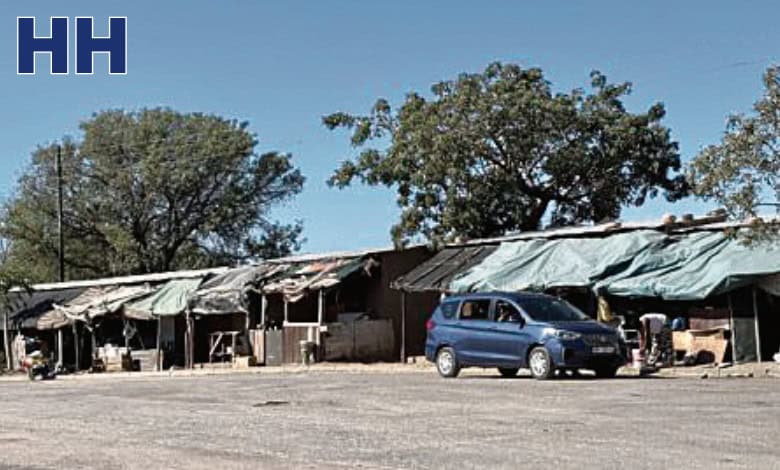
HOEDSPRUIT – Illegal land occupation has become one of the most contentious issues facing the Maruleng Local Municipality (MLM), with residents, businesses, conservation organisations, and civic groups warning that it is placing increasing pressure on public services, infrastructure, and environmentally sensitive areas.
Plastic View: A growing concern
In a report published by Kruger to Canyons Biosphere (K2C), the issue first gained widespread attention through the Plastic View informal settlement in Hoedspruit. What began as a relatively small settlement expanded steadily over the years, highlighting the area’s housing shortage while raising concerns about municipal planning, public safety, and the enforcement of land-use laws.
In November 2024, the Hoedspruit Concerned Ratepayers Association (HCRPA) approached the Limpopo High Court seeking relief over the unlawful occupation of the land occupied by Plastic View. Among its concerns was the serious fire risk created by densely packed informal structures.
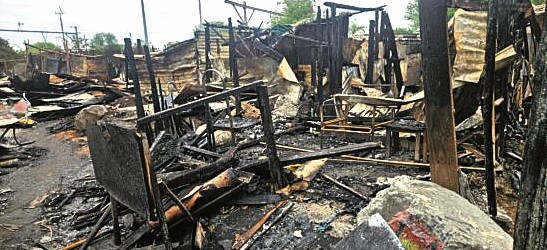
Fire destroyed most of Plastic View
K2C says in their report that those fears became reality in November 2025, when a fire, reportedly sparked by arson, spread rapidly through the settlement and destroyed most of the structures.
Although many former occupants have since relocated, the issue remains unresolved. The former market stalls in Buffel Street are now occupied by informal residents, while ratepayers continue to privately fund weekly clean-up operations in affected areas.
Watch a video of the fire here!
New areas of concern emerge
Meanwhile, new areas of concern have emerged. Informal trading stalls and shack structures have appeared within the Sanral road reserve along the R527 at Jonkmanspruit near the Blyde River bridge. Local organisations describe the growing occupation as both a humanitarian and environmental challenge.
Repeated requests by the HCRPA, Hoedspruit Farm Watch, the Blyde River Water Users Association, Sanral and the police for intervention have reportedly produced little visible progress.
Stakeholders meet, but implementation stalls
K2C writes that in March this year, representatives of the HCRPA met with officials from MLM and Sanral to discuss relocating traders from Buffel Street and removing illegal structures from the road reserve. The association also offered practical assistance, including funding gas stoves for relocated traders to reduce fire risks and providing a ticket office for the Great North bus company.
However, stakeholders say implementation has stalled, with uncertainty over responsibilities delaying action and allowing the occupation of the road reserve to continue expanding.
A complex issue
K2C said the issue requires a balanced approach that recognises both environmental protection and the need for affordable housing.
“Illegal land occupation is a complex issue that cannot be viewed through a single lens,” K2C’s Lauren Booth said. “While we recognise the urgent need for safe, affordable housing, the continued occupation of environmentally sensitive areas and public land threatens critical natural resources, infrastructure and the long-term sustainability of our region.”