The strange and wonderful future of cars…
JOBURG - The University of Johannesburg Sasol Challenge team is now being sponsored by engineering company, RS Components South Africa.
In doing so, the company is advancing the minds of young engineers in renewable energy.
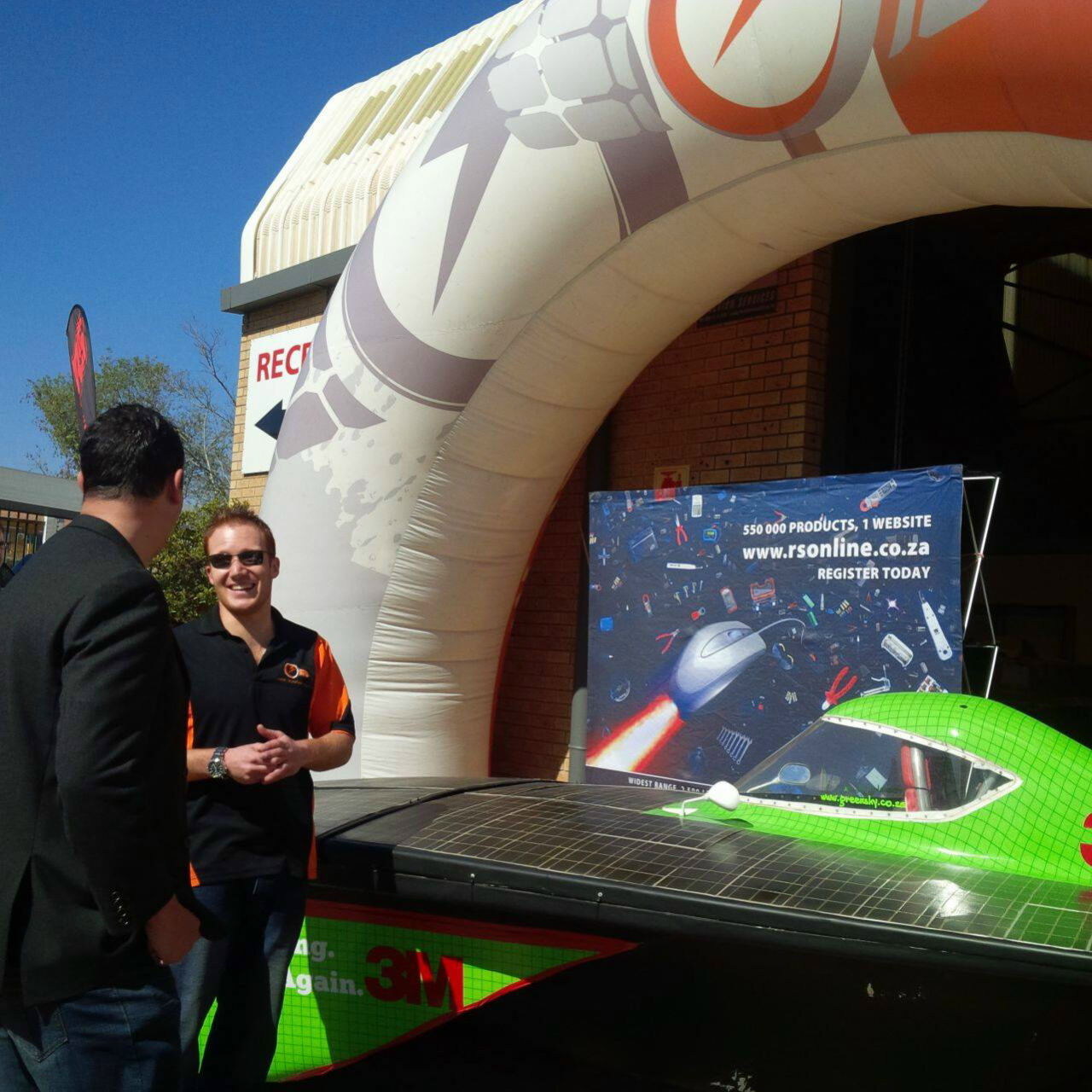
On the morning of 24 July, at the company’s headquarters there was a rather unusual-looking futuristic car parked at the entrance. “This car was built three years ago, actually,” said Warren Hurter, project manager for the university’s solar team. “It’s called the Ilanga 1, the car that’ll be racing is the Ilanga 1.1, and it will be unveiled in two weeks time. This one is the worst of the lot, it runs at 40km per hour.”
The Sasol Solar Car Challenge is an eight day racing event, which brings the youngest and brightest minds from all over the world to test their endurance and brain power. “Teams are allowed two drivers for a car and the car is built around the needs of each driver,” said Hurter.
Brian Andrew, general manager of RS Components, is optimistic about the team’s chances. “This year will be their best performance yet,” he said. “It is their third year competing. They have passion and funding. I believe they’re a lot more focused.”
The company was introduced to the team through a mutual working relationship with Resolution Circle, which is a company owned by the university which provides students with real world experience.
Jessica Lukhulu who received her honours degree at the university and is a marketing assistant at Resolution Circle, found the project to be “fun and exciting”, but admitted that following the technical language used when developing the car was a challenge. “We have a solar society on social media platforms,” she said. “About 600 students, alumni and corporate companies are part of that society.”
Tebogo Mahlalela, a holder of a bachelors degree in electrical and electronics was responsible for the programming. “I am a junior engineer and I am responsible for the telemetry of the new car,” he said. “Information, such as speed and condition of the batteries, from the car is transmitted to another car which follows behind the solar car. This information is transmitted [via wireless] and ensures that the solar car’s performance is monitored.”
Andrew added, “Innovation at the end of the day, is what we need. We’ve lost a bit of that in recent times. We have skilled engineers going overseas and the country needs engineers. They [graduates] need to be innovative and start their own companies.”