City ramps up infrastructure to tackle water challenges
Following an oversight visit in Midrand, government and city officials state they are building new reservoirs and replacing ageing infrastructure to ensure a reliable water supply for millions of residents.
Midrand and Johannesburg residents as a whole may soon see a more reliable water supply as the government accelerates efforts to stabilise the city’s ageing infrastructure.
A media briefing at the Gauteng Provincial Disaster Management Centre in Midrand on February 12 revealed that Johannesburg needs 24 to 25 new water reservoirs to meet demand, 19 of which are already under construction.
Minister of Water and Sanitation Department, Pemmy Majodina, said urgent pipe replacement and infrastructure upgrades were key to tackling leaks and system strain caused by the city’s rapid population growth.
Read more: Deputy president says Gauteng is out of the woods for now in the water crisis
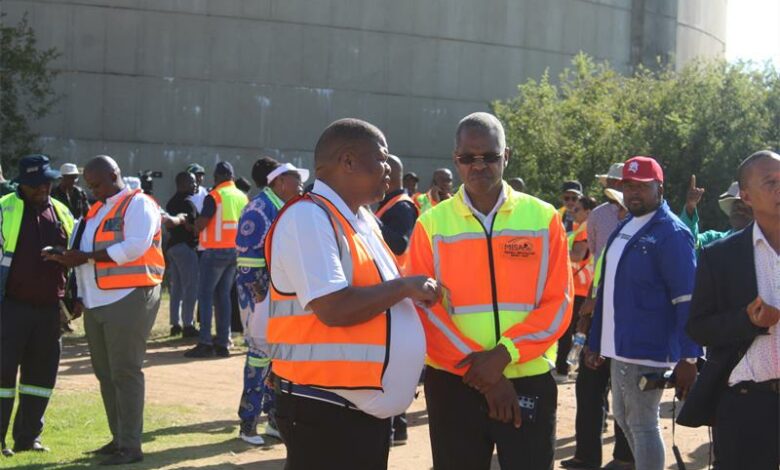
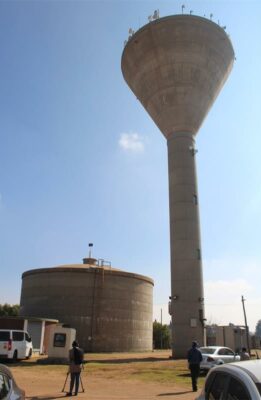
“Johannesburg will never be fully stabilised unless we address these challenges,” she said during the briefing, which followed oversight visits to Midrand critical infrastructure, including the Erand Reservoir, Johannesburg Grand Central Water Tower, and President Park Reservoir.
Majodina was joined by her deputy minister, David Mahlobo, Cooperative Governance and Traditional Affairs (Cogta) minister Velenkosini Hlabisa, Gauteng MEC for Infrastructure and Cogta, Jacob Mamabolo, Executive Mayor Dada Morero, and other officials.
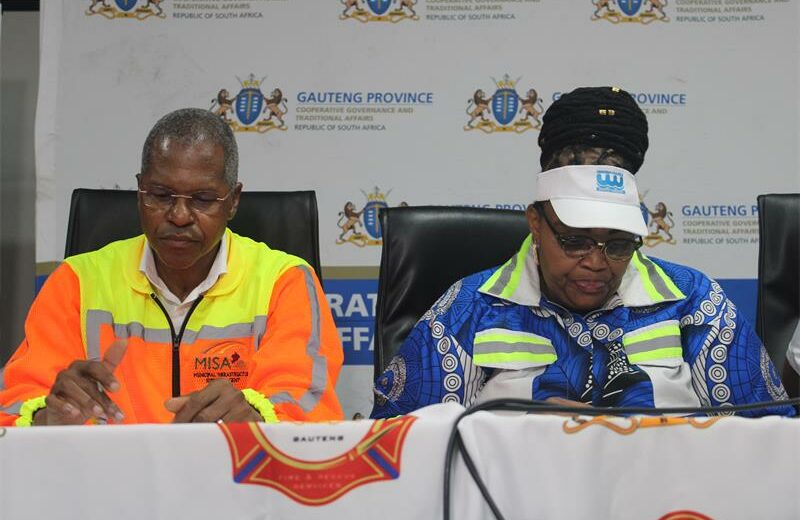
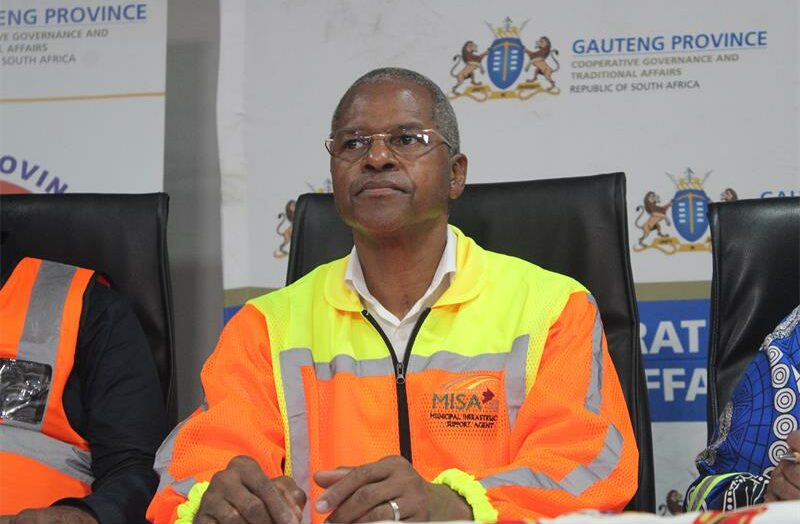
“Residents have been raising the issues that we’ve been talking about, to build more reservoirs to have enough water storage. Should such incidents of a collapse happen, at least we must have water for 48 to 72 hours. But also, they are very concerned about illegal connections and decaying infrastructure, because the infrastructure of Johannesburg is old. So the infrastructure is now giving up,” said Majodina.
“The city needs about 24 to 25 new water reservoirs. They have already started building 19 reservoirs.”
Mahlobo stressed that water supply remained under pressure due to ageing infrastructure, rapid urban growth, and non-revenue water losses.
“The system for water in South Africa remains vulnerable. In other words, we are fixing the system while we are operating at the same time… There are several actions that we must take to achieve certain outcomes,” said Mahlobo.
“We withdraw 5.2b litres per day. Just to supply the 18m citizens, whether it’s a business or what… We lose more than 2.5b [litres] of that water.”
Also read: Midrand residents demand answers as water crisis stretches beyond two weeks
Morero outlined ongoing infrastructure projects, stating that there were 12 000km of water pipes in Joburg, of which 85km were being replaced this financial year. The city is also expanding its fleet of water trucks to deliver a consistent supply to informal settlements.
Municipal Infrastructure Support Agent (Misa) steps in to support municipal projects when needed.
Hlabisa said none of the municipalities in Gauteng, Limpopo, and Mpumalanga had gone back to the national treasury asking for funds this financial year under the Municipal Infrastructure Grant [Mig].
Mig is South Africa’s largest funding programme for local government infrastructure development. Introduced in 2004, it aims to eradicate service backlogs in poor communities by providing capital for basic infrastructure.
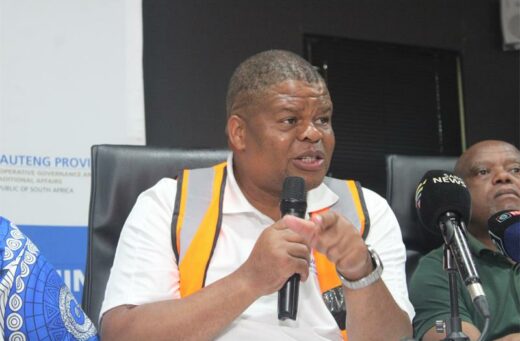
“All of them [municipalities] demonstrated that with constant supervision and support and monitoring by the provincial government, national government, and our teams at local municipalities, they have successfully demonstrated their ability to use the MIG allocation,” said Hlabisa.
Also read: Government targets 90% reservoir capacity by Sunday, amid Gauteng water crisis
“Now, in these three provinces, it’s unlikely they are losing money because they can’t use it; it goes back to none of them,” Hlabisa emphasised that municipalities failing to properly utilise their MIG allocation funds will be held accountable by Misa, amid claims that they mismanage the funds.
Misa is a South African national government component established to help municipalities develop and maintain physical infrastructure.
“But over and above, with effect from the beginning of the new year of financial year. In municipalities where we feel the municipality is unable to use the MIG allocation.
The national treasury has undergone the process of changing the legislation. Money will be taken from those municipalities to allow MISA, which is an implementing wing of COGTA, to implement MIG projects from municipalities that are unable to use the MIG allocation…”
Follow us on our Whatsapp channel, Facebook, X, Instagram, and TikTok for the latest updates and inspiration!