Elijah Mango College moves closer to KaBokweni tech hub transformation
Conflicting official timelines delay the legal transfer of a former teacher-training site set for a modern makeover.
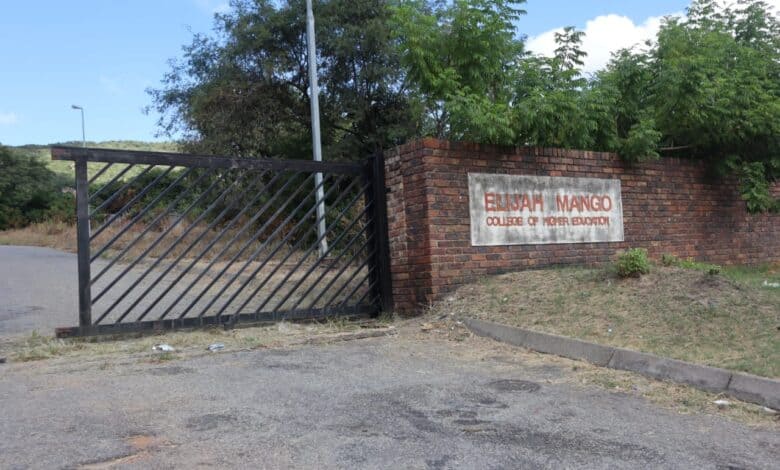
The long-awaited transformation of the vandalised Elijah Mango College into a Fourth Industrial Revolution technology hub has moved forward despite bureaucratic friction.
The former teacher-training college – once a proud beacon of education in the former KaNgwane homeland – was shut down in the late 1990s. Since then, the facility in KaBokweni has suffered severe structural decay, stripping of infrastructure and persistent vandalism, leaving local stakeholders and the KaBokweni Community Movement to conduct basic clean-ups and fight for the site to be put to productive use.
Conflicting official timelines
While community members watch the historically rich facility rot, information received by the publication revealed significant discrepancies between statements made by the Department of Public Works, Roads and Transport (DPWRT) and the Office of the Mpumalanga Surveyor-General (SG).
On Wednesday, July 22, DPWRT spokesperson Bongani Dhlamini said the department was actively redesigning and amending the official cadastral (survey) plan to create a distinct land parcel for the college.
Dhlamini indicated that once the surveyor-general approved the amended diagram, the land could finally be registered with the Deeds Office to grant the college its own legal ownership.
However, an official response issued to Mpumalanga News by the deputy director of communication services at the Department of Land Reform and Rural Development, Zithini Dlamini, confirmed that the SG’s office had already completed the amendment of the diagram, updated all affected spatial datasets and notified the DPWRT via email on June 22 – a full month before the DPWRT claimed the process was still under way.
Dlamini said the target for completion of the whole process in terms of the operational plan is 21 working days, which includes 13 working days for the endorsement and rescanning processes and eight working days for updating of the spatial dataset.
Dlamini further noted that the request for amendment of the diagram was formally lodged on May 18 via email, and the request letter was dated November 3, 2025.
Based on the records provided by the SG, the process then required the DPWRT to formally lodge the approved paperwork with the Deeds Office for title deed registration.
Clearing the issues
Responding to queries regarding discrepancies between official statements, Dhlamini clarified that while the Office of the Surveyor-General contacted the department on June 22, this was only to request additional information.
“The finalised and approved SG diagram was officially handed over to the DPWRT on July 29,” Dhlamini said, disputing the SG’s response that the diagram was emailed to the department on June 22.
When queried regarding the correspondence dates between the SG and the DPWRT, Dlamini reiterated that the amendment process, which included updating all affected datasets, was completed in June.
Dlamini emphasised that all pertinent information regarding the completion of the necessary amendment to the survey diagram, including its final transmission, has already been conveyed to the DPWRT.
Where to from now?
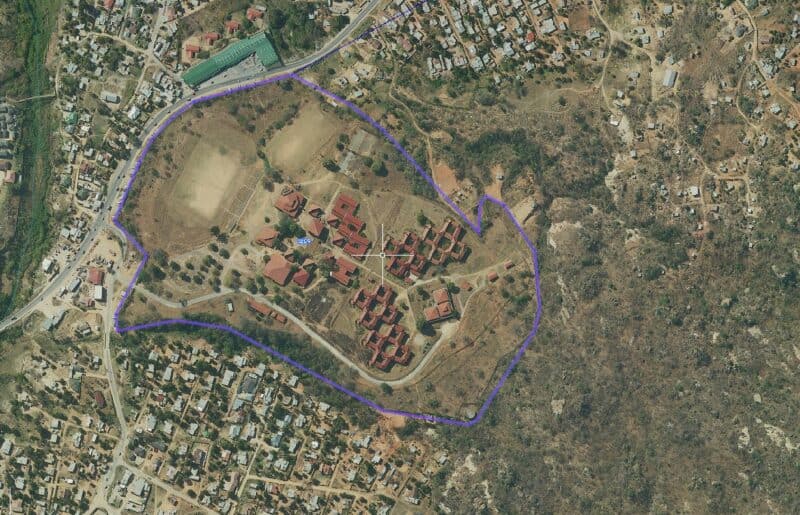
In a key legal manoeuvre to fast-track ownership transfer, Dhlamini said the property was redesigned directly within the SG’s office to bypass underlying land-vesting complications.
He said rather than undergoing a conventional subdivision of the parent property (the farm Mbuyane 960 JU), the site has been established as an independent, standalone piece of provincial state land, now officially designated as Farm 1269 JU.
“This direct redesignation allows the property to be processed and confirmed specifically as provincial government property,” he said.
While the approved diagram is now in hand, full legal transfer to the Deeds Office is far from complete.
The DPWRT outlined the required statutory roadmap currently under way, which includes:
• submission of the approved SG diagram to the Mpumalanga State Land Vesting Disposal Committee for formal state vesting confirmation
• handover of documentation to the Office of the State Attorney once finalised by the vesting committee
• formal lodging of paperwork with the Deeds Office by the State Attorney for official title deed registration in favour of the college
When questioned about operational dates, Dhlamini said project timelines remain subject to external legal processes.
“The timelines are not determined by the department, but once the process of vesting is concluded, the department will proceed with the plans,” he said.
Ehlanzeni TVET College
Responding to questions regarding the future of the site, Ehlanzeni TVET College spokesperson Mxolisi Nzimande confirmed plans to convert the facility into a high-tech learning centre, envisioned as a technology hub of the college.
He said preliminary inspections were conducted to establish the damage and follow-up inspections would be conducted by engineers to specifically assess the necessary structural upgrades and renovations, as well as estimated costs for the rehabilitation of the infrastructure. This will determine target timelines for operationalisation of academic programmes.