Putting an end to food waste
AUCKLAND PARK – The national agricultural sector loses R61.5 billion a year to food waste.
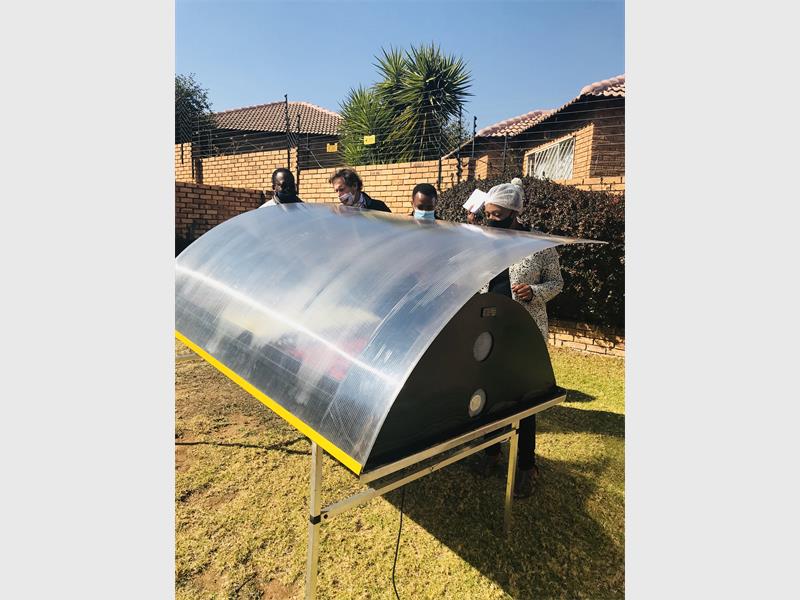
A UJ alumna is using solar energy to reduce food waste.
The University of Johannesburg’s (UJ) alumna Linda Manyeza has been hard at work attempting to create a better food system to mitigate food waste and hunger in Africa. According to a statement released by the university, UJ’s Process, Energy and Environmental Technology Station (UJ-PEETS) and Manyeza’s company Food Masters have utilised simple yet innovative technology that uses solar energy to dry food. This method will also help reduce spoilage of food and help alleviate rural poverty to aid the development of a green economy and decrease food waste.
Founder of Food Masters SA, Manyeza said, “Food waste is problematic on many levels. Firstly, a lot of discarded food is still good for consumption. Secondly, food waste ending up in landfills is creating greenhouse gases, thus contributing to climate change.” Food produce that is lost along the supply chain before it reaches the consumer as well as food that is thrown away by consumers is a global challenge.
According to UJ, thirty per cent of the food produced globally ends up as food waste. UJ stated that in developed countries food waste generally takes place on the consumer side, while in developing countries food waste arises largely along the supply chain due to constraints in technologies such as storage and cooling, but also due to logistics. “Ultimately, valuable resources are used in the production of food, water, nutrients and energy amongst others. It is a great loss when these resources are squandered,” explained Manyeza.
According to Manyeza, nearly 20 per cent of households in South Africa do not have food security and experience hunger, mainly in urban areas. Households with more children also tend to experience more food insecurity which makes such children more vulnerable. On a national economic scale, Manyeza pointed out that the South African agricultural sector contributes 2.2 per cent to the Gross Domestic Product, while nearly the same value is lost as food waste (R61.5 billion annually), excluding resource utilisation for food production.
Being able to directly impact this while helping thousands of South Africans is something which pleases Manyeza. “We are happy to be working towards drying food with solar energy and technologies which are eco-friendly. We are packing our sample solar-dried vegetables in bio-degradable packaging.”