
Small businesses buckling under load-shedding pressure
A CALL TO ACTION: To survive, they need you, their community to make the decision to support and shop local.
In 35 days, Eskom will turn 100 years old – 100 years to learn and adapt to the changing landscape of electricity usage and, yet, the nation is constantly plunged back to the days before electricity was harnessed.
The entity has been unable to live up to its mandate to its customers, who are being throttled beyond survivable limits.
The utility has even resorted to crowdsourcing in a bid to ‘supplement its existing skills base’ to ‘help address its unprecedented challenges’, Eskom says on its homepage.
The paper met with several small businesses in our distribution area to understand how they are coping with crippling power cuts. The recent Nersa-approved increase of 18.65% in tariffs will push many businesses and households to the brink.
The profiles below are a snapshot of some of the hundreds of companies that work hard, create much-needed jobs and provide services or goods to our readers.
Its purpose is to shine a light on some of the behind-the-scenes difficulties they, and others, are facing. When unexpected power outages with City Power hit, it truly becomes a nightmare.
MEDICAL
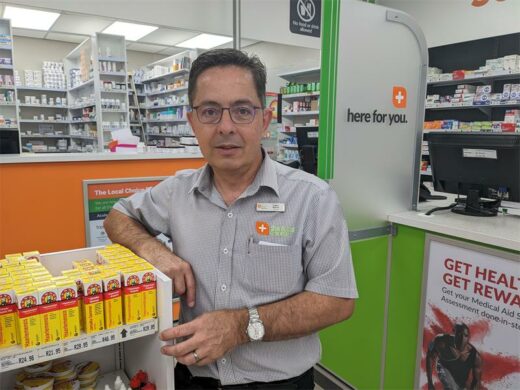
Mays Chemists in Melville was established as a business in 1932, almost 100 years ago. Cobus Botma owns Mays and the building which has several other tenants who are also feeling the sting of power cuts. “We can’t go on like this, but we have to, somehow.”
He describes his new daily routine. It is an elaborate and carefully coordinated dance to keep the generators, UPS systems, and other vital services operating often at hours while many are asleep.
“Medications like insulin need to be kept in temperature-controlled conditions and medical records need to be backed up and stored safely for us to operate and so on. It’s a nightmare because we can’t afford a larger generator which we and the building need.”
He described the difficulties other medical companies he knows of are facing and who need to run power-hungry machinery like X-rays, dental tools, and sonars to mention a few. They, he says are ‘hemorrhaging’ funds on generator fuel.
BUTCHERIES
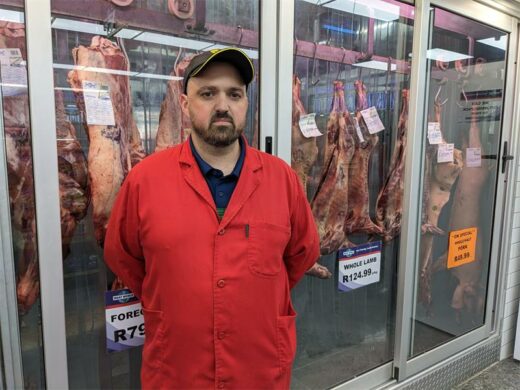
Maala’s Meat Zone, a halal retailer in Melville, and Meatworld in Northcliff are both being asphyxiated. They sell items that need to be butchered (cut and prepared), frozen, and constantly refrigerated.
Sam Kumar from Maala’s showed this reporter around his shop with an extremely limited variety of stock on sale, one display unit was completely bare. “We don’t have the resources to get heavy-duty generators to maintain our meat so we only put out what we hope to sell in a day. This really frustrates our customers as they want more variety and we just can’t meet their needs. I don’t know how long we will be open with sales dwindling and because the economy is struggling so customers have less money to buy food. It’s absolutely terrible.”
Meat World’s Richard Pombo had similar sentiments. “Every night we move all perishable stock from the front of the shop into the overnight cooling fridges because we can’t run the display fridges without spending an additional fortune keeping them on. It’s a logistical nightmare but ensuring our stock is fresh and safe for consumption is critical. We too are carrying far less stock than usual because of this which hurts the business.”
He describes how at least 20% of shop turnover is usually from the sale of whole carcasses. That, he says, has dropped off significantly as customers can’t refrigerate or freeze the meat.
Two weeks ago the store had to replace its electricity board which had exploded one evening when power was restored. Luckily, there was no paper or flammable material underneath it because the entire store could have been destroyed, had a fire started.
PERISHABLE FOODS AND FLOWERS
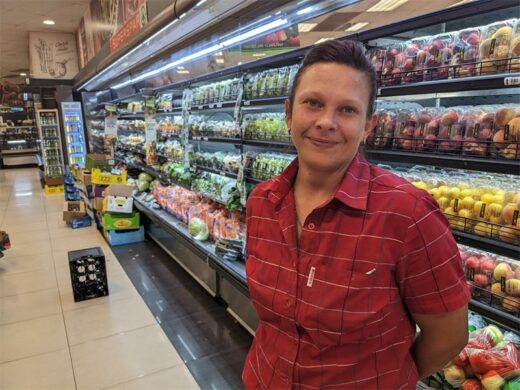
Frank De Agrela owns the Impala building in Northcliff that houses four outlets which are all electricity-hungry. He looks after Impala Fruit and Veg which obviously needs cold storage for its wares, but that comes with an enormous fuel bill to keep the generators running.
The building also houses a butcher and fresh flower and plant store so apart from eye-watering fuel costs to run the generators, they need to be serviced too. “Every 250 hours you have to maintain the hardware every 250 hours without fail. That alone costs thousands, says De Agrela.
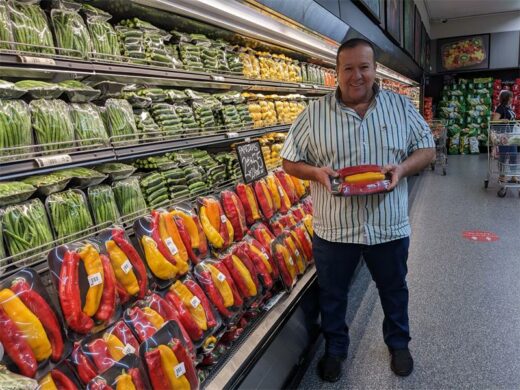
“Our tenants contribute what they can, but it’s a terrible burden on them too. Profit margins are narrow anyway because of the state of the economy and customers are across the board spending less than they were in the past. It’s a perfect storm and I don’t know how we will weather it, but we must and we will.”
Melville SPAR is no different. Store manager Bianca Hattingh said, “We use eight 25-litre drums of fuel a day for our generators to keep the store operational during load-shedding, it’s tough.”
She describes the difficult time with the pandemic and now laments power cuts as another hit to the business. During the interview, load-shedding began, bringing the conversation to an abrupt end as she left and walked into a darkened store to check that the generator was kicking in and all systems, cash point machines, and so on were operational to limit disruption in operations and service to customers.
BAKERIES

The Baker Brothers have two stores in Melville and Norwood. Generators are understandably too costly for the business to purchase as their machines use extraordinary levels of electricity.
One of the brothers, Lloyd Albert, said, “We are having to really change how we operate to try and fit in with the load-shedding schedule. We try to bake at the store that has power in the early hours of the morning and drive across town so we can trade, but it’s not always possible.” More often than not, they bake through the night before doing a full day’s trade, or like the morning the paper visited, were only able to open for customers at 11am as they could only manage to bake in the few hours the store should have already been opened. This is catastrophic for them.
“We have to survive, we have no choice, but shew, it’s really tight right now.”
ELECTRONICS
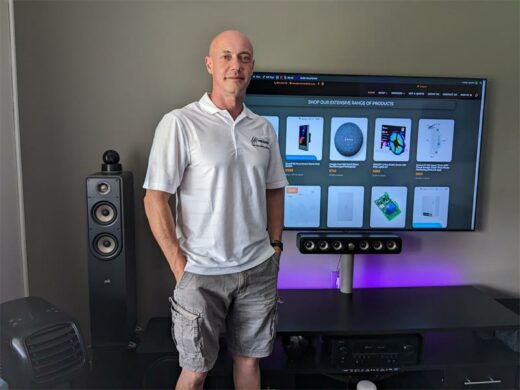
Wynand Ackerman owns his small home automation company, Untamed, in Westdene. He is in the business of smart homes, houses that have intuitive electronics to make life easier by linking devices, curtains, lighting, and so on to your phone or computer via Wi-Fi. “Customers are thinking twice about purchasing items that need both Wi-Fi and power to operate. Who wants to buy those things when they don’t have power at home for several hours a day? It’s killing me!”
SECURITY

Station Commander at Fairland Police Station Lieutenant Colonel Clive de Freitas said, “In terms of load-shedding we are one of the stations that are not fitted with a full generator backup system. We can use our small generator which powers the CSC (walk-in centre) lights and a few others around the property, but it’s frustrating.”
ALSO READ: Eskom experiences challenges with limited stock levels of mini-substations
The CPF is going to install some solar lighting around the station which will greatly assist with safely using the outer buildings and property at night. He notes that ‘during load-shedding, there is an uptick in crime with cables being stolen, gate motors removed and things like that. Criminals also know that power systems run flat when batteries die and CCTV cameras go down. This all increases our work but we are doing our best to support and assist our community.”
JP le Roux, operations manager at Tau Security, agrees with De Freitas. “Load-shedding is really tough to navigate. Apart from people’s homes and gardens being in the dark and therefore potentially less safe, it is causing havoc with our customers. Equipment that relies on batteries is being battered, gate motors, electric fences, alarm systems, and so on.”
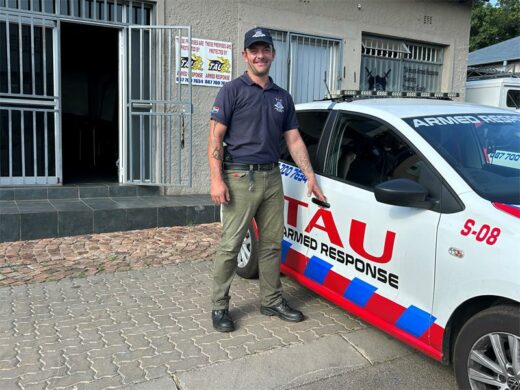
From a reaction perspective, it’s even worse, he laments. “Alarms go off far more often than normal when power is restored for a number of reasons. This means we need to be able to instantly deal with high numbers of alerts and go client- to-client checking if it is power related or an actual emergency. It’s really stressful because we don’t want to lengthen our reaction time for those who really need help. The false alarms are a nightmare operationally but we are doing everything we can to remain the first line of defence and support to our incredible customers.”
ALSO READ: I think about Eskom every day. Why don’t you?