
Parents left explaining billboard ads as officials outline limits of their mandate
“Mommy, what does this mean?” Parents know the moment well, a child spots a billboard and starts asking questions. But who is responsible when those advertisements raise questions about what children are exposed to?
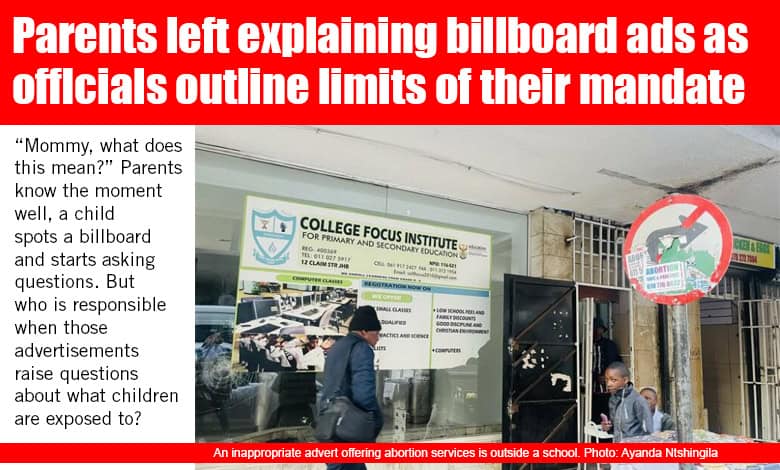
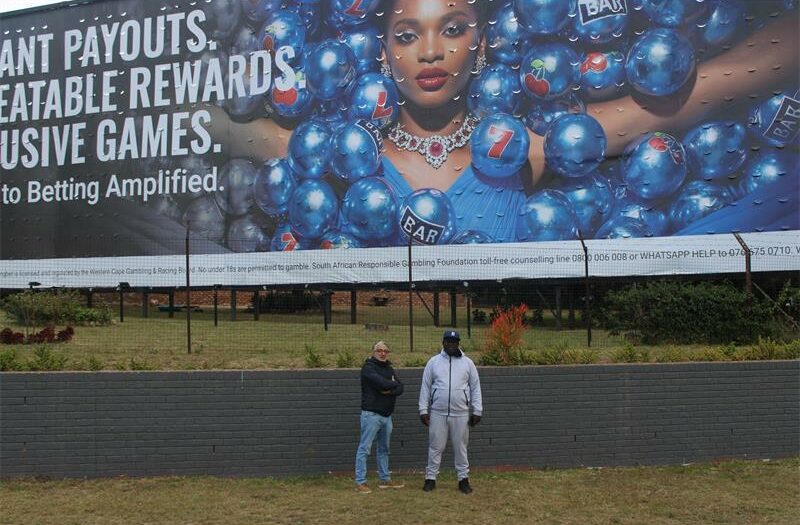
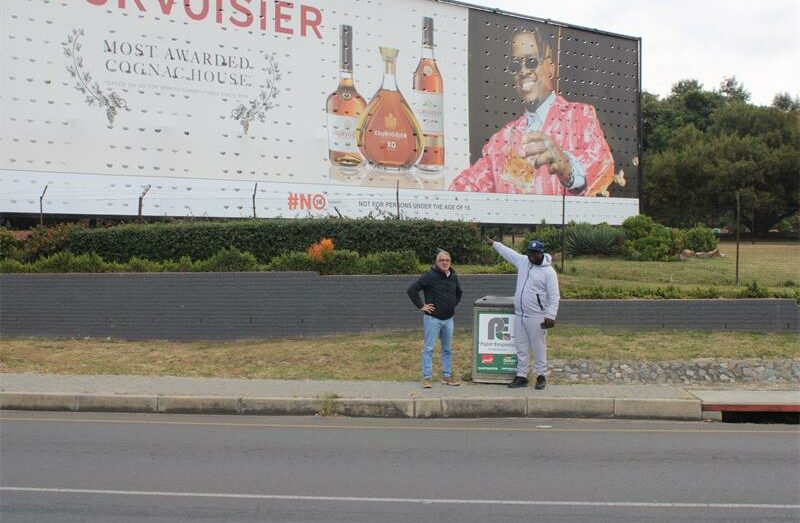
It often starts with a simple question from the back seat. A child notices a billboard along the road and asks what it means. Sometimes it is an advertisement for gambling, sometimes alcohol, and sometimes something that is clearly not meant for young eyes.
For parents, these moments can turn an ordinary drive into an unexpected conversation they may not feel ready to have.
For some parents, it raises an uncomfortable feeling about why such advertisements are placed in public spaces that children pass by every day on their way to school, the shops or home.
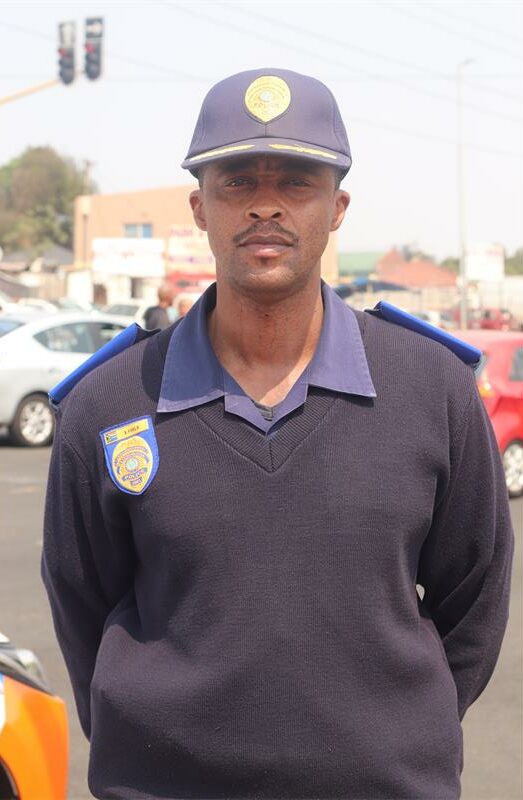
Against this backdrop, Xolani Fihla from the Johannesburg Metropolitan Police Department (JMPD) said their role in outdoor advertising is limited to enforcement of by-laws and safety compliance, not the regulation of advertising content.
Fihla said the JMPD is committed to ensuring that the city remains safe and orderly, particularly for young people, but clarified that it cannot act as a censor of advertising messages.
“The JMPD acts as the primary enforcement arm for the city’s Outdoor Advertising By-laws. Our role is primarily focused on the physical compliance and public safety aspects of advertising structures.”
Read more: DA accused ANC of trying to stop its billboard advert
This includes identifying and removing unauthorised billboards or signs that pose a physical danger to pedestrians or motorists, enforcing rules around illegal connections to municipal infrastructure, and working with Development Planning and the Johannesburg Property Company (JPC) on joint operations to remove unlawful structures.
However, Fihla said questions about whether advertising content is ‘inappropriate’ or ‘unsuitable’ fall outside its legal mandate.
“We do not have the legal mandate to act as ‘content censors’ based on subjective views of morality or suitability unless the content explicitly violates national laws.”
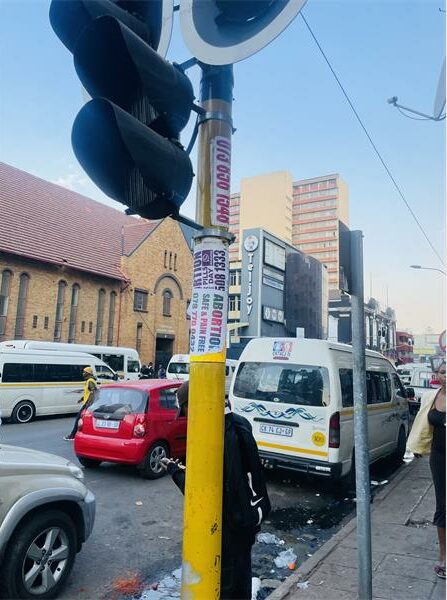
He added that intervention is only possible where an advertisement creates a public safety risk, such as distracting motorists near school crossings or violating specific zoning restrictions.
He said complaints about advertising structures must be directed to the Department of Development Planning, which keeps the register of approved sites, while concerns about advertising content should be lodged with the Advertising Regulatory Board (ARB).
Unsafe or obstructive signs should be reported to JMPD or the Joburg Roads Agency.
The City of Johannesburg, through the Joburg Property Company (JPC), also confirmed that its role is limited to compliance monitoring of structures, not advertising content.
JPC spokesperson Lucky Sindane said the city becomes involved when a billboard or sign is brought to its attention by a councillor or member of the public, after which its legality is assessed.
“It must be noted that the city has no control over the content that is advertised on the billboards. Our responsibility is to ensure that all the structures that are set comply with the city’s by-laws.”
Fihla said that school zones are treated with heightened sensitivity under the city’s Outdoor Advertising By-laws, with many residential and educational areas classified as ‘maximum control zones’, where large commercial billboards may be restricted or prohibited to limit visual clutter and protect the character of neighbourhoods.
According to Fihla, no sign may be placed where it obscures traffic signage or affects visibility at school crossings, and enforcement action can include fines, removal orders, or demolition in cases where structures are illegal or pose immediate danger.
“In some cases, penalties can be up to 12 times standard advertising rates for non-compliance.”
On the issue of content, the ARB outlines strict rules designed to protect children and regulate advertising in public spaces.
Also read: JMPD apprehends suspects in viral child abuse video
These include restrictions on gambling advertisements being directed at minors or placed in environments primarily used by children, such as schools, youth centres, technikons or university campuses.
Alcohol advertising is also restricted within 500m of schools, community centres or places of worship, with additional requirements that outdoor alcohol advertisements carry responsible drinking messages such as ‘Not For Persons Under The Age Of 18’ or ‘Be Responsible. Don’t Drink And Drive’.
The ARB Code of Advertising Practice further states that advertisements should not offend against good taste or decency, and should not contain material likely to cause serious or widespread offence unless justifiable in a democratic society.
It also stresses that advertisements aimed at or likely to influence children must not contain content that could harm them mentally, morally, physically or emotionally.
The code states: “The code prohibits the portrayal of children in any manner that is sexually suggestive, provocative, or involves sexual innuendo.”
A psychologist weighs in, saying some adverts can have a psychological impact
Jennifer King, an educational psychologist from Hope Studio and Crawford International Fourways, said that billboards and advertisements containing images that are sexualised in nature, or those that expose children to substance use and adult themes, often normalise these concepts or make them appear socially acceptable.
“The more children are exposed to these images, the more significant the impact is on the child,” she said. “Thus, billboards and advertisements that are placed in or around schools, parks and other areas frequented by children will have a greater impact on the child’s development and influence their concept of normalcy. When exposed to this type of content, children internalise these messages long before they are developmentally prepared to understand them.”
When asked what psychological or developmental effects such advertising can have on learners, King said the age of the child and their stage of cognitive development will largely determine the type of impact advertisements will have.

“Younger children, for example, are limited in their critical thinking ability and thus have less ability to critically evaluate messages containing adult content. They tend to take information more literally, and thus adult content may be confusing, anxiety-provoking, or prematurely expose children to concepts beyond their cognitive and emotional readiness. During childhood and adolescence, young people are developing a sense of self that goes with them into adulthood.
She noted that exposure to adult content has been linked to lower self-esteem, harmful body image perceptions, and unrealistic expectations around relationships and substance use. “Exposure can also cause children to feel pressure to ‘mature’ more quickly and can give the skewed perception that adulthood and maturity are centred around these behaviours.”
King said there is evidence that exposure to alcohol, gambling, or adult-themed advertising increases the likelihood of risky behaviours among young people, according to research studies.
“Research suggests that repeated exposure may contribute to earlier sexualisation and the normalisation of substance use. However, the relationship is generally considered probabilistic rather than deterministic, which means that media exposure does not cause risky behaviour by itself, but it can increase the likelihood when combined with other risk factors.
She added that children who are already vulnerable may be more susceptible to this kind of exposure. “Those experiencing emotional distress, trauma, developmental delays, or cognitive vulnerabilities may have reduced capacity to interpret media critically. In addition, especially related to family challenges, these children often have less access to adults who can offer appropriate guidance and support. As such, they may tend to struggle to distinguish fantasy from reality and are more likely to internalise stereotypes which can create unrealistic expectations.”
King suggests that local authorities should be limiting or even eliminating the placement of adverts that contain adult themes in ‘child safe’ zones.
“There should be partnerships with advertisers that encourage responsible advertising, and a greater awareness of children’s development should be created. Schools can support by creating awareness around the impact of advertising and offering media literacy programmes. In schools where funding is available, access to counselling or psychological services is immensely beneficial for children.
“It is also important that we remember the role of parents in the social development and support of children, as we cannot solely rely on learning institutions to nurture and develop children. Most of this should be happening in the home environment.”
Follow us on our Whatsapp channel, Facebook, X, Instagram, and TikTok for the latest updates and inspiration!