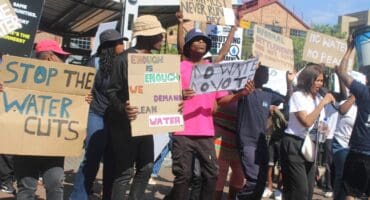
Hursthill 2 water system failure leaves residents without water for over 3 months
Residents in parts of Melville, Auckland Park and Parktown West have endured weeks of unreliable water supply, with Ward 87 councillor candidate Jonathan Thompson calling on Johannesburg Water to provide clear answers and a practical plan to resolve the crisis.
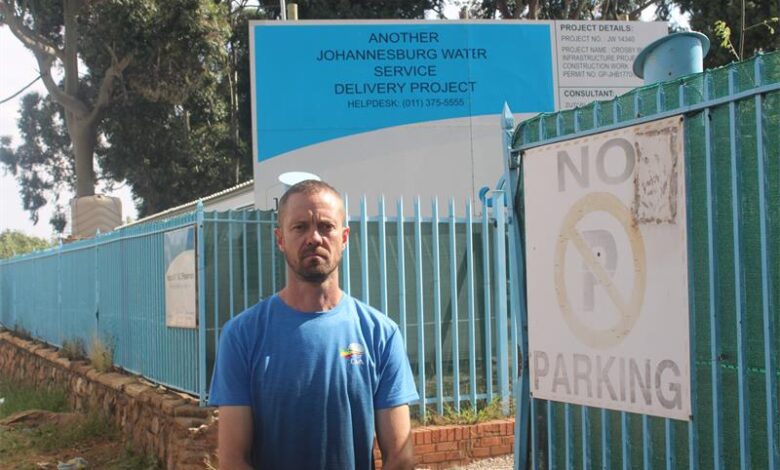
Residents affected by persistent water supply problems linked to the Hursthill 2 system have been struggling for more than three months.
This is according to candidate councillor Jonathan Thompson, who said the intermittent supply has disrupted household routines, placed pressure on businesses and created particular difficulties for elderly residents.
Thompson said the situation had persisted for about 13 to 14 weeks, although he could not confirm the exact duration. Thompson said residents had been contacting him at all hours to report when their water supply returned, only for it to disappear again. He has also been collecting reports through an online form to document the pattern of interruptions, sharing the information with Johannesburg Water (JW).
Read more: Johannesburg residents protest outside Johannesburg Water offices over supply crisis
The effects have extended beyond household inconvenience. Residents have been forced to wake up early to wash, shower, fill containers and carry out basic hygiene tasks, while businesses without alternative water sources have had to find ways to maintain their operations.
Thompson said elderly residents and people with medical conditions were among those facing the greatest difficulties, particularly when they had to carry water themselves. He added that some residents were considering selling their properties because of the difficulty of living without a dependable water supply.
JW spokesperson Nombuso Shabalala said the Commando system was particularly sensitive to interruptions and could take longer than other parts of the utility’s network to recover after a major disruption. She attributed the system’s vulnerability to ageing infrastructure, insufficient bulk infrastructure and capacity pressures associated with population growth, particularly in areas close to the city centre.
Shabalala said interruptions could be triggered by power failures affecting pumping operations, electrical problems at Rand Water facilities or routine maintenance work by the bulk supplier. The system’s recovery is also affected by the geography of the areas it serves. Shabalala explained that water generally reaches lower-lying areas first because distribution depends on gravity and pressure. When reservoirs are depleted, they must accumulate sufficient water before pumping to elevated areas can resume. However, incoming water may be consumed by customers in lower-lying areas before storage levels recover sufficiently. “Higher lying areas are generally affected for longer when reservoir levels and network pressure remain low,” she said.
Shabalala described the Commando system as a chain of interconnected infrastructure, receiving bulk water from Rand Water before it is pumped through the Crosby pump station and distributed across densely populated parts of Johannesburg, including areas in Regions B and F. A failure at any point in that chain can disrupt the recovery process, forcing the system to rebuild storage and pressure.
Thompson said he had engaged JW by email and submitted information gathered from residents to demonstrate the frequency of interruptions. He said other residents had also escalated their concerns to municipal officials and the executive mayor’s office. However, he remained dissatisfied with the explanations provided to affected communities. “Residents want a proper answer,” he said. “They don’t want to hear about bypass. They don’t want to hear about low pressure to no water. They want to hear what is going on.”
According to Thompson, he had not received a direct explanation identifying the specific problem responsible for the ongoing interruptions in the affected areas. He acknowledged that Rand Water had warned of pressure on the broader water system during a heatwave, but argued that residents still needed a clear account of what JW was doing to address their particular circumstances. He wants the utility to explain the cause of the problem, outline the interventions being considered and provide realistic timelines for implementation.
Also read: Johannesburg Water cites infrastructure decay and theft for Melville dry taps
Shabalala said JW issued daily updates on the status of its systems and implemented interventions across its network to support supply recovery. However, its response did not identify the specific cause of the repeated interruptions affecting the areas raised by Thompson, outline a localised remedial plan or provide a timeline for restoring a reliable supply.
For Thompson, the outstanding questions remain: what is causing the problem, what does Johannesburg Water intend to do about it and how long will residents have to wait for a dependable supply?
Follow us on our Whatsapp channel, Facebook, X, Instagram, and TikTok for the latest updates!