The dumpsite – it’s still a shambles
APPARENTLY the province has given R20 million for the rehabilitation the municipal dumpsite in Vryheid, and apparently R5 million of the money has already been paid to the relevant contractor. But looking at the dumpsite, the question is: for what? True, the once massive piles of waste are no longer in evidence, but a vast …
APPARENTLY the province has given R20 million for the rehabilitation the municipal dumpsite in Vryheid, and apparently R5 million of the money has already been paid to the relevant contractor. But looking at the dumpsite, the question is: for what?
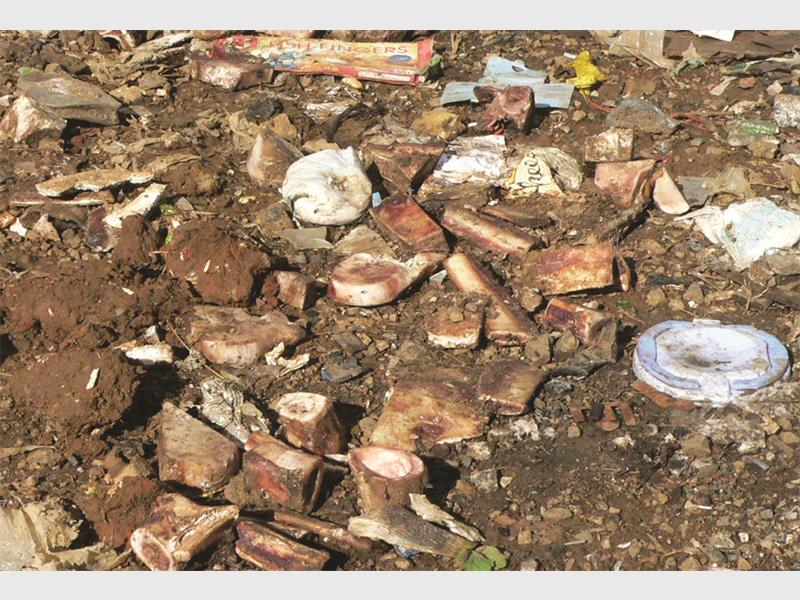
True, the once massive piles of waste are no longer in evidence, but a vast area is covered with a layer of what appears to be un-managed waste, some of it still in its plastic bags. It would seem that flattening the waste is considered treatment.
The attempt to fence the facility now almost two years ago, came to nothing. There is no fence, there is no gate, and it looks as if there is minimum (if any) supervision over the public who come there to dump waste.
True, there was no immediate evidence of tyres still being dumped there, and there is still an army of “pickers” who go through the waste and salvage any recyclable material that they can. But there is enough biological waste to attract a large flock of pied crows and white-necked ravens. This waste included on Monday a mass of marrow bones.
Theoretically and ideally, waste is thrown into huge pits called cells, and each day this waste is compacted with a especially heavy vehicle, and then covered with soil. And the next day’s waste is spread on top, similarly compacted and covered with soil until the cell is full. Then a layer of top soil allows vegetation to cover the whole area.
Vryheid hasn’t had cells excavated, within the designated site, for years. Last year, smallish cells were excavated outside the site to accommodate the huge masses of waste that had been dumped outside the site. But since then, what has happened to the waste?
If it has simply been flattened on the surface, the future problems could be immense. Already, at a rough estimate, the bottom southern end of the site must now consist of maybe four or five metres of semi-compacted rubbish. If a fire begins at the site, and most winters there is at least one fire, and it gets into the substrata of the site, it will be virtually impossible to extinguish. A few winters ago, a fire at the site smouldered for over six months.
Is this what Vryheid can look forward to at the cost of R5 million?