The realignment of Umgeni Water and Mhlatuze Water marks a new era for water services.
Following a directive from the national Department of Water and Sanitation (DWAS) recently, next year could see the creation of a single bulk water and sanitation utility for KwaZulu-Natal.
This would be a twist in the tale of uThukela Water.
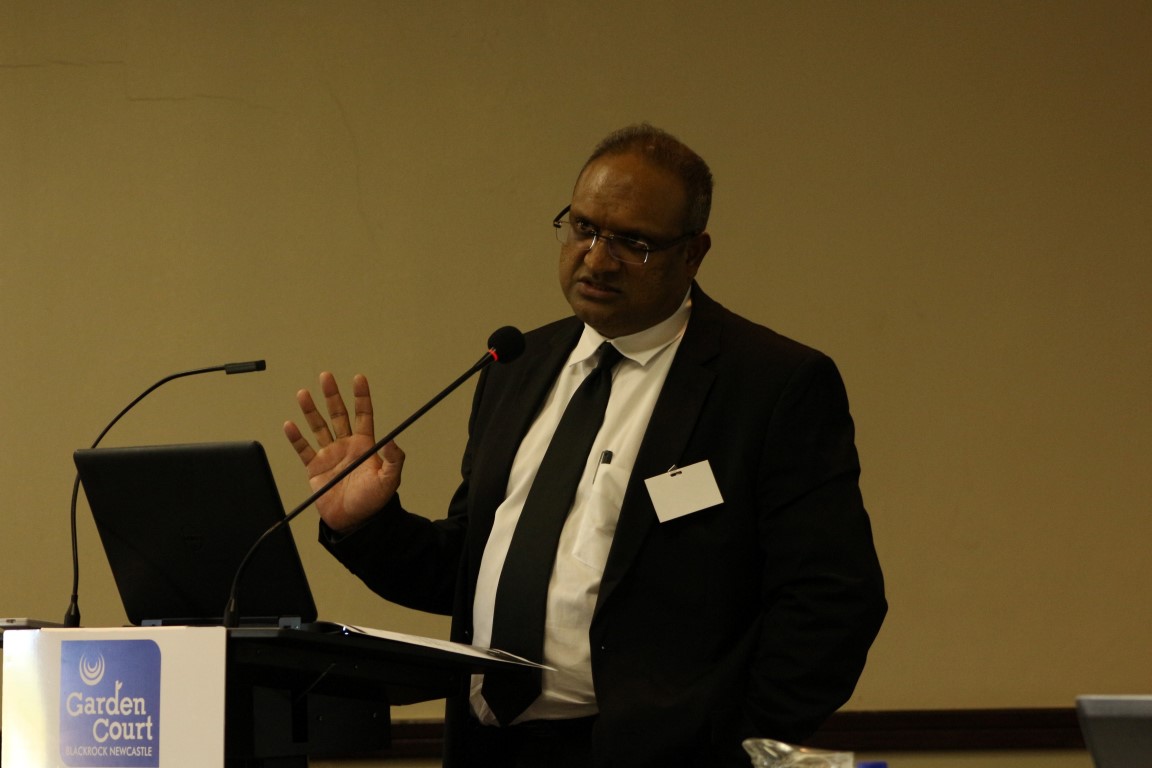
In tabling his report as chairman of the entity’s Board, Dan Naidoo provided context to information presented to stakeholders and guests at the uThukela Water annual general meeting.
He also reflected briefly on his time with the entity.
“As you will remember, there was an intervention in 2008 by provincial Cogta (Department of Cooperative Governance and Traditional Affairs), who brought me in.”
After 18 months with Mr Naidoo as administrator of uThukela Water, the Board was appointed to implement a report he had penned.
In 2012, the entity changed its function to that of a bulk water service provider.
More than three years on, the region is parched by the worst drought conditions in a century, a reality Mr Naidoo elaborated on.
“In an area with difficulty in existing water infrastructure and resources, when a drought is experienced, it places even more strain because there isn’t capacity to deal with it.”
He said a fact of drought conditions was thus – as resources diminish, it becomes harder to treat water, which results in challenges of quality and quantity.
Despite the numerous uphills, water continued to be supplied.
Commenting on the so-called master plan from DWAS, Mr Naidoo felt it imperative to gauge water security and the future of the region.
“Newcastle is an important hub in the region and needs the right infrastructure to advance.”
Mr Naidoo pointed out that although costs were a scary thing, other water sources had to be pursued, particularly when looking between 30 and 50 years ahead.
Owing to lengthy processes involved, the construction of a new dam was paramount.
“The implications of getting the timing wrong can be disastrous.”
He added that significant investments were required in terms of pipelines and securing resources, especially with the situation in the negative.
Even if it rained tomorrow, Mr Naidoo cautioned, the crisis would continue.
“The demands are far outstripping the available resources. People assume if it rains in spring it’s back to normal – it isn’t.”
Mr Naidoo touched on the one-in-a-hundred theory as well – facing the worst drought in a century, he said it was proof of climate change.
Now that the one-in-a-hundred was reached, the way forward would change.
“We have to consider all the options. Even with restrictions and model data, the Ingagane Dam level is very low. People must understand and stop habits like hosing the driveway.”
Calling for a mindset change among water consumers, Mr Naidoo said water would one day be a traded commodity.
He urged residents to save water from now with that in mind.
“You don’t drive with a leaking fuel tank or pour petrol down the driveway. Why then are pipes left to leak?”
On the financial side of proceedings, the statements were presented by Luiz Cunha, the interim managing director and current chief financial officer.
He discussed the salient points of the balance sheet.
uThukela Water has a net asset value, which is the assets bought and used to ensure water is in the taps, of more than R1,2-billion.
The figure for cash and investments is at R10 304 692.
“This is concerning, but we have managed this amount without a financial crisis.”
While debtors and other receivables amounted to more than R24-million, Mr Cunha explained this total was impaired in light of R80-million owing from the transfer of reticulation assets in 2013.
The money owed by Amajuba and uMzinyathi district municipalities was eventually ‘parked’.
With a current asset ratio of four to one in the black, Mr Cunha said un-accrued raw water charges sat at R100-million.
He called this a book debt problem, not a cash flow one.
“We can say the entity is