‘We will remember them’
At the Moths’ Remembrance Day parade on Sunday held at the cenotaph, “flesh” was added to the bones of some of these long-dead sons of Vryheid. A much larger than usual gathering of people heard researcher, Andre Ellinckhuyzen, add “life” to the stone-carved names of those killed during the wars.
A CENOTAPH is a memorial, usually dedicated to soldiers who are buried elsewhere or whose remains have never been identified or recovered.
Vryheid’s cenotaph is in the grounds of St Peter’s Anglican Church in High Street, and in its stone are carved the names of the men of Vryheid, soldiers, who died during the last century’s wars.
Vryheid’s Roll of Honour is a long one for such a small “dorp” in the north of KwaZulu Natal, and many of the wars are now so long ago that the names mean a lot less now than they did when they were originally carved into the stone. Next year, for example, it will be 100 years, a whole century, since the end of World War I. Unless a particular name is known and recognized as a family member, a great-grandfather, a great uncle, a distant cousin, the names mean very little now. They are just names.
YOU MAY ALSO WANT TO READ: Moths commemorate El Alamein
AND: Bringing history alive this Sunday
At the Moths’ Remembrance Day parade on Sunday held at the cenotaph, “flesh” was added to the bones of some of these long-dead sons of Vryheid. A much larger than usual gathering of people heard researcher, Andre Ellinckhuyzen, add “life” to the stone-carved names of those killed during the Border War, during the Korean War and during World Wars I and II. It was brought home that these men, some of them still almost boys, had at one time breathed Vryheid’s air and sipped Vryheid’s water.
Mr Ellinckhuyzen’s research is continuing, and it will perhaps one day be possible to obtain all his gathered information, including pictures of the men, in book form. This will go a long way in ensuring that “We will remember them”.
Their bodies now lie elsewhere, from Namibia (then called South West Africa), Tanzania (then called Tanganyika), Ethiopia (then called Abyssinia), Egypt, Libya, to Western Europe and elsewhere. They are remembered in November because the Armistice bringing to the end World War I, the war supposedly to end all wars, was signed on November 11, 1918.
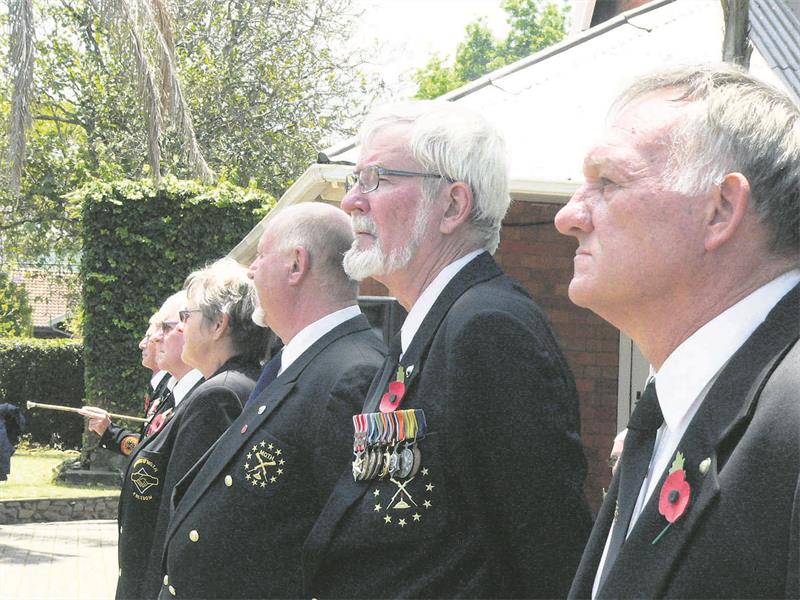
Wreaths were laid at the cenotaph by the Moths, by SAPS veterans, by three Vryheid schools whose ex-pupils were among the names carved in stone, and by as many as a dozen other people remembering those who died young in conflicts, or who survived the conflicts to die a lot older as old soldiers.
The Moths of Vryheid’s Freedom Shellhole served refreshments at the Shellhole after the ceremony, and thank all those people who attended the parade. Thanks were also extended to those members of the public who supported the Moths’ Poppy Day on Saturday, November 11. Poppies were sold at Pick ‘n Pay and AbaQulusi Spar and a generous amount of money was raised which will be donated to the SA Legion.