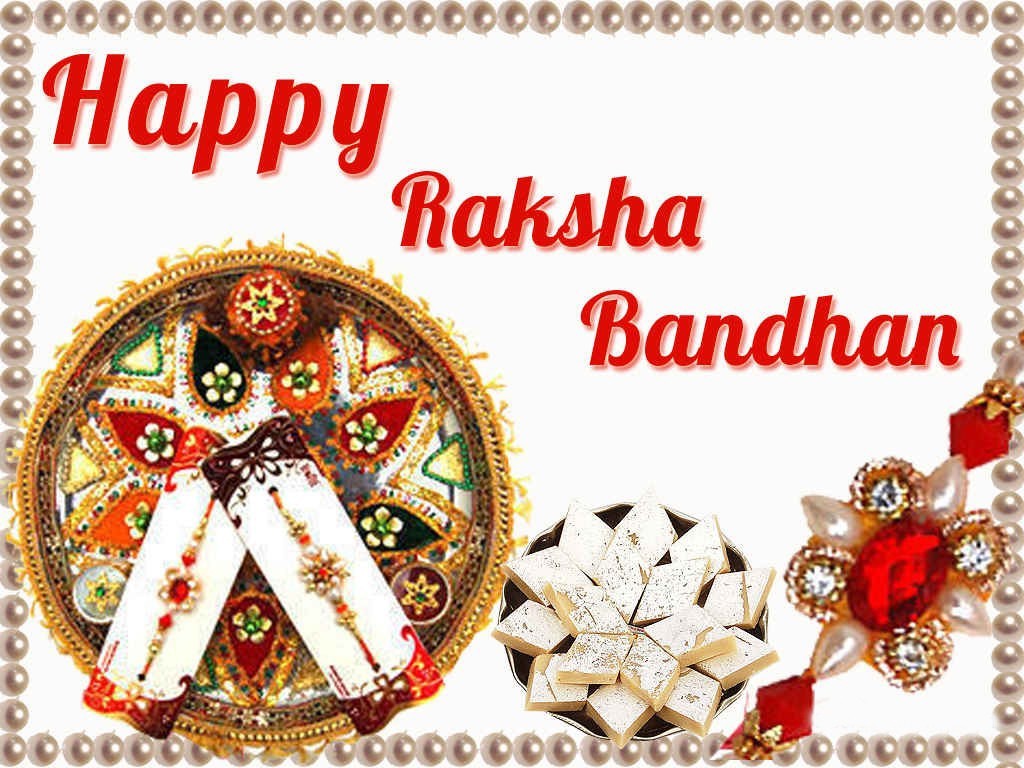
Thousands of hindu’s nationwide gear up to celebrate Raksha Bandhan today, with this in mind the Northern Natal Courier would like to wish all our Hindu readers a very happy Raksha Bandhan.
Raksha Bandhan is a term from the Hindi language which means a relationship or an association based on protection. This is a festival which has a long standing Indian heritage. More commonly known as Rakhi, this Indian festival signifies the sacred bon Raksha Bandhan is an ancient festival, and has many myths and historic legends linked to it. For example, the Rajput queens practised the custom of sending rakhi threads to neighbouring rulers as tokens of brotherhood. On Raksha Bandhan, sisters tie a rakhi (sacred thread) on her brother’s wrist. This symbolizes the sister’s love and prayers for her brother’s well-being, and the brother’s lifelong vow to protect her.The festival falls on the full moon day (Shravan Poornima) of the Shravan month of the Hindu lunisolar calendar. The festival is marked by the several rituals, which vary regionally within India. Typical rituals include:
Preparation.
Days or weeks before Raksha Bandhan, women shop for Rakhi’s, the ceremonial thread to tie around her brother’s wrist. Some women make their own Rakhi. A Rakhi may be a simple thread, woven and colorful; or a Rakhi may be intricate with amulets and decoration on top of it. Sometimes, a Rakhi may be a wrist watch or men’s wrist accessory in the form of bracelet or jewellery. Rakhi in the form of a colorful woven thread is most common. Typically the brother(s) too shop for gifts for the sister, ahead of Raksha Bandhan. The gift from the brother can be a simple thoughtful token of love, and may be more elaborate
Rakhi ritual
On the morning of Raksha Bandhan, the brother(s) and sister(s) get together, in the presence of surviving parents, grandparents and other family members. If the sister and brother are geographically separated, the sister may mail the Rakhi ahead of the Raksha Bandhan day, along with a greeting card or letter wishing her brother well. The ritual typically begins in front of a lighted lamp (diya) or candle, which signifies fire deity. The sister and brother face each other and the sister ties the Rakhi on her brother’s wrist.
Once the Rakhi has been tied, the sister says a prayer for the well being – good health, prosperity and happiness – for her brother. This ritual sometimes involves an aarti, where a tray with lighted lamp or candle is ritually rotated around the brother’s face, along with the prayer and well wishes.
After the prayer, the sister applies a tilak, a colorful mark on the forehead of the brother. After the tilak, the brother pledges to protect her and take care of his sister.
The sister then feeds the brother, with her hands, one or more bites of (desserts), dry fruits and other seasonal delicacies.
Gifts and hugs
The brother gives his sister(s) gifts such as cards, clothes, money or something thoughtful.
The brother(s) wear the Rakhi for the entire day, at school or work, as a reminder of their sister(s) and to mark the festival of Raksha Bandhan.

HAVE YOUR SAY:
Like our Facebook page, follow us on Twitter and Instagram or email us at dundee.courier@caxton.co.za. Add us on WhatsApp 071 277 1394.