KZN Health urges parents to vaccinate their children
Health MEC warns declining coverage puts children at risk
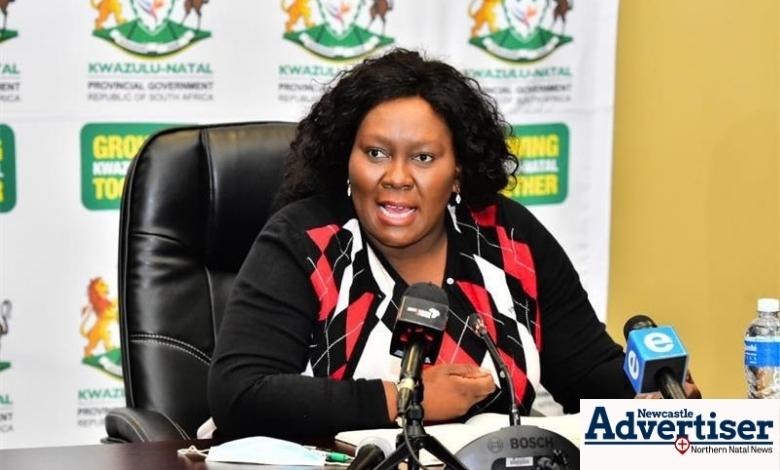
KwaZulu-Natal MEC for Health Nomagugu Simelane has called on parents and caregivers across the province to ensure that their children receive all their routine vaccinations, warning that declining immunisation coverage is putting children and communities at unnecessary risk.
Simelane addressed members of the Edumbe community at the Kanye Kanye Community Hall in Bilanyoni on September 15 as part of the department’s Isibhedlela Kubantu campaign.
While Isibhedlela Kubantu provides an opportunity to bring a range of health services closer to the people, Simelane said childhood immunisation was one of the department’s key priorities.
“We are deeply concerned about the decline in childhood vaccination coverage. Vaccination remains one of the most effective ways of protecting children against serious and preventable diseases, yet too many children are missing their routine vaccinations,” said Simelane.
Vaccination coverage declines
KZN’s first-dose routine immunisation coverage declined from 87% in 2021 to 67% in 2025.
Coverage for the hexavalent vaccine also declined from 87% to 60.5% over the same period.
The hexavalent vaccine protects children against six serious diseases: diphtheria, tetanus, whooping cough, polio, hepatitis B and Haemophilus influenzae type b (Hib), which can cause serious illnesses including meningitis and pneumonia.
“These figures should concern every one of us. Every child who misses a vaccination is placed at greater risk of becoming seriously ill from diseases that are preventable. Every missed vaccination also creates an opportunity for these diseases to spread within families, schools and communities,” said Simelane.
“The department’s target is to achieve at least 90% vaccination coverage and we are calling for a concerted effort involving parents and caregivers, healthcare workers, community health workers, traditional leaders, religious leaders, teachers and community structures.”
Simelane said the reasons children miss vaccinations vary, ranging from misinformation and vaccine hesitancy to practical challenges such as transport costs, poverty, travelling long distances to healthcare facilities and competing household responsibilities.
“We understand that families face different challenges. We also recognise that the Covid-19 period created fear and confusion, while misinformation and anti-vaccination messages spread widely. However, we cannot allow misinformation to determine the health and future of our children,” she said.
Simelane emphasised that vaccines used within the public healthcare system undergo scientific assessment and regulatory processes before being made available.
“We are appealing to parents and caregivers to seek information from healthcare professionals. Do not rely on rumours, unverified social media posts or advice from people who are not qualified to provide medical guidance. If you are uncertain about a vaccine, please speak to a healthcare worker,” she said.
Parents urged to check vaccination records
Parents and caregivers are urged to check their child’s Road to Health Booklet to determine which vaccinations have already been received and which may still be outstanding.
Simelane further stressed that childhood immunisation is not a once-off intervention. Children require vaccinations at different stages, including at birth, six weeks, 10 weeks, 14 weeks, nine months, 18 months, six years, nine years and 12 years.
Parents whose children have missed vaccinations are urged not to feel ashamed or avoid visiting a health facility.
“If your child has missed a vaccination, do not stay away from the clinic. Take your child to the nearest health facility. Our healthcare workers are there to assist you.
“They will assess the child’s vaccination history, advise you on the appropriate next steps and ensure that your child receives the protection they need,” said Simelane.
She called on traditional leaders, religious leaders, teachers, community health workers and other community leaders to help the department combat misinformation and encourage families to keep their children up to date with their vaccinations.
“The responsibility to protect our children belongs to all of us. We must work together to ensure that no child is left behind because of misinformation, fear or circumstances that can be overcome. Let us vaccinate. Let us protect. Let us save lives. A vaccinated child is a protected child,” she concluded.
The news provided to you in this link has been investigated and compiled by the editorial staff of the Newcastle Advertiser, a sold newspaper distributed in the Newcastle area. Please follow us on Youtube and feel free to like, comment, and subscribe. For more local news, visit our webpage, follow us on Facebook and Twitter, and follow us on our WhatsApp Channel.