
The South African story behind the world’s two-minute silence
Millions pause at 11am on November 11 to remember the fallen, but few know that the tradition has its roots in Cape Town and the initiative of a South African.
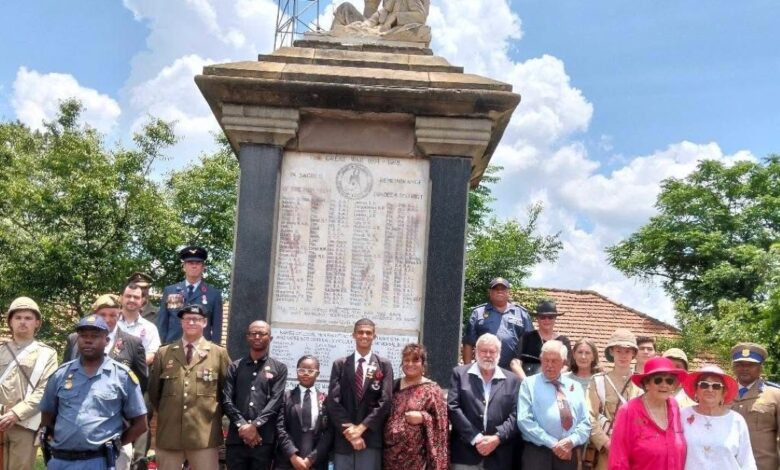
As the Dundee area prepares for Rememberance Sunday this week on November 15 (the closest Sunday to November 11) for wreath laying and two minutes of silence to remember those who lost their lives in war, it is worth knowing that this solemn international tradition has its roots in South Africa, with a remarkable connection to Cape Town and Sir Percy Fitzpatrick.
Millions of people paused for two minutes on Wednesday, November 11, to remember those who lost their lives in war. But few knew that this solemn international tradition had its roots in South Africa, with a remarkable connection to Cape Town and Sir Percy Fitzpatrick.
Work stopped, conversations fell silent and, for two minutes, people reflected on the lives lost in conflicts around the world.
Known as Remembrance Day, Armistice Day or Poppy Day, November 11 marked the anniversary of the end of the fighting on the Western Front during the First World War (1914–1918).
At the 11th hour of the 11th day of the 11th month in 1918, the guns finally fell silent following the signing of the Armistice between the Allied forces and Germany.
After more than four years of devastating conflict, the world was left to count an enormous human cost. Millions of soldiers and civilians had died, families had been shattered and entire communities had been changed forever.
The familiar two-minute silence observed today is a tribute not only to those who died in the First World War, but to all those who have since lost their lives serving their countries in times of conflict.
Did you know that South Africa helped give the world this tradition?
The story begins in Cape Town in 1918.
As news of the terrible losses suffered by South African troops on the battlefields of Europe reached home, a proposal emerged to introduce a daily period of silent remembrance.
Cape Town Mayor Sir Harry Hands supported the initiative, and on May 14, 1918, the city’s famous noon gun on Signal Hill signalled the beginning of a period of silence.
Initially lasting three minutes, the pause brought the city to a standstill. People stopped working, pedestrians stood still and the city’s trams halted as residents reflected on the sacrifices being made thousands of kilometres away.
The practice became known as the midday pause and was later shortened to two minutes.
Sir Percy Fitzpatrick takes the idea to the King
The person credited with taking the idea to the wider British Empire was South African author and politician Sir Percy Fitzpatrick, best known for writing Jock of the Bushveld.
The war had touched him personally. His son, Nugent, was killed in France in December 1917.
Deeply affected by the loss, Sir Percy proposed that an annual two-minute silence be observed throughout the British Empire on the anniversary of the Armistice.
His suggestion was that the first minute should remember those who had fallen, while the second should be dedicated to those who had survived.
He approached King George V, who accepted the proposal and issued a proclamation calling on people throughout the Empire to suspend their normal activities for two minutes at 11am on November 11.
The King’s message called for a complete suspension of work, sound and movement so that everyone could concentrate their thoughts on remembering those who had died.
The first official two-minute silence was observed on November 11, 1919, the first anniversary of the Armistice.
Sir Percy subsequently received a letter from Lord Stamfordham, the King’s private secretary, acknowledging his contribution and thanking him for an idea that had been embraced throughout the Empire.
A tradition that continues more than a century later
Another person associated with the origins of the two-minute silence was Australian journalist Edward George Honey, who wrote a letter to the London Evening News in May 1919 proposing a five-minute silence to commemorate the anniversary of the Armistice.
Although Honey’s proposal was similar in spirit, it was Sir Percy’s recommendation that was formally adopted by the British authorities.
Today, the two-minute silence remains one of the most recognised acts of remembrance around the world.
The red poppy, inspired by the flowers that grew across the battle-scarred fields of Flanders, has also become an enduring symbol of remembrance.
More than a century after the guns fell silent in 1918, the message remains unchanged.
At 11am on November 11, we pause, reflect and remember those who made the ultimate sacrifice – and those whose lives were forever changed by war.
It is a moment to honour the fallen, acknowledge the survivors and remind future generations of the enormous cost of conflict.
Lest we forget.