Pioneering epilepsy procedure offers hope to Vryheid man
Vryheid resident Riaan Lombaard undergoes a pioneering procedure as doctors investigate treatment options for his epilepsy.
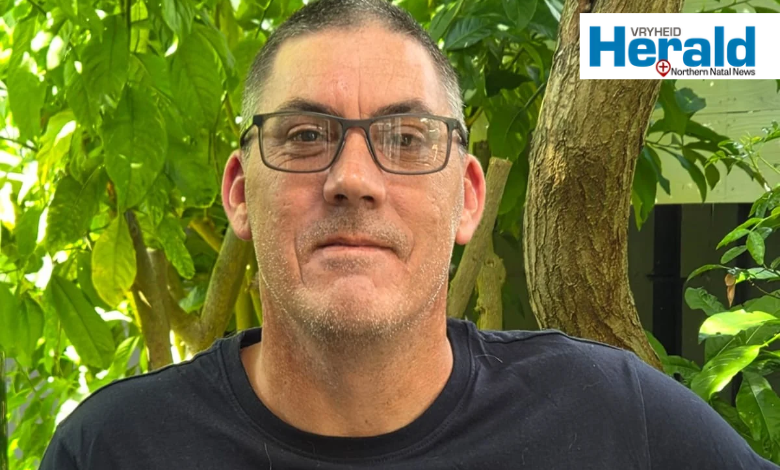
Vryheid resident Riaan Lombaard (41) has become the first patient in sub-Saharan Africa to undergo a pioneering epilepsy procedure that could help doctors pinpoint exactly where his seizures begin and determine whether surgery could offer him a chance at a seizure-free life.
Lombaard underwent the procedure at Mediclinic Constantiaberg in Cape Town on Monday, November 16. The procedure involved implanting stereo-electroencephalography (stereo-EEG) electrodes into his brain, allowing doctors to monitor activity in areas that conventional EEG tests cannot reach.
The electrodes will remain in place while doctors monitor him for seizures. This may take between seven and 10 days. By recording activity deep inside his brain, the team hopes to pinpoint where a seizure starts and how it spreads.
Liezel, Riaan’s wife, explains that conventional EEG tests can only pick up activity at the surface of the brain.
“The old-style EEG cannot read deep into the brain. This machine can read deep inside and pinpoint exactly which part is overactive,” she explains.
She says this information matters because doctors need to identify the precise area responsible for the seizures before they can choose the most appropriate treatment.
Procedure offers hope of finding the source of seizures
Lombaard has a rare form of epilepsy that has proved resistant to medication. His family is hoping that the area where the seizures originate is in a part of the brain that can be operated on safely.
Liezel says that her husband experiences gelastic seizures, also known as laughing seizures.
“He laughs and speaks strangely, but he is completely unaware of it,” she explains.
Sometimes, these seizures spread through the brain and develop into convulsions. Liezel says the family is particularly concerned about the risk of prolonged seizure activity, which she describes as extremely dangerous.
The stereo-EEG procedure is an important step in finding out what is happening inside his brain and what treatment options may be available.
The technique has been used in Europe and North America for between 20 and 30 years. Lombaard is the first patient in sub-Saharan Africa to undergo the procedure at Mediclinic Constantiaberg. It has previously been performed elsewhere in Africa, including in Egypt late last year.
The procedure was carried out by a team that included epileptologist Dr Aayesha Soni, South Africa’s first female adult epileptologist. Dr Soni trained in the technique at Western University in Ontario, Canada.
A long road to diagnosis and treatment
Lombaard’s journey to this point began on July 11 last year, when he experienced his first seizure. Since then, he has battled focal seizures and his condition has affected both his working life and his family.
In May this year, he underwent an extensive month of medical investigations, including prolonged EEG tests, MRI scans and a PET scan. Although the scans did not reveal any lesions on his brain, conventional EEG tests could not identify the exact source of the seizures.
After doctors have collected enough information from the implanted electrodes, the probes will be removed. The small holes made in his skull will then need time to heal, with doctors indicating that this could take between six and eight weeks after the electrodes are removed.
During this recovery period, the neuroscience team will assess the results and decide on the best way forward. One possibility is surgery to remove the area of brain tissue where the seizures originate, although other options may be considered, depending on what the findings show.
For Lombaard and his family, the hope is that the results will identify a treatment that can bring the seizures under control. He will have to return to Cape Town for the next stage of treatment.
Family appeals for help with ongoing costs
Lombaard works as a heavy-duty truck mechanic at Power Train Vryheid. Because of the risk of seizures, he is no longer allowed to drive or test-drive trucks and cannot be left unsupervised at work. This has also meant losing overtime income that previously helped support the family.
Riaan and Liezel have three daughters, the eldest aged 12 and the younger two 11-year-old twins.
Although their medical aid and gap cover assist with clinical procedures, the costs of travelling between Vryheid and Cape Town, accommodation and daily expenses remain a major challenge.
The family needs to make provision for transport and accommodation close to Mediclinic Constantiaberg, as well as food and local transport while he is away. His treatment and recovery will require further time in Cape Town, and the family has already used its savings over the past year. Credit card debt has also accumulated through travel costs and trips to the emergency room.
The family is appealing to the public for help, as Lombaard continues with the next stages of his treatment.
Those who would like to support can contribute through the BackaBuddy campaign at:Get Riaan to Cape Town and make medical history – BackaBuddy
Direct donations can also be made to: account name: Riaan Lombaard; bank: FNB; account number: 62441653418.
The news provided to you in this link comes to you from the editorial staff of the Vryheid Herald, a sold newspaper distributed in the Vryheid area.