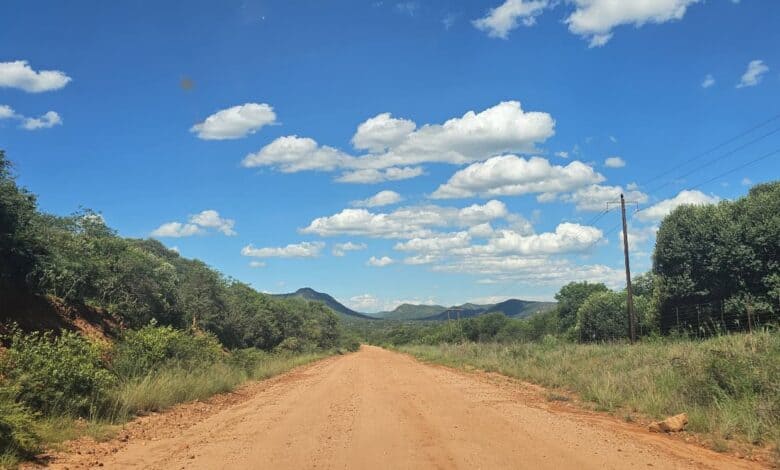
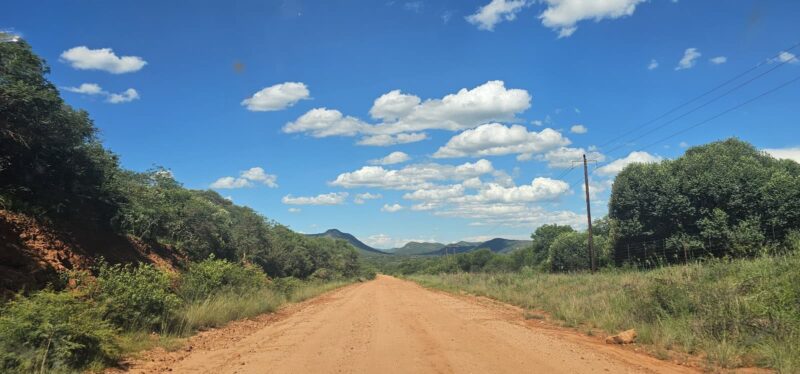
Many visitors arrive expecting to see a giant hole in the ground. Instead, they find rolling mountains, quiet rivers and beautiful countryside. So where is the Vredefort Dome?
The answer is all around them. Horizon to horizon. And what can be seen is only the core of a much larger structure that stretches from Johannesburg to Welkom sone 300km to the south. There’s no hole. And the name Vredefort Dome is a misnomer.
That’s a puzzle and is exactly why every VDOME tour begins with a briefing.
The Vredefort Dome has the same international status as Mount Kilimanjaro, Victoria Falls or the Grand Canyon. It is one of Earth’s greatest natural wonders. The difference is that it is so enormous, so ancient and so deeply eroded that it cannot be appreciated at a glance. It is named for the fact that Vredefort is closest to the centre and what’s here is a dome in the geological sense: a vast plug of granite in the Earth.
In many ways it is a “ghost crater” whose story has to be brought to life.
That is what I aim to do.
Recently, new findings point to the role of such massive cratering in Earth’s past as actual makers of our planet. Its size and bulk, its oceans and continents, and life itself, seem to have arisen from space rocks and ice bodies.
As a science writer, journalist and lecturer with many books to my name, I have spent years learning how to communicate complex ideas in clear, accessible language. Using maps, rock specimens, archaeological artefacts, video clips, diagrams, demonstrations and panoramic viewpoints, I help visitors imagine the unimaginable.
Suddenly the mountains become the shattered roots of a colossal impact. The Vaal River becomes part of an extraordinary geological story. The rocks begin to speak.
The story does not stop with geology. Working with historian colleagues and other researchers, I have also been exploring the remarkable human history of the area. Long before it became known as the Vredefort Dome, it was remembered by African communities as Ntsoana-Tsatsi – The Place of the Sun.
Increasing evidence suggests that South Africa’s interior was linked into an ancient African trading network stretching northwards to the East African coast. I like to describe it as an African Silk Road, through which skins, ivory and perhaps even gold moved towards ports such as Dar es Salaam, while beads, porcelain and other luxury goods from India and China found their way inland.
The Dome was never an isolated wilderness. It was part of a much larger world. Indeed, of the solar system and the universe which formed us.
I have just completed the second draft of a new book on the Dome and am working on the final draft. The journey of writing it has surprised even me.
Some 20 years ago when I first started guiding here, I wanted simply to demonstrate that the Vredefort Dome is indeed the world’s best preserved large visible meteorite impact structure. Then I realised it is better understood as a ghost crater, vastly eroded over two billion years, yet still immensely impressive.
You can see major parts of it from the ground and from the river, by driving, rafting or hiking. But it requires background information to reveal its amazing truths.
Now I am exploring exciting new research suggesting the original impact structure may have been even larger than previously believed and that impacts of this kind helped shape the very continental structure of our planet.
Perhaps the greatest legacy of all is that the impact exposed the richest gold deposits on Earth. That changed the history of South Africa forever, creating extraordinary advances in mining, engineering and science while also giving rise to profound social, economic and political struggles.
My working title evolved with my understanding: first Crater of Catastrophe, then Crater of Conflict, and finally Crater of Gold. Gold became the unifying theme linking catastrophe, conflict, wealth, science, heritage and humanity.
Join me for a day tour, educational briefing, research visit or school programme, and discover why this remarkable landscape deserves its place among the world’s greatest natural wonders.
For more information on the Vredefort Dome contact 084 245 2490 .