
Mindblowing facts about the sea
Next time you’re in the ocean, think about the one million bacteria you’re swallowing with every milliliter of ocean water.
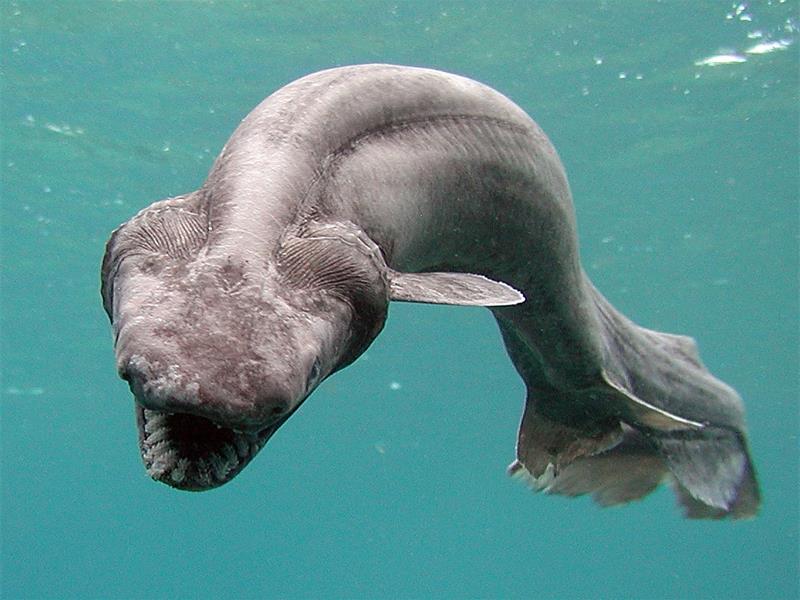
The sea remains a mystery because we do not know it like we know land.
Here are some mind-blowing things you didn’t know about the sea. Some of them are real creepy …
• The ocean covers 71 per cent of the earth’s surface, it has insanely deep points that are full of complete darkness and is home to some of the coolest creatures on the planet.
• There are underwater waves, lakes and rivers at the bottom of the ocean and there are even trees with leaves to compliment these underwater rivers. Due to different levels of water density, there are parts of the ocean that have their own flowing rivers and lakes with crashing waves. One particular underwater river off Mexico is actually a mix of salt water and hydrogen sulfide, this makes the water much more dense than regular seawater and it sinks to the bottom, forming its own distinct mass that flows like a normal river.
• There are underwater forests complete with their own logging industries.The underwater tree industry is estimated to be worth around $40 billion thanks to being preserved by cold water. This preservation has kept away insects and stopped the wood from rotting, making it highly sought after timber for craftsman.
• The deep sea is the largest museum on Earth and the Titanic is just one of the worlds historical artefacts underwater. There are more artefacts and remains of history at the bottom of the ocean than in all of the worlds museums combined. From sunken ships, to crashed planes and even entire cities.Off the coast of Cuba, researchers believe they have found an ancient American city that often gets spoken about in Mayan stories.But no, it’s not Atlantis.
• Much of sea life is invisible to the naked eye. Next time you’re in the ocean, think about the one million bacteria you’re swallowing with every millilitre of ocean water.
• Earth’s longest mountain range is underwater Mauna Kea in Hawaii is more-than-half submerged. This mountain range is over 56 000 kilometres long and runs through the Atlantic Ocean and into the Pacific and Indian Oceans.The worlds tallest mountain, Mauna Kea is more than double the height of Mount Everest, with more than half of that height underwater.
• Around 90 per cent of the ocean is still unmapped and we may never map it all. We have better maps of Mars than we do of the ocean. The way water warps light makes it hard to use traditional imaging equipment, and its different atmospheric pressures don’t allow us to go as deep as we need to in most parts of the ocean. Plus it is very big.
• Two thirds of marine life are unknown. We know that there’s great white sharks, blue-ringed octopus’ and clown fish, they’re only part of the 700 000 to one million species that live in the world’s oceans. Out of those, two-thirds have yet to be named and described. While that sounds both insanely cool and scary, there probably isn’t any giant monsters lying deep in the ocean, but rather crustaceans, molluscs and other small creatures. There may also be eight species of whales and dolphins still yet to be identified.
• Around 80 per cent of sharks are unable to hurt humans in fact, only 32 out of 350 species have been documented in attacks on humans.
• There are both underwater spiders and underwater birds. If you thought you were escaping the horrendous terror of spiders when you jumped into the water, you’d be wrong. Spiders live there too. No, not just cute little spider crabs or weird sea creatures that scientists put the name ‘spider’ in for no reason. Real, actual, creepy spiders. They spend as much time in the water as dolphins do using a special web they weave that acts like an oxygen tank. After they bring down air bubbles in their abdomen they transfer it into its web. The spider then waits for its prey hidden underwater. Not creepy at all.