CSIR woman leads charge to detect HIV and TB
“Many people do not get treatment because they are not diagnosed properly or timeously so by they are, the disease has progressed significantly.”
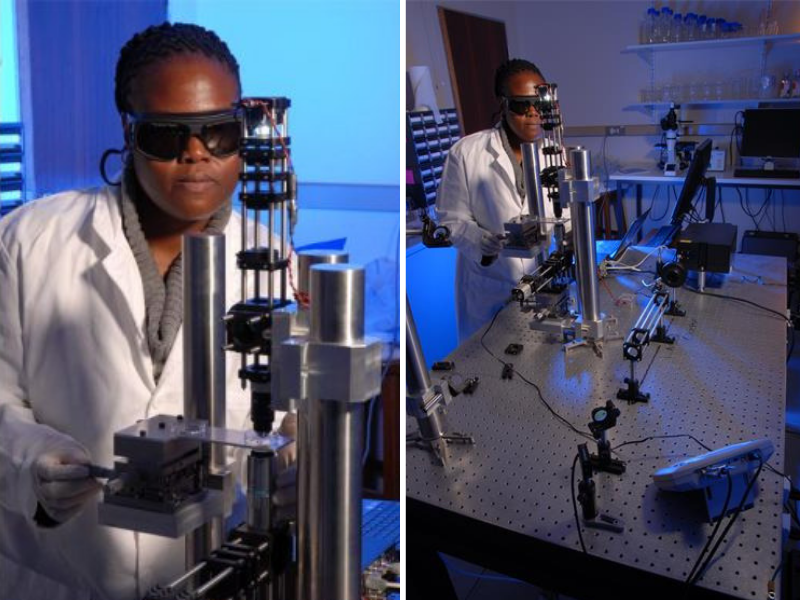
CSIR’s Dr Patience Mthunzi-Kufa is leading the charge for developing a laser diagnostic tool to detect HIV and tuberculosis as well as screen for substandard medicine. As research group leader of the CSIR’s biophotonics group, Mthunzi-Kufa led the team whose research has now been published in the Journal of Biophotonics.
It has also been cited in the Advanced Science News, an online library that highlights new and exciting developments from across a broad spectrum of scientific disciplines.
In a paper titled, “Label-free differentiation of human immunodeficiency virus–1 infected from uninfected cells using transmission measurement,” the CSIR group reported on a label-free optical method for real-time detection of HIV.
ALSO READ: HIV/Aids awareness campaign for elderly
Dr Mthunzi-Kufa said the research was inspired by the current challenges faced in accurately diagnosing patients.
“Many people do not get treatment because they don’t get diagnosed properly or timeously. By the time a patient is diagnosed, the disease has progressed significantly.”
“Our aim is to advance research that will aid efficient diagnosis and ultimately lead to better medical interventions.”
The team utilises HIV-1 infected cells, applies different laser methodologies, including transmission spectroscopy, to analyse the cells and compare them to uninfected cells.
“The research found that the two cell populations expressed different spectra when analysed through laser techniques, compared to conventional methods of manipulating or tagging the infected cells.”
Patent applications have been filed and the work has been published in the Journal of Biophotonics, which led to the research being cited on Advanced Science News.
Mthunzi-Kufa was recently appointed honorary research fellow in the School of Chemistry and Physics at the University of KwaZulu-Natal to mentor a new crop of biophotonics specialists.
ALSO READ: Can I still get life insurance if I am HIV positive?
Biophotonics investigates the development and application of optical or photonics techniques to facilitate single-molecule and/or cell studies.
It is a multidisciplinary, directed research field that cuts across various scientific disciplines, including biological sciences, medicine, chemistry and physical sciences.
Mthunzi-Kufa said she is excited and eager to do more ground-breaking work and research to aid humankind.
Do you have more information about the story? Please send us an email to editorial@rekord.co.za or phone us on 083 625 4114.
For free breaking and community news, visit Rekord’s websites:
Rekord East
Rekord North
Rekord Centurion
Rekord Moot
For more news and interesting articles, like Rekord on Facebook, follow us on Twitter or Instagram