Doctor tells of Covid-19 and mortality impact on medical practitioners
Since the outbreak of the unprecedented Covid-19 pandemic in the country almost a year ago medical staffers have been confronted with healing sickly patients infected with the virus, a doctor from Pretoria shares experiences of the frontline workers.
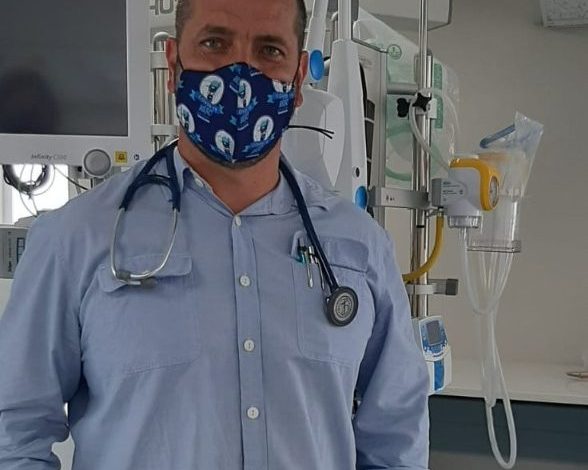
“I can’t think of a single colleague of mine that has not felt the impact of this disease – not only physically, but also emotionally, mentally, and financially…. and sometimes devastatingly so,” a medical doctor recounts of working during Covid-19 outbreak.
Dr Coert Gous heads the emergency department at Zuid-Afrikaans Hospital in Pretoria and has worked as a medical practitioner in different hospitals in Tshwane for the past 17 years, in the emergency units.
He shared some of his experiences working through the Covid-19 pandemic as a frontline worker.
“I think most people have seen visuals of tired and drained health care workers somewhere in the media. This is real… not fake news,” he said.
“You can only imagine the emotional and mental impact on doctors for having to cope daily with death and dealing with concerned family members not able to see their loved ones – and this sometimes for the last time.”
He said most doctors were emotionally and mentally affected as they had to deal daily with death and being confronted with important decisions when dealing with the “precious gift of life” at the face of Covid-19 pandemic.
Like many other doctors the most difficult was the unpredictability of its impact on human life.
“The unpredictability of the disease and the disease’s process for me wins the prize. How it can strike anyone, of any age at any time, with different severities still baffles the minds of the medical fraternity,” he said.
“It made our efforts to respond appropriately much more difficult and almost left us to work on a case by case basis. Managing everyone in hospital as if they are going to complicate anyway, in an attempt not to underestimate a patient’s milder symptoms, most of the time, unnecessarily so.”
Gous said he saw more patients with Covid-19 infection during the second wave of high Covid-19 infections, especially young patients
“I do, however, feel that the reason for this was not that the virus mutated but that the lowering of the lockdown level from 5 to 3 with the resultant increase in exposure, as well as the apparent increase in contagiousness of the virus, had some role to play.”
Gous believed that during the second wave the frontline workers were better prepared.
He also shed light on the financial impact of the pandemic on the medical industry.
“Hospitals and in my case, emergency units alike, had to procure very expensive PPE to ensure the safety of staff and patients. The cost of this massively outweighs the income generated from each patient,” he said.
Meanwhile, patients with other medical conditions were reluctant to visit doctors out of fear of contracting the virus, he said.
“Almost every single practice has seen a massive decrease in other than Covid patients – sometimes with as much as 70%. Keeping in mind that staff salaries still need to be paid, with all the other overhead costs escalating as well to deliver good quality healthcare to our patients, the financial impact was huge.”
Gous said during the tough times, many medical practitioners depended on their families for support. He described families as “unsung heroes”.
“It was difficult to visit family and friends as a result of my high level of daily exposure to critically ill patients in the emergency room and our hospital’s intensive care units.
“Even when it was allowed. People close to us were worried about their exposure to my family. If I remember one thing about this time in our lives it will be the support of my family. I love them.”
Coping with the risks of getting infected, Gous compared health workers to police officers and soldiers who confronted dangerous situations in their line of work.
“We believe in and expect them to confront those situations on our behalf to keep us and our world safe. With a pandemic, we, the healthcare workers are the “police or soldiers” – this is our war and we will win…. we always have.”
One of the key lessons learnt through weathering the storm for him was the value of the work done by the nursing staff.
“The more we learn and the more we know about this disease, the more we understand that our knowledge about Covid-19 and the wonderful world of genetics and immunology is still very much in its infancy.”
With the virus still transmitting in communities, Gous urged the public to adhere to safety measures and also to visit a doctor when feeling sickly or showing symptoms.
“A huge chunk of the so-called ‘excessive deaths’ calculated by the government is a direct consequence of people not seeking medical attention early enough for all or any of their ailments due to fear of contracting Covid-19 in the hospitals.
“Please don’t wait until your ailment has deteriorated and your pain has progressed to such an extent that lengthy hospitalisation is unavoidable. Seek help early.”
According to a report by the SA Medical Research Council, South Africa recorded an excess of more than 125 000 natural deaths since 3 May 2020.
Gauteng accounted for 20 764 natural excess deaths which the health experts at the department believed some may have been Covid-19 cases or as a consequence thereof.
Do you have more information about the story?
Please send us an email to editorial@rekord.co.za or phone us on 083 625 4114.
For free breaking and community news, visit Rekord’s websites: Rekord East
For more news and interesting articles, like Rekord on Facebook, follow us on Twitter or Instagram