Tshwane Automotive City to revolutionise the industry in Gauteng
The capital investment value of the project was set at R50-billion over the next 50 years creating thousands of jobs in the process.
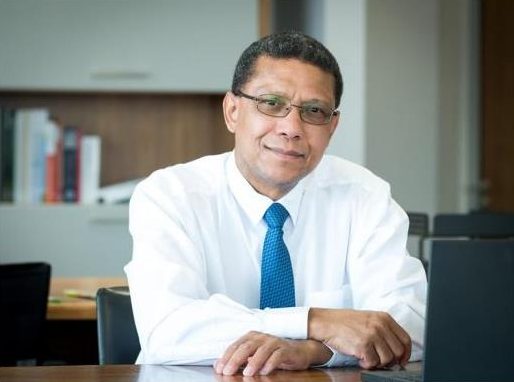
The planned R50-billion Tshwane Automotive City (TAC) in Rosslyn will not only revolutionise the automotive industry in the country but would also create thousands of local jobs as well.
“The TAC development will emulate well-established motor cities such as the Shanghai Automotive City in China, ‘The Autostadt’ in Germany and the Toyota Automotive City in Japan,” Tshwane mayor Randall Williams said.
The industrial area was expected to eventually become the home of the automotive industry in the province.
“It is a long-term 50-year strategic infrastructure programme aimed at stimulating the automotive vehicle assembly and component manufacturing sector in both the country and the city,” Williams said.
The project would be wholly developed through both public and private partnerships “as its strategic goals align with all spheres of government”.
“A core aim is to deepen the components manufacturing base in the city as well as stimulate foreign and domestic investment in the automotive sector,” he said.
Williams said the TAC was a necessary engine for the growth of the automotive industry, not only in Tshwane specifically but in the rest of the country as well.
“The concept aims to assist the automotive industry in the city to become globally competitive. It will do this by increasing locally manufacturing parts and components as well as building upon Rosslyn’s success in automotive manufacturing,” he said.
The development of the automotive city was expected to include three nodes:
Logistics node – this would feature an advanced logistics and supply chain network which would be in partnership with Transnet.
Commercial and recreation node – this would feature retail and shopping malls, banks and restaurants.
Community and civic node – this would feature residential developments, parks and public recreational spaces.
Williams further said that the following long-term benefits were projected from the economic impact of the strategic project:
A projected R50-billion rand capital investment over the next 50 years.
A total production change in the commercial and recreation node of R15.1-billion indicated by the automotive city’s economic impact.
The requirement of an estimated 6 500 employees for the development of the nodes.
The creation of an estimated 14 500 positions over the long-term.
The concept of the TAC began in 2008 as a shared vision of the government and automotive industry to transform the city into a leading automotive investment destination.
Do you have more information about the story?
Please send us an email to editorial@rekord.co.za or phone us on 083 625 4114.
For free breaking and community news, visit Rekord’s websites: Rekord East
For more news and interesting articles, like Rekord on Facebook, follow us on Twitter or Instagram