Angry women traders take Tshwane metro on
“The Tshwane metro put brakes on the celebration immediately after realising it would cost the city more than half a million rand,” says spokesperson Lindela Mashigo.
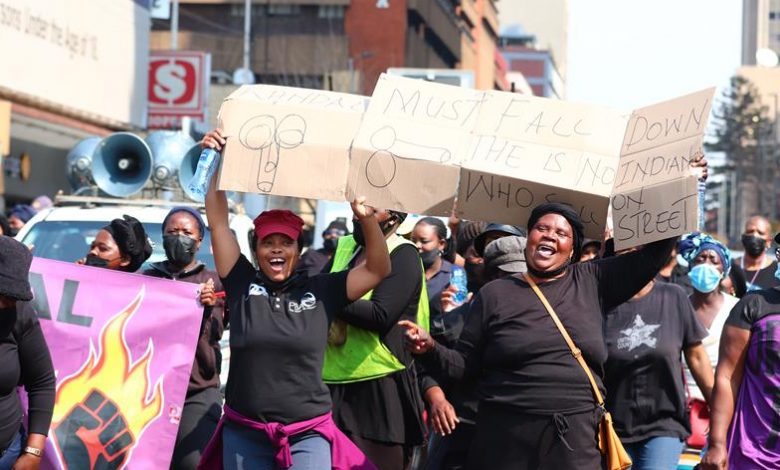
A group of Pretoria women informal traders has threatened to make the capital “ungovernable” over their dispute with the Tshwane metro regarding a cancelled Women’s Month celebration.
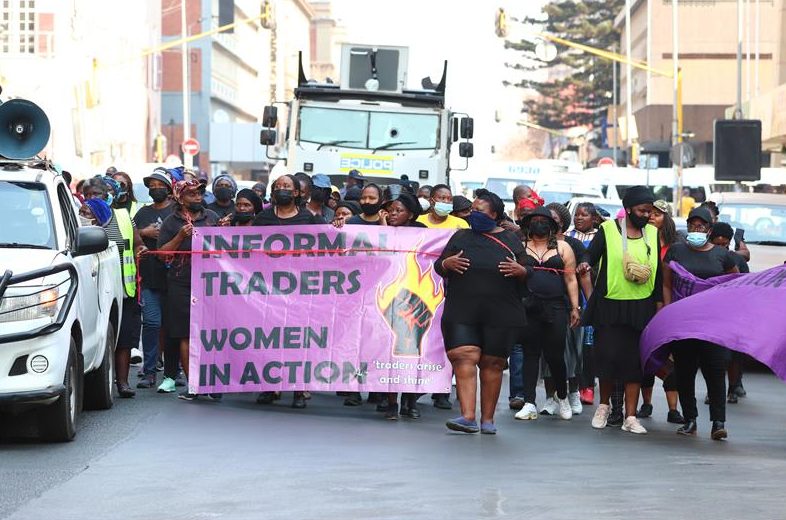
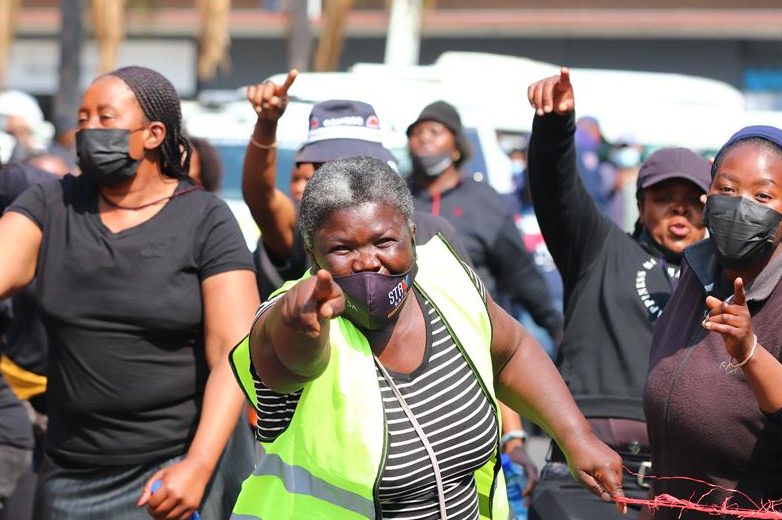
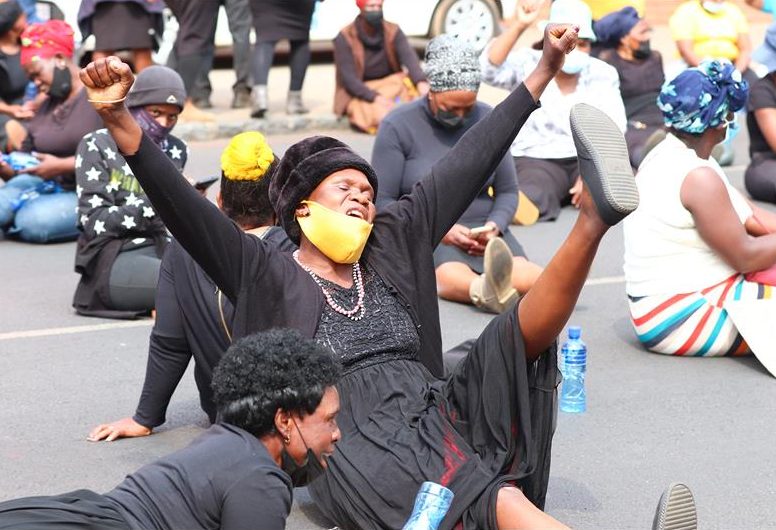
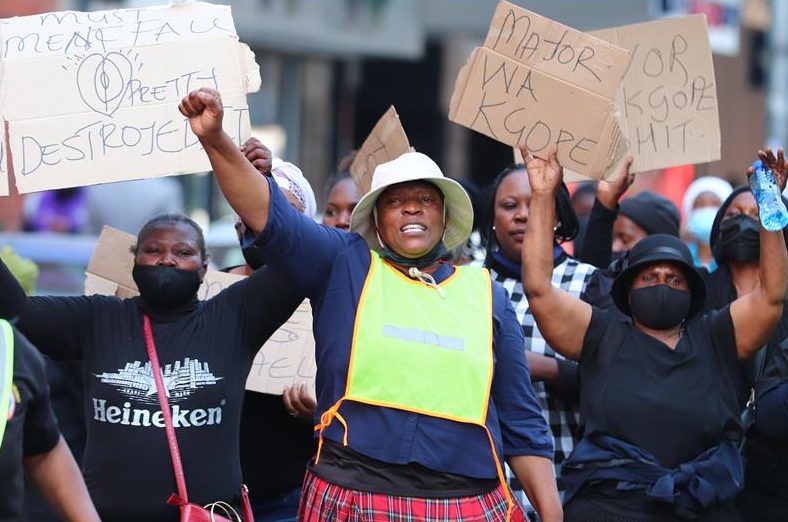
To voice their frustrations, Informal Traders Women in Action took to the streets last Thursday, demanding that Tshwane metro immediately reverse its decision to cancel the women celebration event “or face dire consequences”.
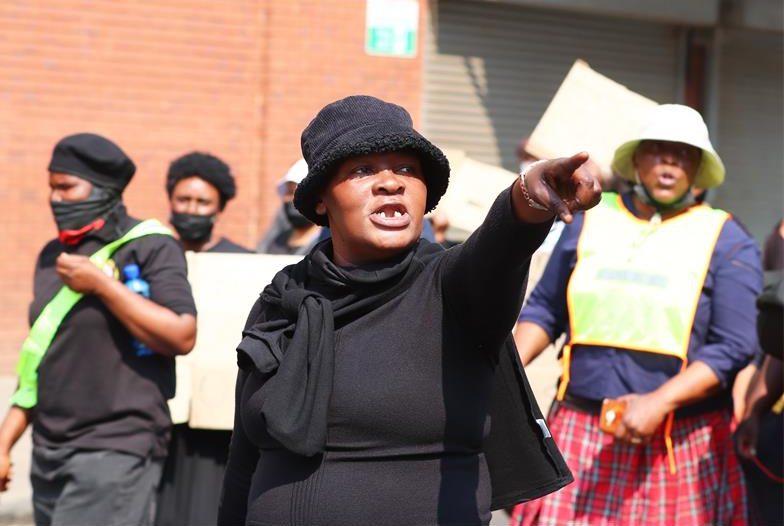
“The Tshwane metro must stop cancelling our important celebration and if they fail to do so we will make this city ungovernable,” said the leader of Informal Traders Women in Action, Lilly Sambo, during a peaceful march to Tshwane House.
The Informal Traders Women in Action represents the interests of women in the informal trading sector and also demanded the metro to stop “ill-treating us and for its failure to recognise informal traders and failing to release Covid-19 relief funds meant to benefit us”.
More than 70 protesting members of the organisation, dressed in black, took part in the march from Church Square to Tshwane House in the city centre.
“The metro cancelled an important event to share skills of doing business during the Covid-19 pandemic time and worse, during Women’s Month.”
Sambo said the metro’s alleged behaviour “was an insult to the dignity of unemployed women who do not beg for social grants from the government but who do something with their hands and minds to alleviate poverty”.
“We demand the metro reverse its decision of cancelling the women celebration and to release the Covid-19 relief funds.”
The women also demanded to be treated with respect and for recognition of informal traders.
“The metro’s department of economic development and office of the mayor must stop abusing us.”
Informal Traders Women in Action spokesperson Mary Ngema said the women’s celebration was supposed to take place on the last day of Women’s Month, August 31.
“Although we have been communicating with the metro’s department of social development about the event all along as we were planning it, we were told in the last hour that the event was no longer taking place.”
Ngema said according to their knowledge, the metro had budgeted for the event and it was supposed to take place.
The Tshwane metro rejected the claim that informal traders were being abused.
“The city of Tshwane has never and will never abuse informal traders,” Tshwane metro spokesperson Lindela Mashigo told Rekord.
He said the primary role of the Tshwane metro was to create enabling environment for all businesses including informal traders to thrive and grow in order to contribute towards job creation, food security and improvement of livelihood.
He said the metro recognised the informal traders as a critical economic stakeholders, adding that it was incorrect that the city did not recognise them.
Mashigo said the metro never committed to a Women’s Month celebration, after it became apparent from the proposal drafted by the informal traders themselves that the celebration would cost the city more than R500 000.
“We immediately informed the traders that the event could not be funded, as in the first place, no budget existed for such an event.
“Due to the city’s cost containment policy, the majority of all funding for events has effectively stopped. This was communicated well in advance to the traders. Thus, the event was never cancelled as the city indicated clearly it could not fund the idea.”
ALSO READ: House robberies, burglaries remain a problem for Centurion
He said the Tshwane metro would continue to support the informal traders.
“The metro has just spent R5-million on the upgrade and refurbishment of the Marabastad informal traders stalls. This is a sign of the metro’s commitment to develop and maintain good relationships with informal traders.”
Plans were at an advanced stage to launch the Tshwane informal traders forum, the purpose of which was to create a platform for the metro and the informal traders to engage on issues affecting informal traders, he said.
He added that the first meeting of the forum would be held next month.
Mashigo said the city’s Covid-19 relief funds for informal traders included the freezing of payments of permits and licence fees for 2019/20 financial year.
“In line with the president’s announcement in July, the metro is processing a report to suspend the payment of informal traders permits and licences until December 2022,” he said, citing that this would be a relief of over R5-million to the informal traders.
He said the city also continued to help informal traders to access relief funds offered by other spheres of government and the private sector and that more than 1 000 informal traders had received R1 500 from Gauteng Enterprise Propellers.
He also said the metro was assisting over 5 000 informal traders to access grants offered by the Small Enterprise Development Agency.
Do you have more information about the story?
Please send us an email to editorial@rekord.co.za or phone us on 083 625 4114.
For free breaking and community news, visit Rekord’s websites: Rekord East
For more news and interesting articles, like Rekord on Facebook, follow us on Twitter or Instagram