Tshwane elections: slight drop in registered voters, over 1,5 million set to head to the polls
For the first time in 22 years, registered voters in local government elections nationally experienced a drop compared to previous elections.
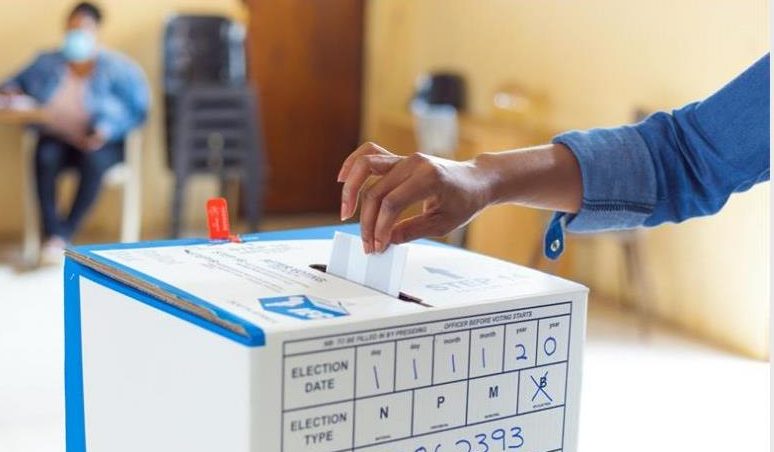
Voter registration closed last week and 1 526 295 people in the Tshwane region are set to head to the polls in the upcoming local government elections.
Those who did not register during the past week will not be eligible to vote on November 1.
The capital city had a slight drop of 30 629 voters compared to the 2019 elections. The region had the lowest drop compared to other metropolitans in the region which had a decrease of over 50 000 – 60 000 registered voters.
The region also has the third highest number of people set to vote in the Gauteng province which has an overall of 6 196 972.
Tshwane registered voters account for almost half of the population when compared with the 2011 StatsSA census report which found the region had a population of 2,9 million. Then this number entailed 71,9% of people aged 15-67 years old.
Ten years later in 2021, the population number was expected to grow even higher.
In the 2011 census report the province’s population was over 12 million people and it was estimated to grow to 15,5 million in 2020.
Tshwane voter breakdown:
– The lowest registered group: 18-19 with 3 793 males and 4 956 females registered.
– The highest registered group: 30-39 with 181 302 males and 204 780 females registered
– For the first time in 22 years, registered voters for elections experienced a drop nationally compared to previous registrations.
– Nationally the voters’ roll shrunk by 538 946 compared to the 2019 elections.
– In 2019 there were 26 756 649 registered to vote, 26 217 703 people set to vote in 2021.
– In 2018/19 there were 490 520 new voters and in 2021 there were 433 198 new voters.
– Over 12 million people eligible to vote did not register across the country.
Political analyst from Tshwane University of Technology Levy Ndou said the decrease could be attributed to a lack of political activeness in communities and constant migration.
“South Africans move around regularly and change places of stay. When they move to new places they are not used to the environment and do not know even the politicians and when voting time comes they ask themselves ‘how will we vote for people we do not know?”
Ndou said political parties were not engaging enough with communities through holding meetings and hearing what the communities’ troubles are.
“The parties are not doing enough political education. People feel as if they do not have leaders.
“Even the parties that say they are on the ground only want people when they want to go for protests but not engaging with residents on their needs,” he said.
He said this created a distance between politicians and the community and eventually leads to less people heading to the polls.
“The Electoral Commission also needs to develop strategies that will better encourage people to vote, after all, ensuring that people head to the polls forms part of their constitutional responsibility.
“There is also the issue of university students, most of them stay in cities for purposes of studying and they hardly vote. The students account for a large number of people who are able to vote and they also do not vote because they do not know the local councillors. Politicians need to work better.”
Most citizens viewed voting from a self improvement position, he said, “if a person stays in an area where everything is okay they feel as if there is no reason to vote while not thinking of those that face different circumstances”.
Do you have more information about the story?
Please send us an email to editorial@rekord.co.za or phone us on 083 625 4114.
For free breaking and community news, visit Rekord’s websites: Rekord East
For more news and interesting articles, like Rekord on Facebook, follow us on Twitter or Instagram